
MARITIMEPOSTS.COM – Seaweed continues to play a strategic role in South Sulawesi’s marine and fisheries economy. Data from South Sulawesi Province in Figures 2025 shows that the province produced 3.85 million tons of seaweed in 2023, generating an economic value of more than Rp10.54 trillion.
The commodity remains the backbone of aquaculture production in the province and demonstrates South Sulawesi’s position as one of Indonesia’s leading seaweed-producing regions.
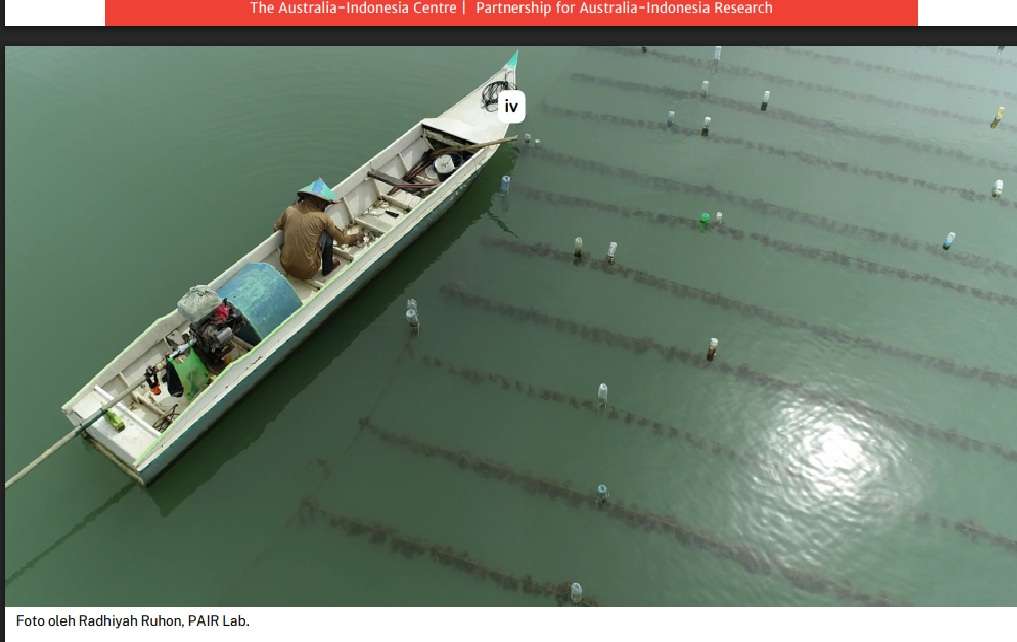
Seaweed cultivation has become a major source of livelihood for thousands of coastal households, stretching from the Gulf of Bone and the eastern coast of Luwu to the southern waters of Takalar and Jeneponto.
Its relatively low production costs, short cultivation cycle, and strong domestic and international demand make seaweed one of the most important marine commodities in the province.
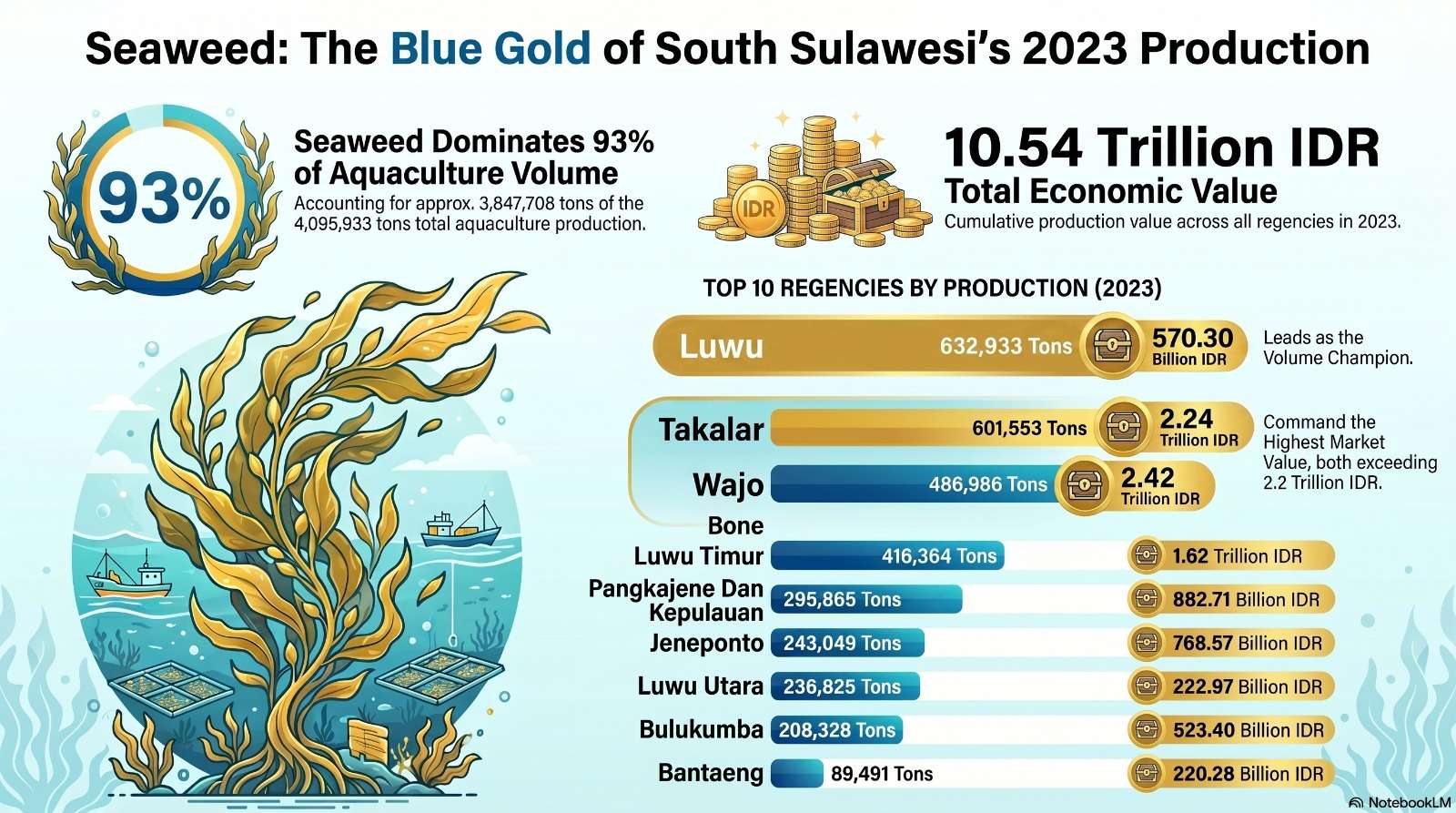
Luwu Leads in Production Volume
Among all regencies and municipalities, Luwu Regency recorded the highest production volume in 2023, reaching 632,933 tons, equivalent to approximately 16.5 percent of total provincial output.
The top five seaweed-producing regions were:
- Luwu – 632,933 tons
- Takalar – 601,553 tons
- Wajo – 486,986 tons
- Bone – 416,364 tons
- Luwu Timur – 359,531 tons
Together, these five regions contributed nearly two-thirds of South Sulawesi’s total seaweed production, highlighting the concentration of cultivation activities along the province’s extensive coastal areas.
Other significant producers included Pangkajene dan Kepulauan (295,865 tons), Jeneponto (243,049 tons), Luwu Utara (236,825 tons), Bulukumba (208,328 tons), and Kota Palopo (173,859 tons).
Value Creation Tells a Different Story
While Luwu ranked first in production volume, the economic value generated from seaweed production reveals a different pattern.
Wajo Regency recorded the highest production value at approximately Rp2.42 trillion, followed closely by Takalar Regency with Rp2.24 trillion. These figures are significantly higher than Luwu’s recorded value of around Rp570.3 billion, despite Luwu producing the largest volume.
This disparity suggests differences in cultivated seaweed varieties, quality grades, post-harvest handling, market access, or pricing structures across regions.
Areas capable of producing higher-value seaweed products or connecting more effectively with processing industries may capture greater economic returns despite lower production volumes.
The data also indicates that strengthening value-added activities could become a key strategy for increasing the income of seaweed farmers without necessarily expanding cultivation areas.
Dominating South Sulawesi Aquaculture
Seaweed is by far the dominant commodity in South Sulawesi’s aquaculture sector. Of the province’s approximately 4.1 million tons of aquaculture production, seaweed accounts for around 93 percent of total volume.
This overwhelming share underscores the commodity’s importance not only as a fisheries product but also as a pillar of regional economic development.
The industry supports employment, rural livelihoods, export earnings, and the broader blue economy ecosystem.
As global demand continues to grow for seaweed-based products—including food ingredients, pharmaceuticals, cosmetics, biofertilizers, and renewable materials—the commodity is increasingly viewed as a strategic resource for sustainable economic growth.
Opportunities for Downstream Development
Despite its impressive production performance, much of South Sulawesi’s seaweed is still marketed as raw material.
Experts have long argued that the province could significantly increase economic returns through downstream processing industries such as carrageenan extraction, agar production, bioplastics, nutraceuticals, and functional foods.
Developing processing facilities closer to cultivation centers could help farmers capture more value while reducing dependence on fluctuating raw commodity prices.
With production exceeding 3.8 million tons annually and an economic value surpassing Rp10 trillion, seaweed remains one of South Sulawesi’s strongest marine economic assets.
The challenge ahead is not merely increasing output, but transforming the province from a major producer of raw seaweed into a leading center for seaweed-based industries in Indonesia and Southeast Asia.
The Editorial Team