
CBIB is a national standard developed by Indonesia’s Ministry of Marine Affairs and Fisheries (KKP) to ensure that aquaculture activities are conducted in accordance with principles of quality assurance, food safety, aquatic animal health, environmental sustainability, and social responsibility. For seaweed farming, the implementation of this standard is still relatively new compared to other aquaculture commodities such as shrimp.
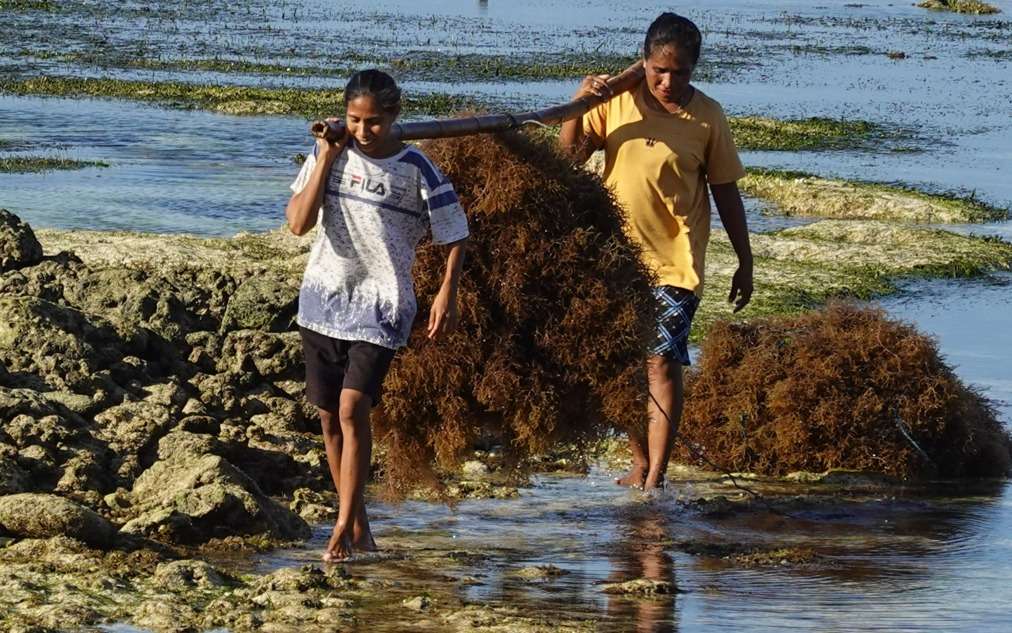
MARITIMEPOSTS.COM – Kupang, June 15, 2026 – East Nusa Tenggara (NTT) Province is one of Indonesia’s leading seaweed-producing regions. In recent years, seaweed production in NTT has ranged between 1.4 and 2.1 million tons annually, contributing approximately 15 percent of the country’s total seaweed output.
Despite this significant potential, several challenges remain. These include maintaining consistent product quality, ensuring traceability, and implementing farming practices that support the long-term health of coastal ecosystems.
As a result, strengthening capacity and understanding of aquaculture standards has become increasingly important.
Addressing these challenges was one of the key objectives of the Good Aquaculture Practices (CBIB) Technical Training for seaweed farming, organized by the East Nusa Tenggara Provincial Marine and Fisheries Agency in collaboration with Yayasan Konservasi Alam Nusantara (YKAN) in Kupang on June 10–11, 2026.
The training brought together local government representatives and 20 seaweed farmers from Kupang Regency, Rote Ndao Regency, and Sabu Raijua Regency.
Acting Head of the East Nusa Tenggara Marine and Fisheries Agency, Stefania T. Boro, emphasized that the provincial government continues to promote improvements in aquaculture quality as a key pillar of the region’s marine-based economic development.
“NTT has tremendous potential as one of Indonesia’s major seaweed production centers. Our challenge today is not only to increase production volumes but also to ensure product quality, sustainability, and competitiveness. Through capacity building for government officers and farmers, we hope the adoption of CBIB standards will become more widespread and generate greater economic benefits for coastal communities,” she said.
CBIB is a national standard developed by Indonesia’s Ministry of Marine Affairs and Fisheries (KKP) to ensure that aquaculture activities are conducted in accordance with principles of quality assurance, food safety, aquatic animal health, environmental sustainability, and social responsibility.
For seaweed farming, the implementation of this standard is still relatively new compared to other aquaculture commodities such as shrimp.
Sri Ismaryati, a resource person from the Directorate General of Aquaculture at KKP, explained that CBIB focuses not only on production outcomes but also on responsible farming processes.
“CBIB is designed to ensure that every stage of aquaculture is carried out properly, from site selection, seed use, and farm management to harvesting and post-harvest handling. The standard also covers occupational safety, waste management, and environmental protection. With proper implementation, product quality improves and market access opportunities expand,” she explained.
During the two-day training, participants received materials covering government policies related to CBIB, quality assurance and food safety principles, seaweed health management, environmental sustainability, socio-economic aspects, Indonesian National Standards (SNI), CBIB certification requirements, and the Online Single Submission (OSS) licensing system.
Quality for Sustainability
One of the most important sessions during the training was a self-assessment exercise, where participants compared their existing farming practices with CBIB requirements.
The assessment revealed that many of the practices already implemented by farmers were aligned with CBIB principles.
Yefri Yermias Boboy, a seaweed farmer from Rote Ndao Regency, said the training provided new insights into standards that had, in many cases, already been applied in the field.
“Through this activity, we realized that many technical CBIB requirements are practices we have already implemented, such as proper site selection, the use of quality seedlings, and post-harvest handling. We are not starting from scratch; rather, we are strengthening and refining existing practices so they fully comply with recognized standards,” he said.
A similar perspective was shared by Yohana Kale, a seaweed farmer from Sabu Raijua Regency who has received technical assistance from YKAN. According to her, many of the principles promoted through Best Management Practices (BMP) are closely aligned with CBIB standards.
“During the discussions, we found that many of the practices taught through BMP are consistent with CBIB principles. These include site preparation, seed selection, appropriate harvest timing, and post-harvest handling. This training helped us understand that the practices we have been implementing already support CBIB standards; they simply need to be strengthened and documented more systematically,” she said.
These findings are encouraging for efforts to improve seaweed farming standards across NTT. The practices promoted through BMP approaches have proven to be highly compatible with CBIB principles.
At a time when global markets increasingly demand products that are traceable and responsibly produced, strengthening standards has become essential to ensuring that seaweed remains a source of prosperity for coastal communities while also protecting the marine ecosystems that support production.
YKAN Marine Program Director Muhammad Ilman emphasized that strengthening aquaculture standards is a crucial component of building a sustainable blue economy in coastal regions.
“Seaweed plays a strategic role in the livelihoods of coastal communities across NTT. Therefore, improving production quality and ensuring sustainability must go hand in hand. CBIB provides a more comprehensive framework to ensure that aquaculture practices not only generate strong production outcomes but also address environmental stewardship, occupational safety, and community well-being,” he concluded.