
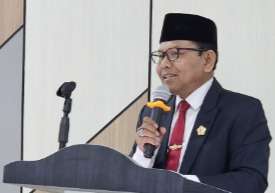
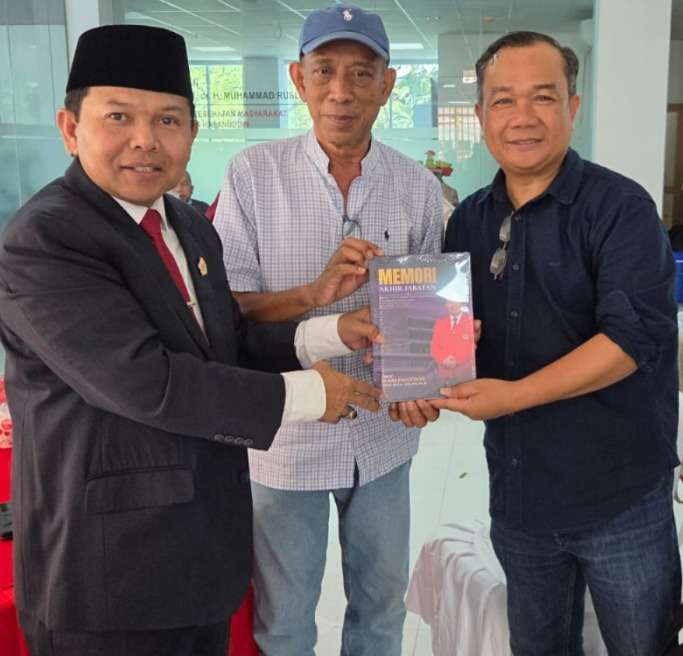
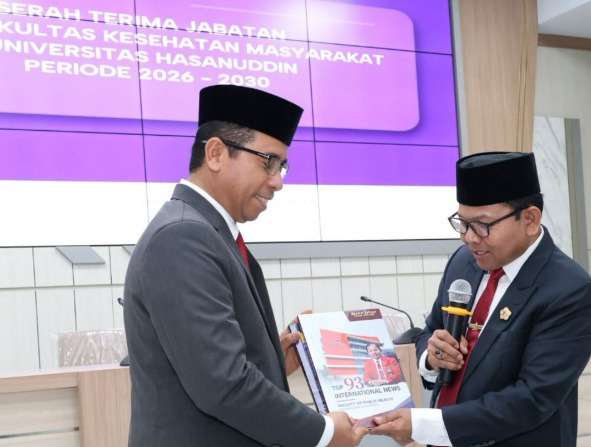
Prof. Sukri Palutturi explains that the memoir was intended not merely as an end-of-term report, but also as a reflection on institutional development. “This book is expected to serve as an academic archive, a valuable source of information, and an inspiration for the continued development of FKM Unhas. The achievements of this period should become stepping stones for moving forward, strengthening our tradition of excellence, and opening new avenues of innovation for future generations of leadership.”
MARITIMEPOSTS.COM – Four years may seem like a relatively short period in the life of a higher education institution. Yet between 2022 and 2026, the Faculty of Public Health (FKM) at Hasanuddin University underwent a remarkable transformation that left a lasting imprint on its governance, academic reputation, research productivity, and international engagement.
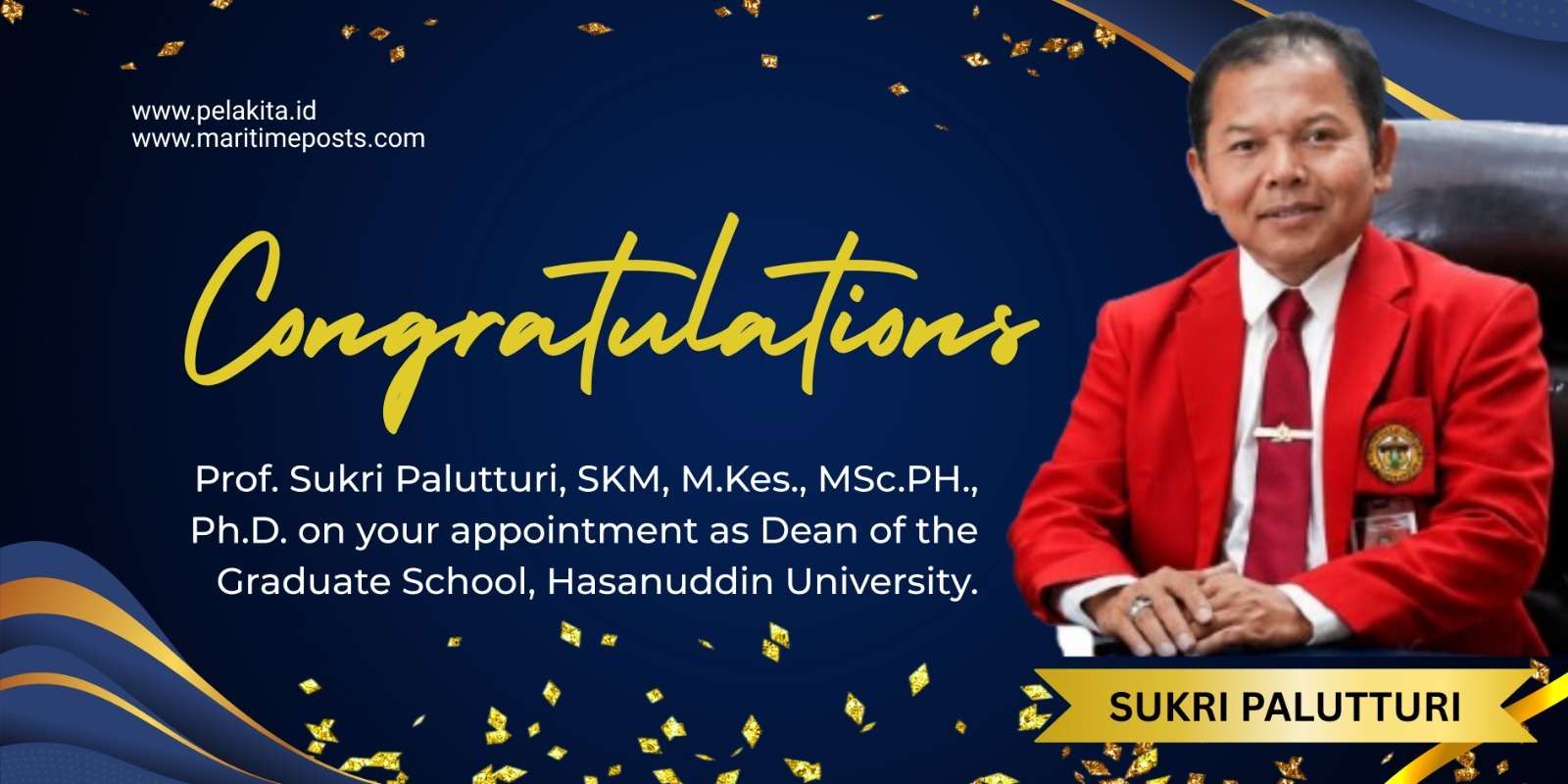
Under the leadership of Prof. Sukri Palutturi, S.KM., M.Kes., M.Sc.PH., Ph.D., FKM Unhas achieved far more than impressive administrative milestones.
It cultivated a more inclusive, collaborative, and quality-driven academic culture that will continue to shape the faculty’s future for years to come.
The Dean’s End-of-Term Memoir, published at the conclusion of his tenure, demonstrates that Prof. Sukri’s greatest legacy is not merely reflected in awards or performance indicators.
Rather, it lies in the strong institutional foundation he established to enable the faculty to meet future challenges in public health education at both the national and international levels.
About the Memoir
The Dean’s End-of-Term Memoir of the Faculty of Public Health, Hasanuddin University, 2022–2026 documents the faculty’s institutional journey throughout four years of leadership.
It chronicles the challenges, achievements, lessons learned, and collective efforts undertaken to strengthen FKM Unhas as a leading institution for public health education—one that is adaptive, collaborative, and committed to serving society.
According to Prof. Sukri, the 2022–2026 period was characterized by both significant challenges and tremendous opportunities.
During this period, higher education institutions were expected to become increasingly responsive to change, strengthen academic quality, enhance national and international recognition, expand strategic partnerships, and provide tangible solutions to pressing public health issues.
“Within this context, FKM Unhas has continuously worked to reinforce its position as a faculty that excels not only in education, research, and community service, but also in fostering an inclusive, innovative, and globally competitive academic culture,” he writes.
A wide range of strategic initiatives were successfully implemented through the collective efforts of the entire faculty community.
These included strengthening academic programs, improving accreditation status, developing new academic programs, expanding collaborations, upgrading laboratory capacity, enhancing student development, improving infrastructure, implementing the Integrity Zone initiative, and reinforcing institutional governance.
Every achievement, he emphasizes, was made possible not by individual efforts, but through collaboration, dedication, and the shared commitment of the entire academic community.
Prof. Sukri explains that the memoir was intended not merely as an end-of-term report, but also as a reflection on institutional development.
“This book is expected to serve as an academic archive, a valuable source of information, and an inspiration for the continued development of FKM Unhas. The achievements of this period should become stepping stones for moving forward, strengthening our tradition of excellence, and opening new avenues of innovation for future generations of leadership.”
He also expresses his deepest appreciation:
“On this occasion, I extend my sincere gratitude to the Rector of Hasanuddin University and the entire university leadership for their guidance, support, and trust in FKM Unhas.”
He further acknowledges the invaluable contributions of vice deans, the Faculty Academic Senate, the Quality Assurance Unit, department heads and secretaries, study program coordinators, faculty members, administrative staff, students, alumni, and all collaborative partners who played important roles throughout the 2022–2026 period.
Prof. Sukri also reflects with humility:
“I realize that every leadership journey comes with limitations. Not every aspiration can be fully realized, and not every plan can be completed perfectly. Therefore, I sincerely apologize for any shortcomings during my tenure as Dean of the Faculty of Public Health, Hasanuddin University.”
He concludes with a message of hope:
“May this memoir become a symbol of our shared journey, a reminder of our collective achievements, and a source of inspiration to continue developing FKM Unhas as an academic home that is excellent, humane, principled, and beneficial to society. May all our efforts and dedication be accepted as good deeds and receive Allah’s blessings.”
Leadership that Inspires Rather Than Simply Manages
The memoir contains numerous tributes to Prof. Sukri’s leadership throughout his four-year tenure.
To many faculty members, administrative staff, and students, he was more than a dean; he was a mentor and a caring leader. His leadership style was characterized by humility, openness, and genuine concern for people.
Several testimonials illustrate this character.
One comes from Dian Sidik Arsyad, Ph.D., who recalls how Prof. Sukri personally traveled to the Netherlands to serve as an examiner during his doctoral defense. His presence represented far more than an academic obligation—it was a meaningful gesture of moral support for a young scholar.
Similar sentiments were expressed by Dr. Masyita Muis and Dr. Irwandy, who described Prof. Sukri as a leader capable of creating a harmonious and supportive working environment while maintaining discipline, strong principles, and a clear commitment to institutional advancement.
This leadership model became an invaluable source of social capital, enabling the faculty community to pursue increasingly ambitious goals together.
Outstanding Institutional Performance
Leadership success is measured not only by perception but also by measurable outcomes.
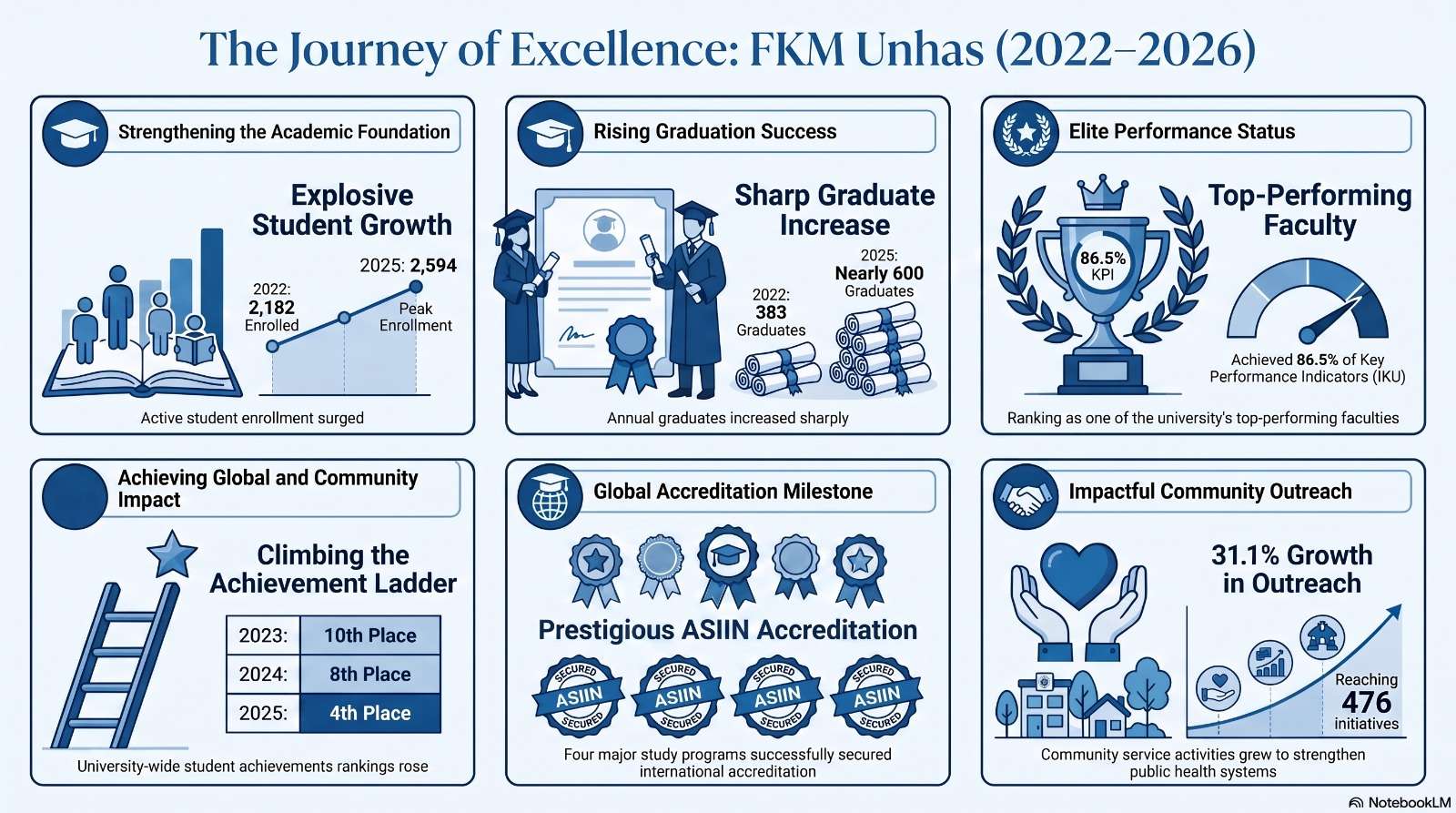
In the 2025 evaluation of the University’s Key Performance Indicators (KPIs), FKM Unhas successfully achieved 45 out of 52 indicators, representing an impressive 86.5 percent completion rate.
This performance placed the faculty among the highest-performing faculties within Hasanuddin University, surpassing several larger faculties.
The achievement reflects an institutional governance system that is efficient, productive, and highly adaptive to the rapidly evolving higher education landscape.
Strengthening Academic Excellence through International Accreditation
One of the defining achievements of Prof. Sukri’s tenure was the strengthening of academic quality assurance.
The undergraduate programs in Public Health and Nutrition, along with the Master’s and Doctoral programs in Public Health, successfully earned international accreditation from ASIIN while simultaneously maintaining the prestigious “Excellent” (Unggul) accreditation status from LAM-PTKes.
At the postgraduate level, the Master’s programs in Hospital Administration, Occupational Health and Safety, Health Policy Administration, and Nutrition also retained their Excellent accreditation.
Quality assurance extended beyond academic programs.
The Chemistry and Biophysics Laboratory received accreditation from Indonesia’s National Accreditation Committee (KAN) for the 2026–2031 period, while the faculty maintained its ISO 9001:2015 Quality Management System certification through 2028.
Together, these accomplishments demonstrate that academic excellence at FKM Unhas is supported by internationally recognized quality standards.
Growing Public Trust
The faculty’s strengthened academic reputation translated directly into growing public confidence.
The number of active students increased consistently throughout Prof. Sukri’s leadership:
-
2022: 2,182 students
-
2023: 2,326 students
-
2024: 2,463 students
-
2025: 2,594 students
The provisional figure of 2,489 students in 2026 largely reflects the graduation cycle and ongoing academic data updates, rather than a decline in long-term enrollment trends.
Quality remained equally impressive.
Average graduating GPAs consistently ranged between 3.75 and nearly 4.00. Undergraduate Public Health graduates recorded an average GPA of 3.85, while Master’s and Doctoral graduates achieved remarkable averages between 3.96 and 3.97.
In response to Indonesia’s growing demand for qualified healthcare professionals, FKM Unhas also launched its Professional Dietitian Program in 2026.
Strengthening Human Resources and Academic Infrastructure
Institutional transformation was equally evident in faculty development.
During Prof. Sukri’s tenure, FKM Unhas added three new full professors, bringing the faculty composition in 2025 to:
-
22 Professors
-
18 Associate Professors (Lektor Kepala)
-
36 Lecturers
-
17 Assistant Professors
Faculty regeneration was supported by a policy requiring all newly recruited lecturers to possess at least a Master’s degree.
Academic infrastructure also received significant investment.
A modern Computer Laboratory equipped with 50 computers was transformed into a center for digital literacy, offering training in Systematic Literature Review (SLR), JASP statistical software, KoBo Toolbox for digital data collection, and reference management applications essential for scientific writing.
Becoming a Center of Research Excellence and Community Engagement
The faculty’s commitment to the Three Pillars of Higher Education—education, research, and community service—was reflected in its growing research impact.
In 2025, FKM Unhas ranked fourth among all faculties at Hasanuddin University in citation performance, with 4,289 citations generated by 44 faculty members.
Community engagement also expanded significantly.
The number of community service (PKM) activities increased from:
-
363 programs in 2022
-
398 in 2023
-
435 in 2024
-
476 in 2025
Overall, community service activities grew by 31.1 percent during the four-year period, demonstrating the faculty’s expanding contribution to addressing real public health challenges.
Advancing Toward a World-Class Faculty
Internationalization remained a central pillar of Prof. Sukri’s vision.
The long-standing student exchange program with Okayama University, Japan, continued to send four to six students annually.
Global engagement was further strengthened through the successful organization of the Nusantara International Summer Course on Public Health 2026, which welcomed participation from internationally respected institutions including Mahidol University (Thailand) and Soonchunhyang University (South Korea).
Student organizations also flourished, achieving increasing success in the National Student Entrepreneurship Program and the Student Organization Capacity Building Program, reflecting the faculty’s commitment to developing future leaders alongside academic excellence.
A Legacy that Will Endure
Prof. Sukri Palutturi’s leadership legacy cannot be measured solely by statistics, accreditation certificates, or institutional performance indicators.
His most enduring contribution lies in establishing a culture of quality, transparent governance, collaborative leadership, and a shared institutional identity that has become deeply embedded within the Faculty of Public Health.
These foundations provide a strong platform for future leadership to continue advancing FKM Unhas toward becoming an internationally recognized center of excellence in public health education.
As Dr. Irwandy aptly summarized:
“Thank you, Professor, for laying the extraordinary foundation upon which our institution will continue to grow.”
It is more than a tribute to a dean completing his term of office. It is an acknowledgment that Prof. Sukri Palutturi has left a legacy that will continue to guide the Faculty of Public Health, Hasanuddin University, well into the future.
___
Prepared by Kamaruddin Azis, founder maritimeposts.com