
According to Abdul Rahman, the support provided through the SECURE program focuses not only on increasing production but also on strengthening farmers’ capacity to manage ponds more efficiently and sustainably. This includes training in compost production and the use of local microorganisms (MOL) to maintain pond environmental quality.
MARITIMESPOSTS,COM– Tanjung Redeb, June 15, 2026 – The harvest of ponds implementing the Shrimp Carbon Aquaculture (SECURE) approach, conducted on June 3, 2026, in Pegat Batumbuk Village and Suaran Village, Berau Regency, East Kalimantan, demonstrated encouraging results from environmentally sustainable aquaculture practices.
The initiative is supported by Yayasan Konservasi Alam Nusantara (YKAN) in collaboration with the Berau Fisheries Agency under the framework of the Solutions for Marine and Coastal Resilience in the Coral Triangle (SOMACORE) Program.
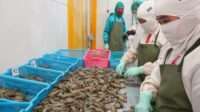
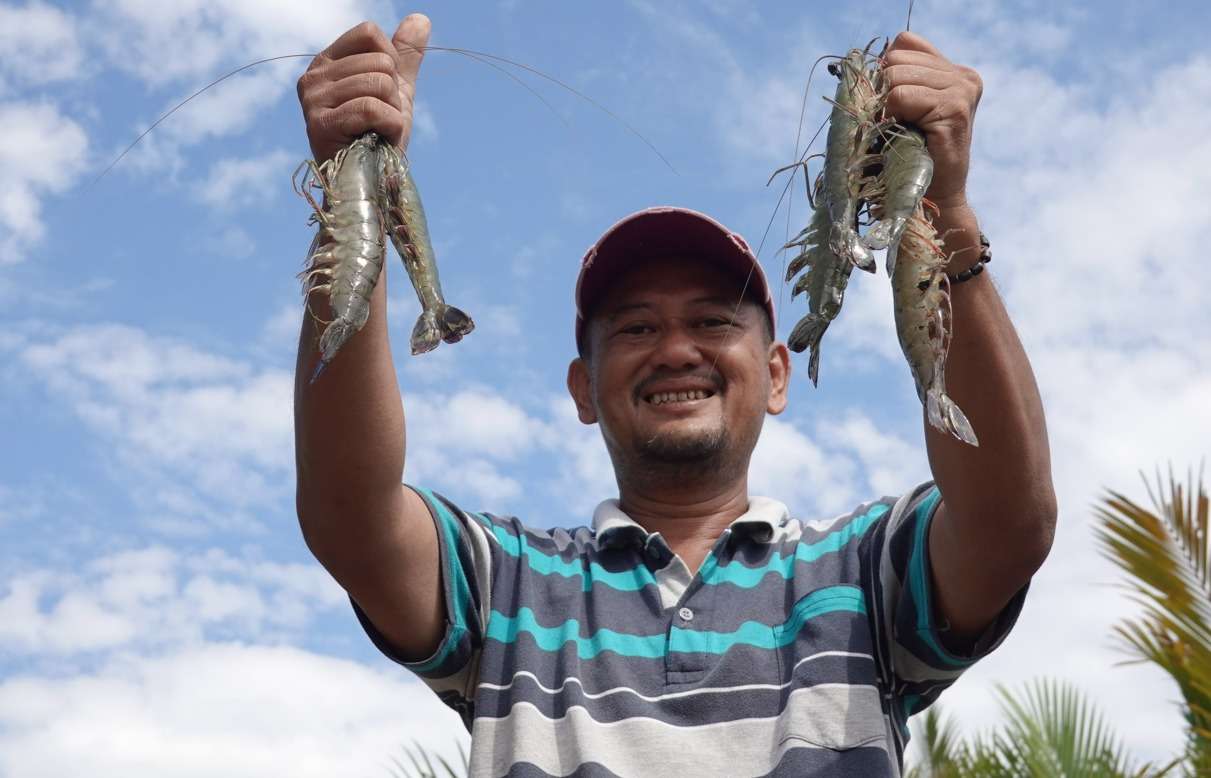
One of the harvest sites was a pond owned by Abdul Rahman in Pegat Batumbuk Village. The pond produced 115 kilograms of black tiger shrimp (Penaeus monodon), 141 kilograms of spotted shrimp, 1.9 tons of milkfish, and 50 kilograms of mud crabs.
“This harvest shows that pond management practices that pay greater attention to environmental conditions can deliver positive results. In addition to shrimp, we also harvested milkfish and mud crabs,” said Abdul Rahman.
He explained that before adopting the SECURE approach, the average black tiger shrimp harvest from his pond was around 100 kilograms.
With the latest harvest reaching 115 kilograms, black tiger shrimp production increased by approximately 15 percent, despite the farming area being reduced to only 20 percent of its original size.
According to Abdul Rahman, the support provided through the SECURE program focuses not only on increasing production but also on strengthening farmers’ capacity to manage ponds more efficiently and sustainably. This includes training in compost production and the use of local microorganisms (MOL) to maintain pond environmental quality.
The harvest results demonstrate that ecosystem-based aquaculture can support not only the production of primary commodities but also the diversification of fisheries products, generating additional economic value for coastal communities.
SECURE is an initiative developed by YKAN in collaboration with local governments and various partners to transform traditional pond farming into a more sustainable aquaculture system.
Under this approach, approximately 20 percent of the area is allocated for aquaculture activities, while the remaining 80 percent is dedicated to mangrove restoration and conservation.
Mangroves serve not only as carbon sinks and natural coastal protection but also play a vital role in maintaining water quality that supports long-term pond productivity. As a result, fisheries production and ecosystem restoration can advance simultaneously.
Strengthening Capacity and Sustainability
In Pegat Batumbuk and Suaran villages, SECURE implementation has also been reinforced through farmer field schools, which provide learning opportunities for pond farmers to adopt more environmentally friendly aquaculture practices.
Through these field schools, farmers are introduced to composting techniques and the production of local microorganisms using organic materials readily available around their ponds.
Compost is used to improve pond ecosystem fertility and promote the growth of natural feed, while local microorganisms help maintain the balance of aquatic microbial communities, ensuring that environmental conditions remain suitable for aquaculture.
The field schools also introduce nursery techniques as part of the acclimatization process for black tiger shrimp and milkfish fry before they are stocked in grow-out ponds. This method is designed to improve seed resilience and increase survival rates.
Jumardi, a SECURE partner farmer in Suaran Village, has experienced the benefits of these techniques firsthand.
“Nursery practices are among the most valuable new skills we have learned. Previously, shrimp and milkfish fry were stocked directly into the ponds, and survival rates were not always optimal. Through the field school, we learned to acclimatize and nurse the fry first so they can adapt to pond conditions. As a result, the fry are stronger, survival rates are higher, and we are more confident in managing the cultivation process,” he said.
The implementation of these practices has produced promising outcomes. A pond managed by Jumardi and his father, Satar, harvested on June 3, 2026, yielded 284.2 kilograms of black tiger shrimp and 120 kilograms of spotted shrimp.
The Head of the Berau Fisheries Agency, Abdul Majid, praised the SECURE approach, noting that it aligns closely with Berau Regency’s sustainable development agenda.
“This approach demonstrates that aquaculture development and environmental conservation can go hand in hand. In addition to increasing production, the SECURE model helps maintain the sustainability of coastal ecosystems that support local livelihoods,” he said.
The integration of mangrove restoration with environmentally friendly aquaculture practices has produced tangible benefits, improving pond resilience to environmental risks while helping reduce production costs.
This approach is consistent with the principles of the blue economy, which place healthy coastal ecosystems at the foundation of sustainable marine and fisheries development.
YKAN Marine Program Director Muhammad Ilman emphasized that the success of the program should not be measured solely by production outcomes, but also by the ability of communities to manage coastal resources sustainably.
“SECURE is not only about shrimp production. It is about helping communities rebuild their relationship with coastal ecosystems. When mangroves are restored and farmers’ capacities are strengthened, we can see the emergence of a management system that is more resilient—both economically and ecologically,” he concluded.
About YKAN
Yayasan Konservasi Alam Nusantara (YKAN) is a science-based non-profit organization that has been operating in Indonesia since 2014. YKAN develops innovative solutions to foster harmony between people and nature through effective natural resource governance, non-confrontational approaches, and strong partnerships with stakeholders across sectors to support a sustainable Indonesia.
For more information, visit: www.ykan.or.id.