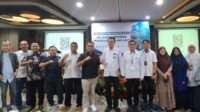


- Under the leadership of Rector Prof. Jamaluddin Jompa, widely known as Prof. JJ, Universitas Hasanuddin has consistently positioned maritime studies as one of its principal academic pillars.
- The university integrates marine perspectives across education, research, innovation, and community engagement while strengthening partnerships with governments, research institutions, international organizations, and coastal communities.
- The 2026 THE Impact Rankings placed Universitas Hasanuddin first in Indonesia and 31st globally for Sustainable Development Goal (SDG) 14: Life Below Water.
By Kamaruddin Azis
MARITIMEPOSTS.COM – In the 21st century, the future of humanity is inseparable from the future of the ocean. Covering more than 70 percent of Earth’s surface, the world’s seas regulate climate, sustain biodiversity, secure food systems, and support the livelihoods of billions.
Yet marine ecosystems are under unprecedented stress—from climate change and ocean acidification to overfishing, habitat degradation, and pollution.
Responding to these interconnected challenges requires more than government policies or international treaties. Universities have become indispensable engines of scientific discovery, innovation, and evidence-based policymaking.
Increasingly, they are expected not only to generate knowledge but also to shape sustainable solutions that bridge science, society, and governance.
Among these emerging global leaders is Universitas Hasanuddin (Unhas) in Indonesia. Located in Makassar, at the gateway to the Coral Triangle—the world’s richest marine biodiversity region—the university has transformed itself from a regional academic institution into one of the world’s leading centers for marine sustainability.
Its remarkable ascent was confirmed by the 2026 Times Higher Education (THE) Impact Rankings, where Unhas achieved one of the highest distinctions ever earned by an Indonesian university in ocean sustainability.
A Global Leader in Life Below Water
The 2026 THE Impact Rankings placed Universitas Hasanuddin first in Indonesia and 31st globally for Sustainable Development Goal (SDG) 14: Life Below Water.
Unlike conventional university rankings that emphasize academic reputation or research citations alone, the THE Impact Rankings assess how universities contribute directly to achieving the United Nations Sustainable Development Goals through research, education, institutional policies, partnerships, and community engagement.
For SDG 14, institutions are evaluated on their efforts to conserve marine ecosystems, promote sustainable fisheries, reduce marine pollution, strengthen ocean governance, and advance scientific understanding of the marine environment.
Unhas’ position among the world’s top 40 institutions demonstrates that excellence in marine conservation is no longer concentrated exclusively within established research centers in Europe, North America, or Oceania. Instead, it signals the growing importance of universities located within biodiversity hotspots that combine scientific expertise with direct engagement in real-world conservation challenges.
The achievement reflects years of strategic investment in marine science, interdisciplinary research, international collaboration, and community-based conservation initiatives.
Turning Geography into Scientific Advantage
Few universities possess the natural laboratory available to Universitas Hasanuddin.
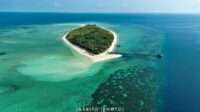
Indonesia lies within the Coral Triangle, home to approximately 76 percent of the world’s coral species and one of the highest levels of marine biodiversity on Earth. Eastern Indonesia, where Unhas is located, contains ecosystems that are globally significant for coral reefs, mangroves, seagrass meadows, small islands, and fisheries.
Rather than viewing geography as a passive advantage, the university has transformed its location into a strategic research platform.
Marine science has become one of the institution’s defining identities, influencing education, research priorities, innovation, and community outreach. This vision has enabled researchers to study ecological processes where they occur while generating practical solutions that benefit both local communities and global conservation efforts.
Beyond Research: Restoring Blue Carbon Ecosystems
The university’s contribution extends well beyond academic publications.
Researchers and students actively participate in the restoration and protection of Indonesia’s coastal ecosystems, particularly mangrove forests, seagrass meadows, and coral reefs. These ecosystems are increasingly recognized as critical Blue Carbon habitats because of their extraordinary capacity to capture and store atmospheric carbon.
Protecting these environments contributes simultaneously to biodiversity conservation, climate change mitigation, fisheries productivity, and coastal resilience.
Unhas has also expanded its research into one of the most complex emerging threats to marine ecosystems: ocean acidification.
As atmospheric carbon dioxide concentrations continue to rise, seawater chemistry changes in ways that threaten coral reefs, shell-forming organisms, and entire marine food webs. Through interdisciplinary research integrating marine biology, oceanography, chemistry, and climate science, the university seeks to improve scientific understanding of these processes while informing adaptive management strategies.
Such work positions Unhas at the intersection of marine conservation and global climate policy.
Conservation That Benefits Coastal Communities
Perhaps one of the university’s greatest strengths lies in its recognition that healthy oceans and prosperous communities cannot be separated.
Marine conservation often fails when local livelihoods are overlooked. Conversely, sustainable fisheries cannot exist without healthy ecosystems.
Recognizing this relationship, Unhas integrates social sciences, economics, fisheries management, and environmental science into its research and outreach programs.
The university works closely with small-scale fishers and coastal communities to improve fisheries management, strengthen aquaculture, increase market access, and promote sustainable livelihood opportunities.
Rather than treating communities merely as beneficiaries, Unhas emphasizes participatory approaches that position local people as active partners in conservation.
This integration of ecological science and social development reflects a broader understanding of sustainability—one that acknowledges that environmental resilience depends as much on social inclusion as on biological restoration.
Science Supporting Better Ocean Governance
The university’s impact also extends into the policy arena.
Evidence generated through marine research supports science-based decision-making for fisheries management, marine protected areas, biodiversity conservation, and coastal planning.
Researchers contribute to discussions surrounding international maritime governance, sustainable fisheries, and the implementation of regulations aimed at combating overfishing and protecting marine resources.
Particular attention has been given to research addressing harmful fisheries subsidies, illegal fishing, and ecosystem-based management—issues that sit at the heart of global negotiations concerning ocean sustainability.
By connecting scientific evidence with public policy, Unhas helps ensure that conservation strategies are grounded in data rather than short-term economic pressures.
The Maritime Campus Vision
These accomplishments are closely aligned with the university’s long-term institutional strategy.
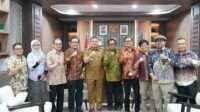
Under the leadership of Rector Prof. Jamaluddin Jompa, widely known as Prof. JJ, Universitas Hasanuddin has consistently positioned maritime studies as one of its principal academic pillars.
The university integrates marine perspectives across education, research, innovation, and community engagement while strengthening partnerships with governments, research institutions, international organizations, and coastal communities.
As the Rector has emphasized:
“These achievements are consistent with the direction of Universitas Hasanuddin’s development, which places maritime affairs as one of its primary focuses in education, research, and community service.”
This vision recognizes that Indonesia’s future as the world’s largest archipelagic nation depends upon producing scientific knowledge capable of sustaining both marine ecosystems and coastal societies.
A Model for Universities in the Global South
The rise of Universitas Hasanuddin carries broader significance beyond Indonesia.
For decades, many global university rankings have been dominated by institutions located in wealthier countries. Unhas demonstrates that universities in the Global South can achieve international excellence by building upon their unique ecological and geographical strengths rather than replicating conventional academic models.
Its success illustrates how local biodiversity, regional partnerships, community engagement, and globally relevant research can combine to create genuine international impact.
In an era defined by climate change, biodiversity loss, and growing demands for sustainable development, universities are increasingly judged not only by the knowledge they produce but also by the difference they make.
Looking Toward the Blue Future
Universitas Hasanuddin’s recognition among the world’s leading institutions for SDG 14 represents more than an impressive ranking. It reflects an institutional philosophy in which scientific excellence, environmental stewardship, and community empowerment reinforce one another.
From restoring Blue Carbon ecosystems and advancing ocean science to strengthening fisheries governance and empowering coastal communities, the university has demonstrated that regional expertise can generate global influence.
As nations search for effective responses to mounting ecological challenges, the experience of Universitas Hasanuddin offers an important lesson: world-class innovation does not always emerge from the largest or wealthiest institutions. Sometimes, it begins at the edge of the sea—where science, society, and nature meet in pursuit of a more sustainable future.