
The Big Picture: Indonesia’s Semester I 2026 Performance
MARITIMEPOSTS.COM – In the first half of 2026, Indonesia’s fisheries sector solidified its role as a “Blue Engine,” driving national prosperity through a sophisticated model of Export-Driven Growth.
By leveraging marine wealth for international trade, Indonesia has effectively converted natural capital into a massive influx of foreign exchange, strengthening the domestic financial system. Between January and June 2026, the sector reached a significant milestone, generating a valuation that underscores its importance to the national GDP.
Key Achievement: Semester I 2026 Export Totals
- Total Export Volume: 566.25 thousand tons
- Total Valuation: USD 3 Billion (Approx. Rp 52.6 Trillion)
This robust national performance is not anchored to a single commodity; rather, it is sustained by a diverse portfolio of powerhouse products that allow the nation to navigate the complexities of global demand.
For a fisheries economist, a diverse product portfolio is the primary defense for mitigating price volatility and diversifying against commodity-specific shocks. Indonesia’s export strategy balances raw commodities with “value-added” processed goods, ensuring the economy remains resilient even if demand for a single species fluctuates.
- Vannamei Shrimp: The high-volume cornerstone of Indonesia’s seafood exports.
- Seaweed: A versatile resource with expanding applications in global markets.
- Tuna: A premium export that captures high-value segments in Japan and the West.
- Sardines: A staple for the global preserved food industry.
- Mackerel (Tenggiri): Highly sought after for regional culinary processing.
- Skipjack Tuna (Cakalang): A vital component of the international tuna supply chain.
- Squid, Cuttlefish, & Octopus: High-demand cephalopods for the global restaurant trade.
- Carrageenan: A critical industrial extract from seaweed used as a thickener. Unlike raw seaweed, this “value-added” product represents the shift toward higher-margin industrial exports.
- Grouper: A high-value reef fish primarily serving luxury dining markets.
- Crabs & Blue Swimmer Crabs: Prized for their meat in both fresh and processed forms.
By moving beyond the export of raw fish to processed goods like carrageenan, Indonesia captures more of the value chain, anchoring itself firmly in the global economy and reaching consumers across 152 nations.
Global Reach: A Network of 152 Nations
Indonesia’s fishery products penetrate a staggering 152 countries, demonstrating an exceptional ability to meet diverse regulatory and culinary standards across every inhabited continent.
Accessing these 152 nations is not merely a matter of logistics; it requires a massive, certified industrial infrastructure to serve as the guarantor of the quality standards these diverse markets demand.
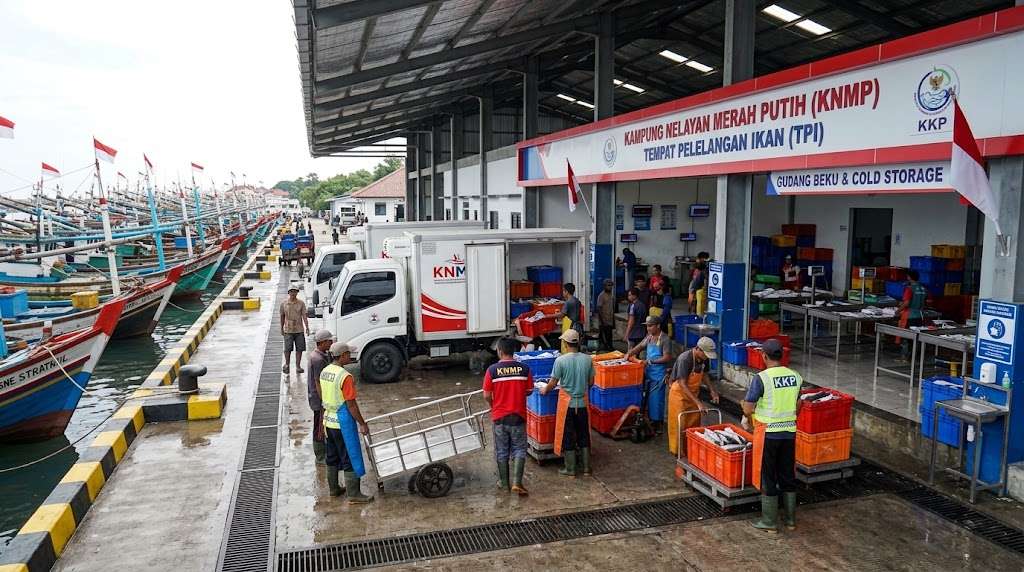
The backbone of this export economy consists of 1,162 certified entities that ensure supply chain integrity. These units are the operational bridge between Indonesian waters and the global consumer:
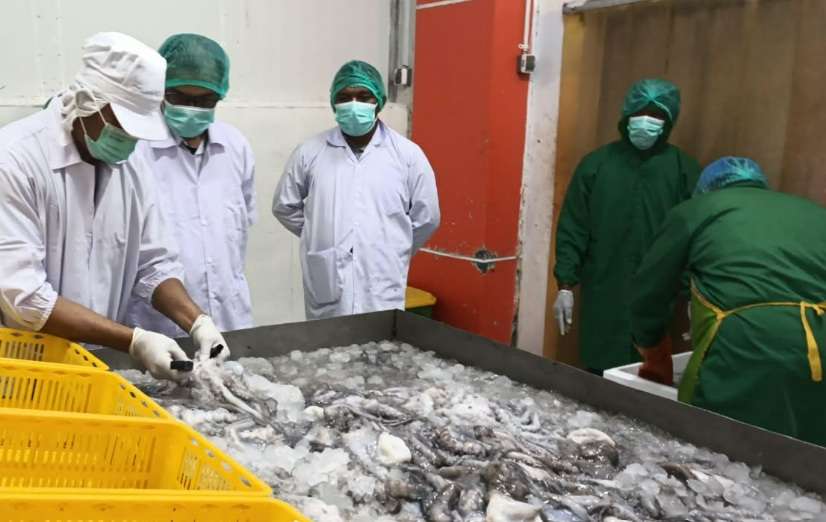
- 900 Processing Units (UPI): These are the industrial “downstream” hubs where raw harvests are transformed into export-ready products through freezing, canning, or extraction.
- 229 Live Fish Export Units: Specialized facilities equipped to manage the high-stakes logistics of transporting live aquatic species across borders.
- 33 Seed Production Units: The vital “upstream” starting point, ensuring the sustainability and quality of aquaculture stocks like shrimp and fish seeds.
While these figures represent industrial capacity, the ultimate success of this infrastructure is measured by its ability to generate local employment and regional prosperity.
National data tells the story of macro success, but regional data reveals the human impact. In provinces like North Sumatra and South Sulawesi, the fishery sector acts as a primary engine for job creation and community stability.
North Sumatra recorded Rp115.5 billion in fisheries export value during Semester I 2026, supported by a diverse range of products including shrimp paste, frozen octopus, krill, frozen eel, and black tiger shrimp.
These products reached key international markets such as Malaysia, China, Thailand, Egypt, and Vietnam, demonstrating the region’s growing participation in regional and global seafood trade.
In South Sulawesi, the fisheries export sector generated significant employment and supported thousands of local livelihoods through sustained international demand.
From January to August 2026, 144 local export units created 8,389 jobs and handled 8,540 shipments to 46 countries, reflecting the high frequency and broad reach of the province’s fisheries trade while strengthening economic opportunities across local production and supply chains.
These regional achievements are only possible because the Ministry of Marine Affairs and Fisheries (KKP) maintains a rigorous quality assurance engine that keeps global markets open.
The Quality Assurance Engine (BPPMHKP)
The Badan Pengendalian dan Pengawasan Mutu Hasil Kelautan dan Perikanan (BPPMHKP) manages 46 Technical Implementation Units (UPT) across the archipelago. Their mission is to maintain “Quality Assurance” (QA) across the entire value chain.
- Upstream (Hulu): Certification begins at the source, ensuring that seeds and raw harvests meet health and safety standards.
- Downstream (Hilir): Monitoring continues through processing and packaging, ensuring the final product is compliant with international regulations.
- Accessibility: To encourage participation from Small and Medium Enterprises (UMKMs), the KKP provides these certification services free of charge through a streamlined online system.
Learner’s Insight: Why is certification the most important link in the chain? Think of “Certification” as a golden passport. Without it, a local fisherman’s catch—no matter how high the quality—is legally barred from entering markets like Norway or the USA. Certification proves the product is safe, sustainable, and legally caught, serving as the essential bridge between a local boat and a global dinner plate.
The Fisheries Sector as an Economic Pillar
Indonesia’s performance in 2026 confirms that the fisheries sector is a critical pillar of sustainable development. For a new learner, three takeaways are essential:
- Global Leadership through Quality: By prioritizing international standards from hulu to hilir, Indonesia maintains an expansive market reach of 152 nations.
- Economic Resilience through Value-Addition: Transitioning from raw commodities to value-added products like carrageenan helps the nation mitigate market volatility and increase profit margins.
- Trade as a Tool for Local Welfare: The “Blue Engine” is not just about billions in USD; it is about the 8,389 families in South Sulawesi and thousands more nationwide whose livelihoods depend on the health of the export market.
Source:KKP