
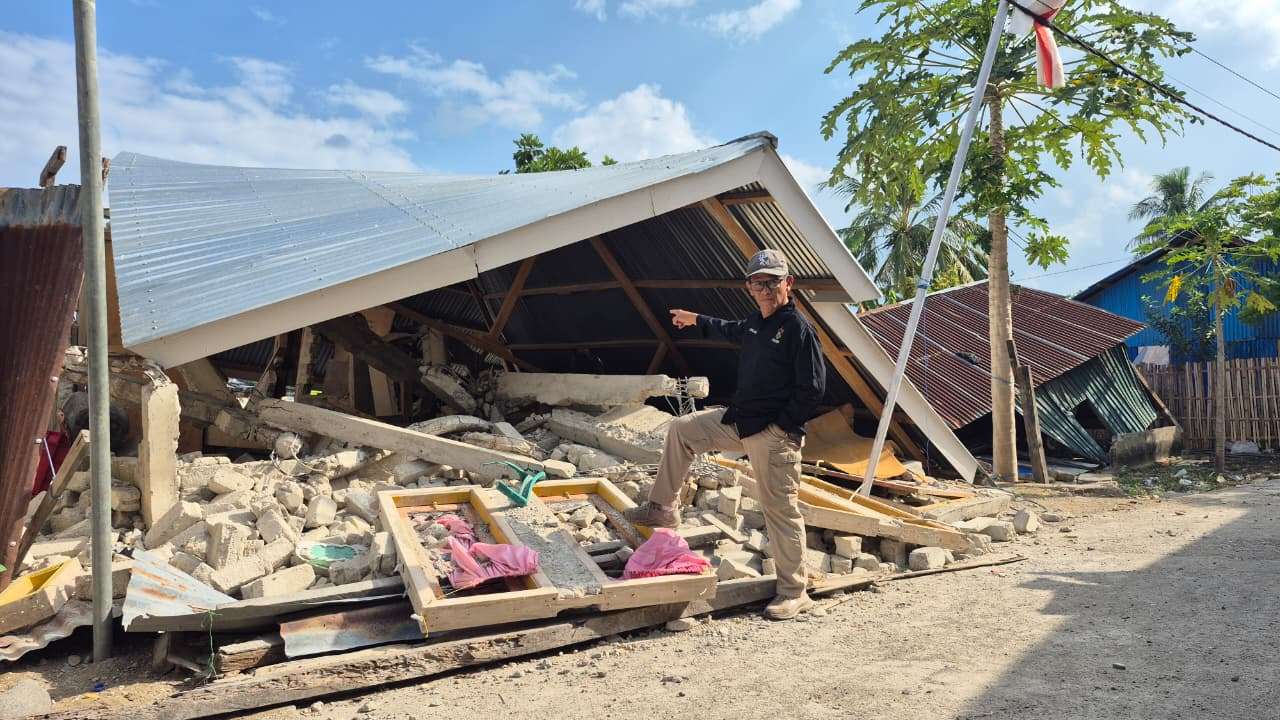
Severe damage was reported at a two-story house in North Lamba Leda District, East Manggarai Regency, East Nusa Tenggara (NTT), with the first floor sustaining extensive damage and partially collapsing, highlighting the powerful impact of the earthquake on the building’s structure. Photo: Ilham Alimuddin/Unhas Disaster Response Team. Location: North Lamba Leda District, East Manggarai Regency, NTT — August 20, 2026.
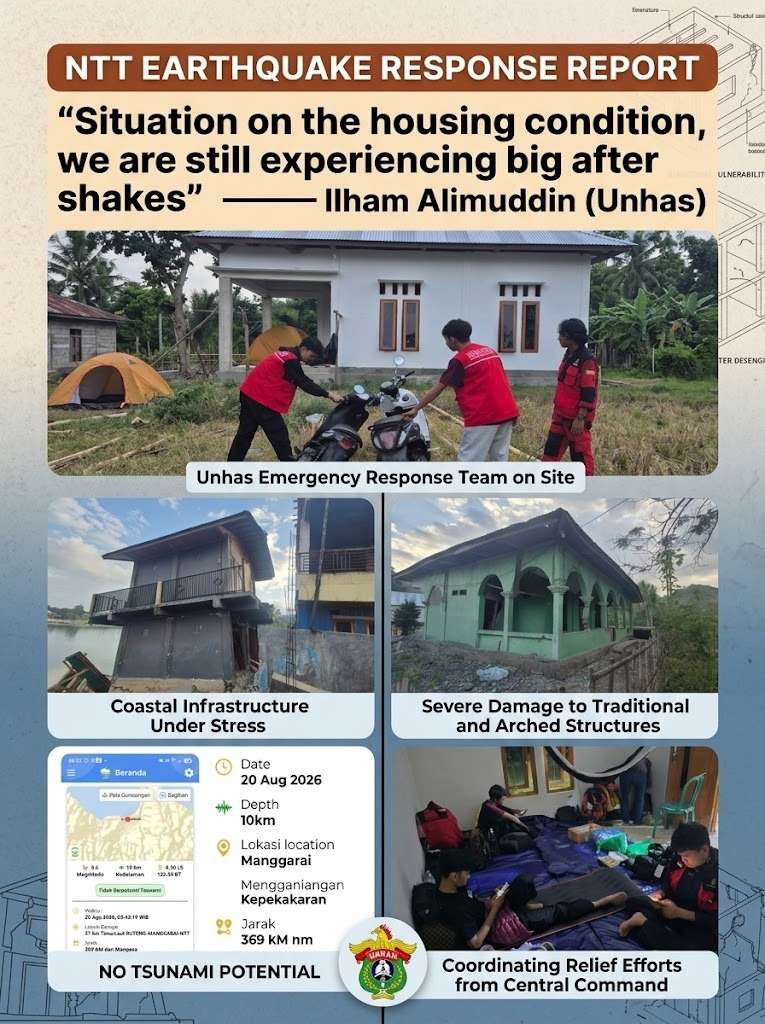
MARITIMEPOSTS.COM — The Universitas Hasanuddin (Unhas) disaster response team arrived in East Nusa Tenggara (NTT) on August 19, 2026, to monitor and conduct field assessments of communities and infrastructure affected by the earthquake.
Ilham Alimuddin, Head of the Unhas Disaster Management Center, who is also on the ground, reported that residents remain highly alert as aftershocks continue to be felt.
“Situation on the housing condition, we are still experiencing big aftershakes,” Ilham said in his field report.
According to Ilham, the continuing aftershocks are among the main concerns, as residents remain reluctant to return to their homes, particularly buildings that have already sustained cracks or structural damage.
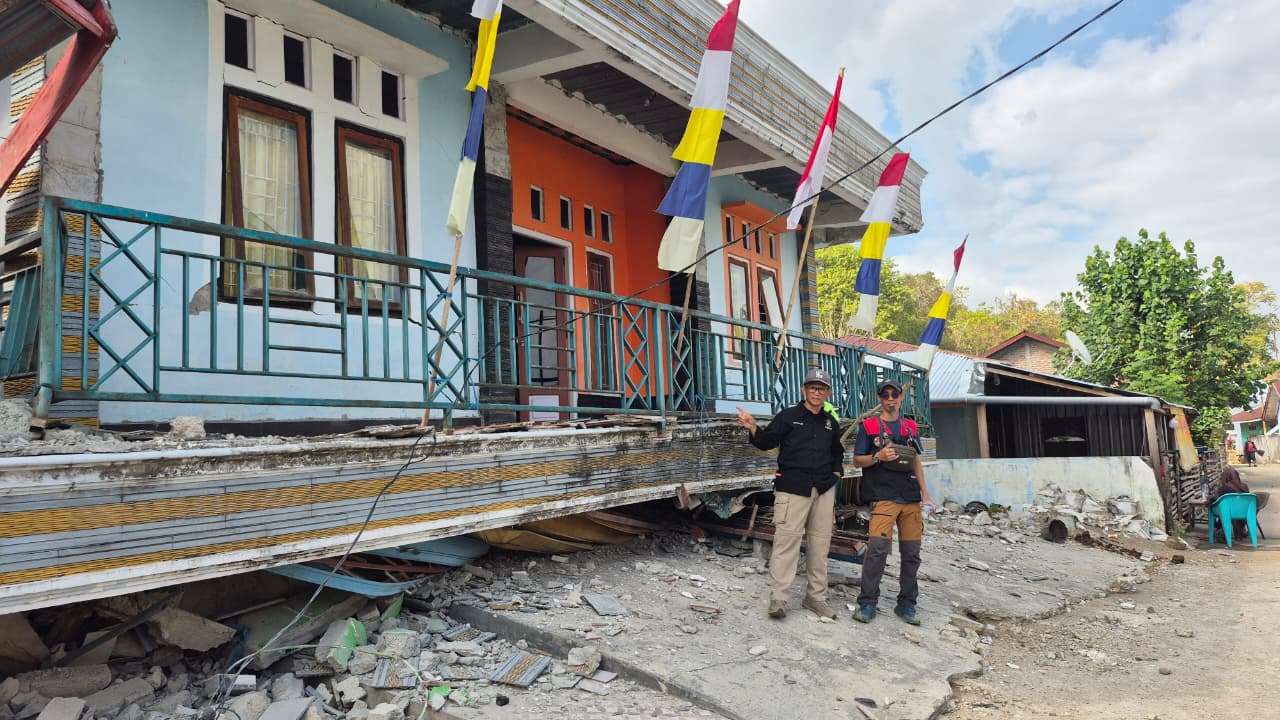
Building Damage Reported at Several Locations
Initial observations by the Unhas team indicate damage to a number of residential buildings and public facilities. Some buildings have sustained wall cracks, damage to structural elements, and displacement of building components.
Multi-story buildings and masonry structures have also shown signs of structural stress. At several locations, damage is visible in load-bearing walls, columns and other structural elements.
The team also found damage to community facilities and places of worship. Cracks in walls and structural components are a concern because the buildings could still pose safety risks if they are used again before undergoing technical inspections.
In residential areas, damage to houses varies in severity. Some homes have sustained minor to moderate cracks, while others show more serious damage and require further assessment before they can be declared safe for occupancy.
Residents Remain Outside Their Homes
The continuing aftershocks have prompted some residents to stay outside their homes or seek temporary shelter. This has created additional challenges as demand for tents, tarpaulins, bedding and other basic necessities increases.
According to Ilham’s field report, building safety has become an urgent priority. Initial visual inspections need to be followed by technical assessments to determine which buildings remain safe for occupation and which must be evacuated.
The situation also underscores the importance of continued monitoring. Following the main earthquake, structures that have already been weakened may sustain additional damage from subsequent tremors.
Unhas Strengthens Field Assessment and Emergency Response
The presence of the Unhas team in NTT is aimed not only at assessing the physical impact of the earthquake but also at understanding the needs of communities in affected areas.
The team is monitoring residential conditions, identifying damage and gathering information about residents’ needs. These field data are important for supporting disaster response coordination with local governments and disaster management agencies.
Ilham emphasized the importance of caution among residents as they deal with the post-earthquake situation, particularly while aftershocks continue.
Under such circumstances, residents are advised not to rush back into damaged buildings until their structural safety has been confirmed.
Urgent Needs
In addition to building assessments, urgent needs in the affected areas include temporary shelters, bedding, clean water and logistical support for residents who have been forced to leave their homes.
The Unhas team also identified the need for strong field communication so that information about conditions, community needs and developments can be quickly conveyed to agencies involved in the emergency response.
For Ilham and the Unhas team, field reporting is essential to ensure that disaster response goes beyond simply documenting damage and moves toward mapping community needs and protecting residents’ safety.
As aftershocks continue to be felt, monitoring the condition of buildings and affected communities remains a priority. The Unhas team continues its field assessments while coordinating with local stakeholders to support emergency response efforts in NTT.