
MARITIMEPOSTS.COM – Makassar is growing rapidly. New infrastructure, expanding business districts, and rising economic indicators all point to a city on the move. Yet behind these achievements lies a challenge shared by many developing cities: how to ensure that economic growth translates into better lives for all citizens.
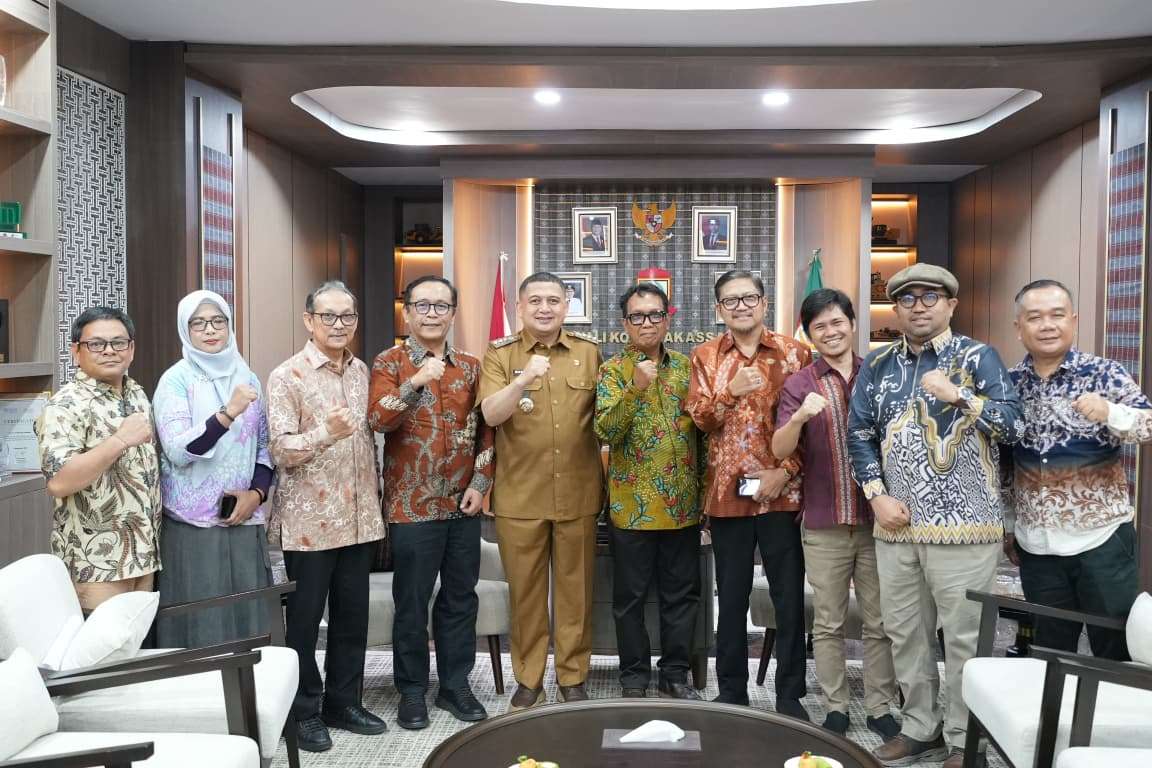
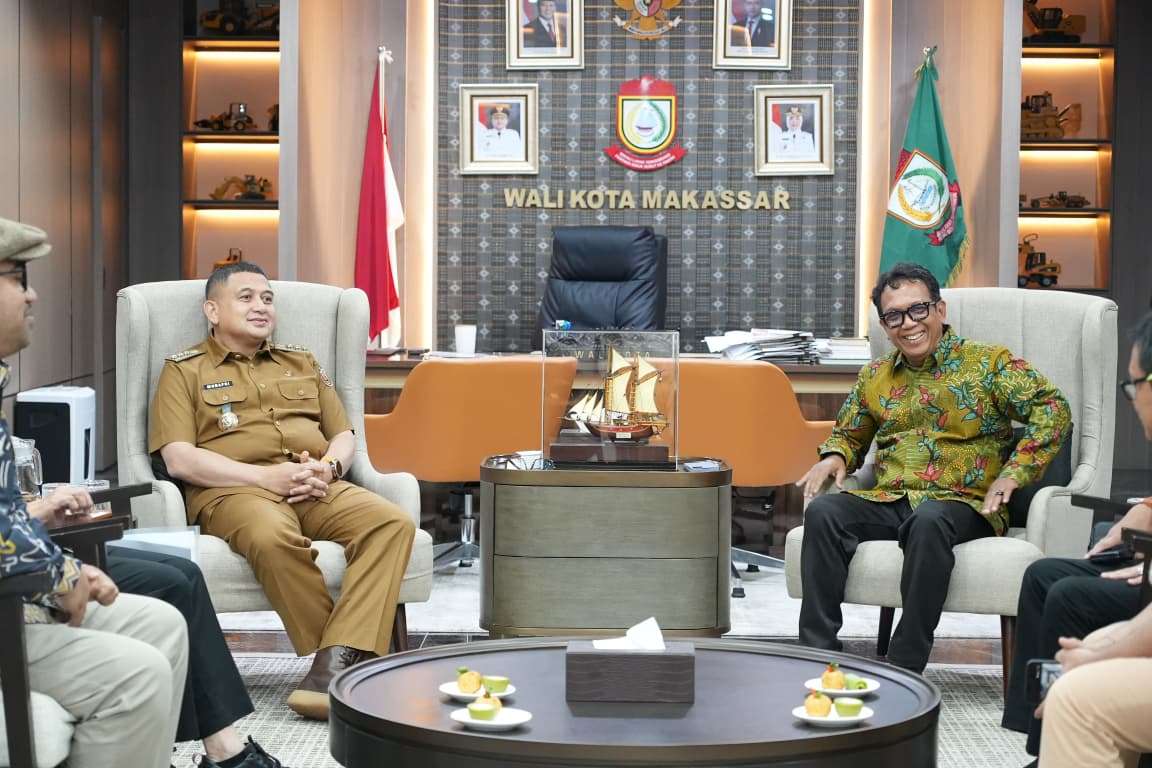
This issue was at the center of a discussion between Makassar Mayor Munafri Arifuddin and the Center for Information Development Studies (CIDES) ICMI, led by Prof. Abd. Hamid Paddu, at Makassar City Hall on August 18, 2026.
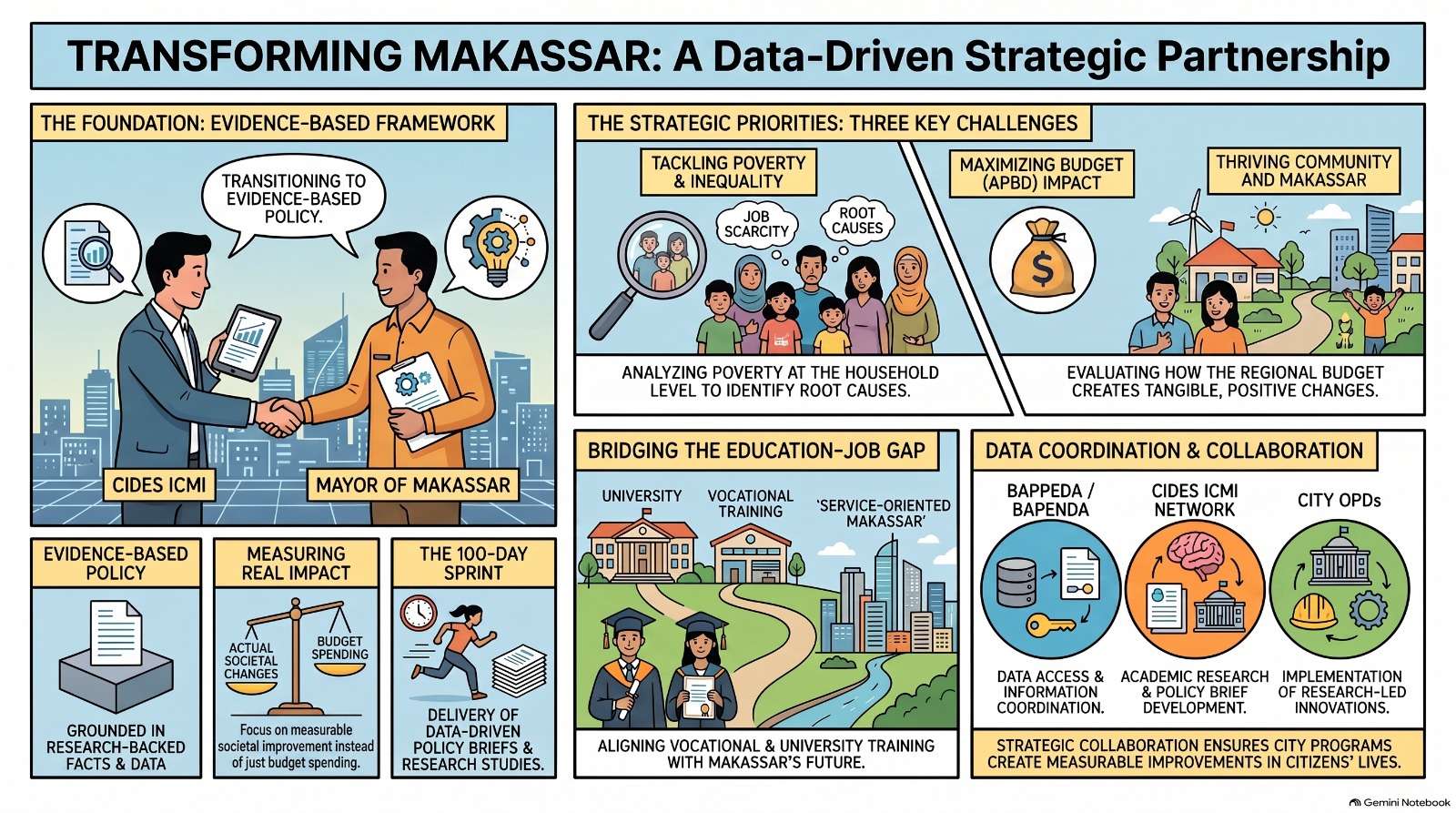
The meeting highlighted the importance of strengthening collaboration between government, academics, and civil society to ensure that development policies are guided by evidence and produce real benefits for the community.
One of the key messages emerging from the discussion was that economic growth alone is not enough. While Makassar’s economy continues to expand, policymakers must pay closer attention to how the benefits of growth are distributed.
Understanding conditions at the household level can help the government identify the specific factors that keep families trapped in poverty and design more targeted interventions.
The meeting also emphasized the need to shift the focus of public spending from budget absorption to public impact.
Success should not be measured solely by how much money is spent, but by how effectively government programs improve livelihoods, create opportunities, and strengthen social welfare.
In this perspective, the regional budget becomes a tool for social transformation rather than merely a financial instrument.
Another important topic was the future of Makassar’s workforce. As a city driven largely by the service sector, Makassar requires human resources equipped with skills that match the needs of a modern economy.
Strengthening links between education, training institutions, and labor market demand will be essential to ensure that young people are prepared for emerging opportunities in the years ahead.
Participants also highlighted the importance of social readiness in every development program. Technical solutions alone are often insufficient if communities are not involved in the planning and implementation process.
Whether addressing waste management, urban agriculture, public infrastructure, or economic empowerment, successful policies require public participation, trust, and a strong understanding of local social dynamics.
To support these goals, CIDES ICMI will contribute research and policy recommendations focused on poverty reduction, budget effectiveness, and workforce development.
The collaboration is expected to provide evidence-based insights that can strengthen decision-making and help the city achieve more inclusive and sustainable growth.
The discussion reflected a shared commitment to ensuring that Makassar’s development is measured not only by economic statistics but also by meaningful improvements in the lives of its people.
As the city continues to evolve, the partnership between government, researchers, and community stakeholders offers an important pathway toward a more equitable and resilient future.
Here are the four most impactful strategic lessons from this new blueprint for Makassar’s future.
1. Growth is Meaningless if it’s Asymmetris
One of the most profound realizations from the CIDES briefing is that aggregate economic growth can often act as a veil, hiding deep-seated “timpang” (structural inequality). While the city’s GDP may climb, the benefits are frequently lopsided.
To bridge this gap, CIDES is advocating for a transition from “aggregate data” to micro-level household analysis. This isn’t just about collecting more data; it’s about shifting the unit of analysis.
By looking at the household level, the city can diagnose the specific “poverty triggers” for different families—whether it is a lack of liquid income or a systemic lack of access to the labor market.
As Prof. Hamid emphasized: “Economy grows, but it is lopsided. This is what we want to study and present the facts to the Mayor… so that poverty reduction policies can be more specific and on target.”
2. From Outlays to Outcomes: Redefining Fiscal Success
In traditional bureaucracy, the success of the Regional Budget (APBD) is often measured by its total volume or the speed of its absorption. The new strategic blueprint rejects this technical metric. Instead, it proposes a shift toward impact-based evaluation.
The strategist’s perspective is clear: the size of the spend is a secondary metric. The primary metric is the tangible change produced in the community’s standard of living.
This transforms the budget from a fiscal accounting tool into a social impact instrument. This shift increases public accountability by forcing departments to justify spending not by what they bought, but by what they improved.
“The issue with the APBD is not how much money there is, but how much impact the APBD we have has on the community.”
3. Strategic Human Capital Alignment in the “Service City”
Makassar’s identity is firmly rooted as a “Service City” (Kota Jasa). However, there is currently a significant strategic misalignment of human capital.
High school and university graduates are entering the market with competencies that do not match the needs of a modern service-oriented economy, which requires specific soft skills, digital literacy, and hospitality expertise.
To solve this, the blueprint moves beyond traditional educational metrics (like graduation rates) and focuses on future-proofing the workforce.
The plan involves projecting labor market demands 2–3 years into the future. By forecasting the specific needs of the service sector, the government can facilitate a curriculum alignment that ensures Makassar’s youth are prepared for the jobs that will exist, rather than the jobs that used to exist.
4. Social Design: The Antidote to Technocratic Failure
Perhaps the most sophisticated takeaway is the concept of “Social Design.” Dr. A. Luhur Prianto, Dean of FISIPOL Unismuh, noted that even the most technically perfect policies often fail because they lack social preparation and community acceptance.
This is the “technocratic trap”—policies that look good on a spreadsheet but fail on the street.
Whether the city is implementing urban farming, waste management systems, or new stadium construction, the program must be socially viable before it is technically executed.
CIDES provides a unique “feedback loop” for the government through its diverse network of academics, journalists, and activists.
This multi-perspective approach ensures that every policy brief includes a strategy for social preparation, ensuring that the community isn’t just a recipient of policy, but a participant in it.
Conclusion: The 100-Day Sprint to Results
The roadmap for this strategic pivot is not a multi-year academic study but a high-velocity 100-day sprint. CIDES has committed to producing targeted policy briefs within this window, focusing on the core issues of poverty, budget impact, and labor alignment.
To ensure momentum, Bappeda (Regional Development Planning Agency) and Bapenda (Regional Tax Agency) will serve as the primary data focal points for these researchers.
___
Written by Kamaruddin Azis