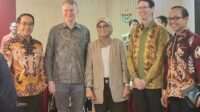


Born on November 4, 1966, William Sabandar began his academic journey at Hasanuddin University, where he earned a bachelor’s degree in Civil Engineering. He later pursued a Master of Engineering Science in Transportation at the University of New South Wales, Australia, followed by a Ph.D. in Geography from the University of Canterbury, New Zealand.
MARITIMEPOSTS.COM – In the volatile landscape of 21st-century governance, the most significant barrier to progress is rarely a lack of technical expertise; it is the inability to drive systemic change across disconnected silos.
While many can execute a project blueprint, true transformational leadership requires a “social architect”—someone capable of navigating the high-stakes intersection of science, public policy, and global diplomacy to solve the era’s most pressing crises.
Dr. William P. Sabandar, M.Eng.Sc., stands as a premier example of this “bridge-building” archetype. A civil engineer by training and a distinguished alumnus of Universitas Hasanuddin (Unhas), Sabandar has systematically dismantled the traditional wall between technical engineering and visionary social leadership.
Today, as a key member of the Advisory Team for HADIN Metavisi Akademika—the business holding of Unhas—his career offers a masterclass in how professional competence can be leveraged for profound national and international impact.
Engineering Hope in the Wake of Disaster
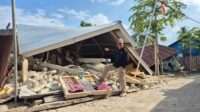
The true test of a leader is not found in the stability of a boardroom, but in the ruins of a crisis. Following the 2004 Tsunami, Sabandar was tasked with leading the reconstruction of the Nias Islands through the Aceh–Nias Rehabilitation and Reconstruction Agency (BRR). Here, his background in Civil Engineering was merely the entry fee; the real work was the restoration of a community’s soul.
While he possessed the technical vocabulary to rebuild roads and bridges, Sabandar recognized that infrastructure serves as the vessel for something far more critical: human dignity.
His leadership in Nias was defined by “operationalizing hope,” proving that reconstruction is successful only when it restores the social fabric along with the physical foundations.
Born on November 4, 1966, William Sabandar began his academic journey at Hasanuddin University, where he earned a bachelor’s degree in Civil Engineering. He later pursued a Master of Engineering Science in Transportation at the University of New South Wales, Australia, followed by a Ph.D. in Geography from the University of Canterbury, New Zealand.
His academic path not only shaped his technical expertise but also provided the intellectual foundation for a remarkable career spanning disaster reconstruction, sustainable development, climate governance, energy transition, and transformative urban mobility.
Strategic Insight: A leader’s academic foundation must serve as a launchpad for cross-sectoral agility, enabling them to translate technical rigor into strategic impact across diverse social landscapes.
The Diplomat of Reconstruction: Breaking ASEAN’s Deadlock
Sabandar’s appointment as the Special Envoy of the Secretary-General of ASEAN for the Cyclone Nargis recovery in Myanmar marked a pivotal shift from engineer to international diplomat. In this role, he encountered a “structural bottleneck” far more complex than any physical obstruction: a sensitive and deadlocked political environment.
He approached this diplomatic stalemate with an engineering mindset, identifying the leverage points where inclusive leadership could open humanitarian corridors.
By building unprecedented mechanisms for ASEAN’s involvement in humanitarian crises, he demonstrated that transparency and trust-building are the ultimate tools for solving political gridlock.
This period of his career, followed by high-level governance roles in the Presidential Work Unit (UKP4) and the Ministry of Energy and Mineral Resources, established his reputation as a leader who could manage change in the sectors that define a nation’s future.
More Than Just Trains: Redefining the Urban Paradigm
When Sabandar assumed the role of President Director of PT MRT Jakarta in 2016, he faced a project widely viewed through the narrow lens of “beton dan baja” (concrete and steel). He responded by pivoting the organizational North Star: shifting the mission from merely moving vehicles to moving a civilization.
By championing Transit-Oriented Development (TOD) and multi-modal integration, Sabandar transformed the culture of urban mobility in Indonesia. He moved the organization from a “project-based” mindset to a “service-based” mindset, proving that the success of a public utility is measured by public trust and behavioral change, not just mileage.
This transformation was anchored in three strategic pillars: Infrastructure Excellence: Delivering a world-class, reliable physical system. Public Trust Restoration: Engineering a new culture of service that shifted how millions of citizens interact with their city and Professional Governance: Maintaining institutional integrity and innovation even during the unprecedented disruption of the COVID-19 pandemic.
The “5P” Vision: Scaling Impact through Global Ecosystems
As the current Chief Operating Officer (COO) of the Indonesian Business Council (IBC) and Chairman of the Global 5P Movement in Indonesia, Sabandar has scaled his impact from physical construction to the architecture of global sustainability. His work now focuses on bridging the gap between private sector power and the public interest.
This evolution is codified in the 5P framework, which he uses to align economic growth with environmental and social imperatives: Peace, Prosperity, People, Planet (Leveraging his deep expertise from the REDD+ Agency and the World Resources Institute to drive climate action). Partnership (The “social engineering” of cross-sectoral synergy).
His leadership of ITS Indonesia and his advisory roles in climate dialogue further underscore his role as a curator of sustainable ecosystems, moving beyond building things to building the future itself.
The Modern Engineer is a Collaborator, Not Just a Specialist
To the HADIN Unhas community and the next generation of professionals, Sabandar’s journey serves as a clarion call: technical proficiency is the floor, not the ceiling. He posits that an engineer’s ultimate value is found in their ability to read social problems and lead cross-sectoral collaborations.
In an era of hyper-specialization, Sabandar argues that the leaders who change the world are those who have the courage to take responsibility for large-scale national problems. They must view themselves as connectors of disparate interests and builders of the most essential infrastructure of all: trust.
“Kepemimpinan modern bukan lagi soal kekuasaan, melainkan kemampuan membangun kepercayaan, menghubungkan berbagai kepentingan, dan memastikan pembangunan memberikan dampak yang berkelanjutan.”
Strategic Insight: Leadership is no longer defined by the exercise of power, but by the ability to orchestrate trust and deliver sustainable, cross-sectoral benefits to the public.
The Measure of a Leader
The recent accolades bestowed upon Dr. William Sabandar—including being named the Australian Alumni of the Year 2025 and receiving the Satyalancana Wira Karya from the President of Indonesia—are more than just personal milestones. They are validations of a leadership philosophy that prioritizes systemic impact over individual title.
As he returns to his roots as an advisor for HADIN Metavisi Akademika, Sabandar’s journey comes full circle, reminding the Unhas community that the “Kampus Merah” is a factory for world-class change agents.
His legacy teaches us that professional success is not measured by the height of one’s position, but by the depth of the transformation one brings to the lives of others. The question for every modern professional is no longer “What can I build?” but “How many lives will my work transform?”