
Lessons from PAIR Annual Meeting at Unhas on AI, Climate-Smart Seaweed Farming, and the Future of Indonesia’s Blue Economy
___
MARITIMEPOSTS.COM – Indonesia has long been recognized as one of the world’s leading seaweed producers, yet its greatest opportunities remain largely beneath the surface.
With more than one million hectares of suitable waters for seaweed cultivation, only around 20 percent of this vast marine resource has been developed. At the same time, national production is approaching a biological plateau, making traditional expansion strategies increasingly ineffective.
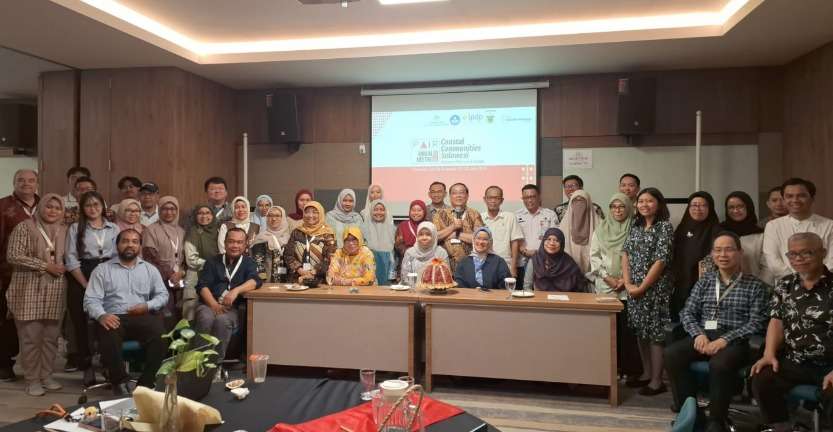
These challenges—and the opportunities they present—were at the heart of discussions during the PAIR (Partnership for Australia–Indonesia Research) Annual Meeting 2026 in Makassar. Researchers, policymakers, industry leaders, and development practitioners agreed that the future of Indonesia’s blue economy will depend not on cultivating more ocean space, but on cultivating smarter through science, technology, and stronger governance.
From “Weed” to Superfood: The Remarkable Rise of Ulva
For decades, Ulva, the bright green seaweed commonly found along Indonesia’s coastlines, has been regarded as little more than a nuisance. Its rapid growth often interferes with conventional seaweed farming, leading many coastal communities to remove and discard it.
However, research presented during the PAIR Annual Meeting 2026 challenges this long-held perception. Scientists now recognize Ulva as a promising high-value commodity with enormous commercial potential. Rich in protein—second only to Porphyra, the seaweed used to produce nori—it offers exciting opportunities for the expanding global market for plant-based foods.
Its potential extends well beyond nutrition. Researchers are exploring Ulva as a biodegradable food-packaging material capable of preserving the freshness of fruits and vegetables while reducing dependence on single-use plastics.
“The Ulva found at the research sites has been considered a weed and hasn’t been utilized at all. This is actually a huge opportunity if it can be processed into food products or other products with economic value,” said Zulung, a researcher from JASUDA.
Seaweed “Submarines”: Engineering Resilience Against Climate Change
Extreme weather events have become one of the greatest threats facing seaweed farmers. Powerful waves and storms regularly destroy floating cultivation systems, resulting in significant economic losses for coastal communities.
To address this challenge, researchers from the University of Queensland have introduced an innovative semi-submersible cultivation raft designed to protect crops beneath the ocean’s turbulent surface.
The concept is straightforward but highly effective. When storms approach, the raft can be lowered several meters below the water using a combination of buoyancy systems, guide rollers, and counterweights. By moving the seaweed away from the high-energy surface zone, the plants remain protected from destructive wave action.
The technology continues to evolve. Engineers are refining the original square platform into an octagonal design that distributes structural loads more evenly while improving stability under changing ocean conditions.
“We are developing a new, sustainable, cost-effective, safe, and very resilient seaweed cultivation infrastructure to support and improve the livelihoods of seaweed farmers in Sulawesi,” explained Prof. Wang from the University of Queensland.
Smart Aquaculture: Increasing Production Without Expanding the Ocean
One of the most significant findings presented at the conference challenges a common assumption—that increasing production requires expanding cultivation areas.
According to Prof. Nurjannah Nurdin and her Smart Technology and Automation research team, productivity gains can instead be achieved through better cultivation techniques supported by artificial intelligence and geospatial analysis.
Using more than 7,700 drone images combined with ten years of environmental data, researchers developed predictive models capable of identifying the most suitable cultivation conditions.
Perhaps the most practical discovery concerns cultivation methods. The double-line system consistently outperformed the traditional single-line system, increasing production by approximately 60–70 percent without requiring additional farming space.
Artificial intelligence, GIS mapping, and historical environmental datasets are now being integrated into a government decision-support dashboard that can assist policymakers in determining planting schedules, identifying suitable cultivation sites, monitoring environmental conditions, and allocating government support more effectively.
“Integrating water conditions, crop health, market information, and waste management provides a comprehensive understanding of seaweed farming systems while supporting evidence-based recommendations,” Prof. Nurjannah Nurdin explained.
Biological Fatigue: The Hidden Crisis Beneath the Surface
While digital innovation and engineering continue to advance, scientists warn that Indonesia’s greatest challenge may lie within the biology of the crop itself.
Prof. Nita Rukminasari described the phenomenon of biological fatigue, caused by decades of repeated vegetative propagation. Continuously cloning the same genetic material has gradually weakened the resilience of cultivated seaweed, making it increasingly vulnerable to diseases such as ice-ice and to environmental stress associated with climate change.
The findings also demonstrate that there is no universal solution for seed production. Tissue-culture seedlings, for example, have performed well in some regions but failed to adapt successfully in others, including parts of West Sulawesi, where local oceanographic conditions differ significantly.
Researchers therefore advocate establishing a National Seed Center supported by regional seed banks to preserve genetic diversity, improve seed quality, ensure traceability, and develop locally adapted varieties capable of thriving under different environmental conditions.
Why Precision Marine Spatial Planning Matters
Technology alone cannot transform Indonesia’s seaweed industry without clear governance of marine space.
The Head of the South Sulawesi Marine Affairs and Fisheries Office emphasized that existing marine spatial planning remains too general to accommodate increasingly diverse coastal activities. Current zoning regulations identify broad aquaculture areas but do not distinguish between specific commodities such as seaweed, floating net cages, lobster farming, tourism, or conservation.
This lack of detail has already generated conflicts. In Jeneponto Regency, for instance, seaweed cultivation areas have overlapped with tourism development, illustrating the consequences of insufficient spatial precision.
Another challenge lies in mapping accuracy. Existing marine spatial plans combine maps produced at different scales—1:250,000 and 1:50,000—making precise site planning difficult.
Future revisions of South Sulawesi’s Regional Spatial Plan (RTRWP), building upon Regional Regulation No. 3 of 2022, are expected to introduce much more detailed zoning that provides legal certainty for investors while reducing conflicts among competing marine users.
The Leadership Challenge
Despite remarkable technological advances, conference participants agreed that the greatest obstacle to transformation remains institutional rather than technical.
Prof. Mochammad Chalid argued that successful reform begins with establishing a common understanding of the industry’s most pressing problems among governments, researchers, businesses, and coastal communities.
Indonesia’s governance landscape remains fragmented. Local governments often navigate competing ministerial directives while facing limited fiscal resources. As a result, circular economy initiatives frequently receive lower priority than other development sectors.
Participants emphasized that technological innovation must be accompanied by inclusive governance and circular business models. Waste generated throughout the seaweed value chain—including plastics used in cultivation—should be viewed as a resource that can be recycled into high-value products such as geotextiles or industrial fillers.
Equally important, the transition toward a circular economy should create opportunities for traditionally marginalized groups, including coastal waste collectors, ensuring that environmental sustainability also generates social and economic inclusion.
Building the Next Generation of Indonesia’s Blue Economy
The PAIR Annual Meeting 2026 demonstrated that Indonesia’s seaweed industry is entering a new era—one defined not by expansion alone, but by innovation, resilience, and collaboration.
Artificial intelligence is helping farmers make smarter decisions. Semi-submersible cultivation systems are improving climate resilience. Advanced breeding strategies promise healthier and more productive seaweed varieties. Precision marine spatial planning is creating greater certainty for investment, while circular economy principles are expanding opportunities throughout the value chain.
Taken together, these innovations point toward a future where Indonesia’s oceans are no longer viewed simply as sources of raw materials, but as dynamic ecosystems capable of supporting sustainable economic growth, scientific innovation, and resilient coastal livelihoods.
The challenge now is not whether these technologies exist—they do. The real question is whether Indonesia can build the collaborative leadership, policy coherence, and long-term commitment necessary to transform this vision into reality.
If published together with coverage of the PAIR Annual Meeting 2026, this version reads as a magazine-style feature rather than a conference report, making it suitable for international readers while maintaining the substance of the discussions.