
Recently, South Sulawesi reaffirmed its position on the global fisheries trade map by exporting 18,900 kilograms (18.9 metric tons) of Frozen Vannamei Shrimp to Japan. Yet the strategic significance of this shipment lies not merely in its volume, but in the logistical standards that made it possible.
MARITIMEPOSTS.COM – The journey of vannamei shrimp from the coastal ponds of South Sulawesi to dining tables in Tokyo is far more than a routine export activity. It is a sophisticated cross-border logistics operation that demands exceptional precision.
Behind every premium seafood dish enjoyed by Japanese consumers stands a rigorous system of health, quality, and traceability standards that requires strict compliance with international protocols.
Entering the Japanese market—widely regarded as one of the most demanding food safety markets in the world—requires a combination of dedicated shrimp farmers, efficient supply chains, and vigilant quarantine authorities.
Recently, South Sulawesi once again strengthened its presence in international fisheries trade by exporting 18.9 tons of frozen vannamei shrimp to the Land of the Rising Sun.
The significance of this export extends well beyond its weight. Equally important is the level of logistical standardization behind the shipment.
The cargo was carefully packed into 1,750 master cartons (MC), a figure that reflects a mature and highly organized packaging system.
From a business journalism perspective, the use of 1,750 master cartons demonstrates a level of packaging standardization that enables optimal utilization of refrigerated container space.
Such standardization is not merely about neat packaging; it plays a crucial role in reducing logistics costs while ensuring the physical safety of the product throughout a lengthy ocean voyage.
Zero-Tolerance Protocols: The Cold Chain at the Heart of Seafood Logistics
In the frozen food industry, supply chain integrity depends entirely on an uninterrupted cold chain system. This is a protocol with no room for compromise.
During the loading process into refrigerated containers, every second matters in maintaining thermal stability.
Consistent temperature control is not only necessary to keep the shrimp frozen. It is also essential to prevent autolysis—the breakdown of cellular structures—which can significantly affect texture, taste, and overall product quality.
Maintaining thermal stability from storage facilities to the hands of overseas buyers is therefore a non-negotiable requirement.
Speaking about the importance of these procedures, Sitti Chadidjah, Head of the South Sulawesi Center for Animal, Fish, and Plant Quarantine, emphasized the strategic role of quarantine services in supporting exports.
“Safeguarding export gateways means ensuring that every commodity shipped abroad complies with quarantine regulations and the requirements of the destination country. For markets such as Japan, which enforce stringent standards, every stage of the process must be conducted in accordance with established regulations,” she said, as quoted by Rakyat Sulsel on August 21, 2026.
Japan is globally recognized for its uncompromising approach to food safety and traceability.
In this context, the South Sulawesi Center for Animal, Fish, and Plant Quarantine serves as the frontline institution protecting Indonesia’s reputation in international markets.
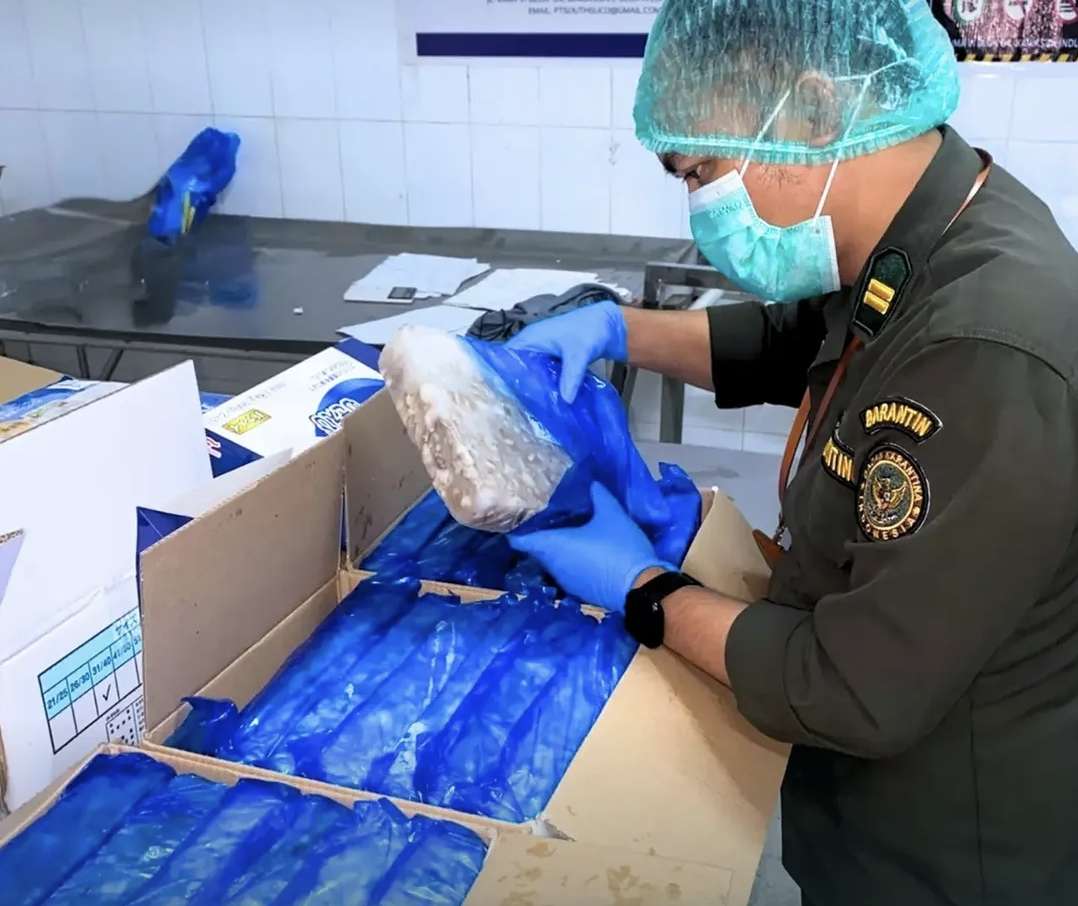
The verification process conducted by quarantine officers involves comprehensive technical audits, including physical inspections of products, packaging supervision, and meticulous document verification.
These procedures ensure that every shipment of vannamei shrimp leaving Makassar carries a clear and reliable health record.
Compliance with international standards should no longer be viewed as a regulatory burden. Instead, it has become a strategic instrument for strengthening the competitiveness of Indonesian seafood products in the global marketplace.
The final stage that confirms the cargo’s readiness for export is the official sealing of the container by quarantine authorities.
This seal is more than a locking mechanism. It represents the integrity of the shipment, guaranteeing that the cargo remains intact and free from interference from the moment of inspection until arrival at its destination port.
The sealing process provides both legal certainty and quality assurance for Japanese trading partners, ensuring that the products they receive are identical to those certified in Indonesia.
As Sitti Chadidjah further emphasized:
“Compliance with quarantine requirements is the key. Quarantine services are here to ensure that exported commodities meet all applicable standards so that our products are well received and increasingly competitive in global markets.”
A Blueprint for Indonesia’s Export Future
The successful shipment of 18.9 tons of vannamei shrimp sends an encouraging signal about the future of South Sulawesi’s fisheries sector.
With consistent oversight, strict standardization, and unwavering quality control, access to global markets will remain wide open, further strengthening Indonesia’s position in the international protein trade.
The commitment to quality demonstrated through this export to Japan should become a defining characteristic of Indonesian exports.
The same discipline in cold-chain management, traceability, and regulatory compliance that enabled South Sulawesi’s shrimp to reach dining tables in Tokyo can serve as a national blueprint for other export commodities.
If replicated across sectors, this model has the potential not only to expand market access but also to elevate Indonesia’s standing as a trusted supplier in the global marketplace.
Editorial Desk – MaritimePosts.com