
MARITIMEPOSTS.COM — Konservasi Indonesia Calls for Jurisdictional Approach to Sustainable Shrimp Aquaculture Governance in Indonesia
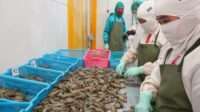
The conservation organization Konservasi Indonesia is calling for stronger governance of sustainable shrimp aquaculture through a jurisdictional approach that integrates production interests, ecosystem protection, community empowerment, and local and national government policies.
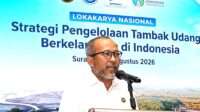
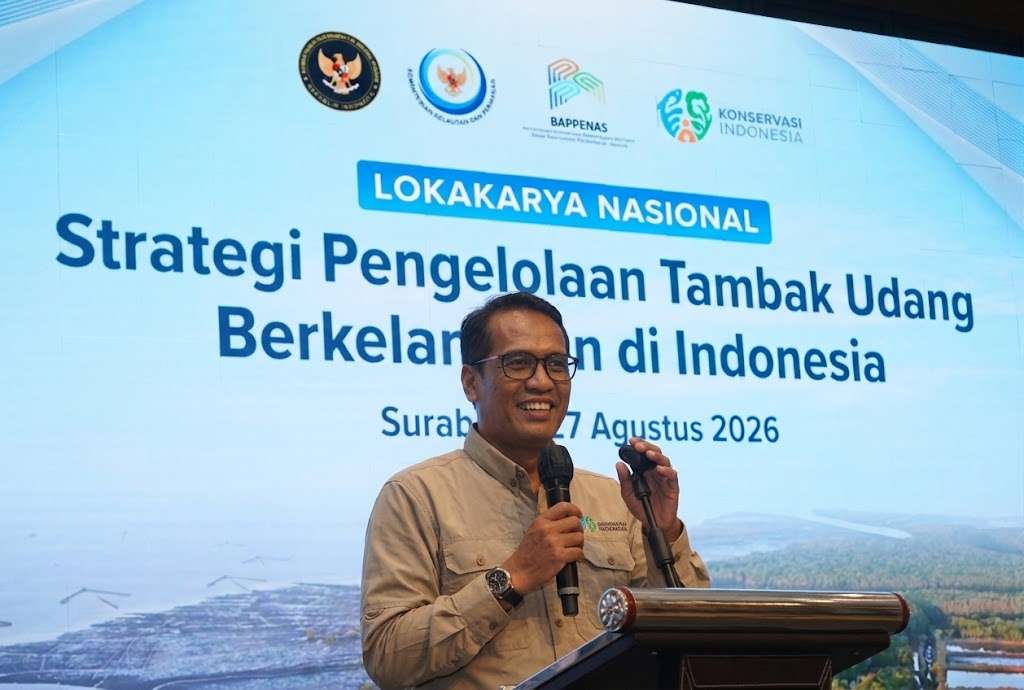
The call emerged during the National Workshop on Sustainable Shrimp Farm Management Strategies in Indonesia, which brought together central and local governments, academics, business representatives, aquaculture practitioners, research institutions, development partners, and civil society organizations.
The event was held at the Mövenpick Hotel Surabaya on Thursday, August 27, 2026.
At the forum, Konservasi Indonesia emphasized that the development of shrimp as a strategic commodity cannot focus solely on increasing production.
The sustainability of shrimp farming must be developed alongside the sustainability of the ecosystems that support its productivity.
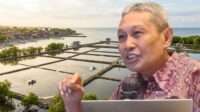
Representing Konservasi Indonesia, Burhanuddin, in his report before the Deputy for Maritime Coordination at the Coordinating Ministry for Food Affairs and stakeholders involved in shrimp research and aquaculture, said the approach is important because shrimp is one of the Indonesian government’s priority commodities, as well as an important source of foreign exchange and livelihoods for coastal communities.
“We cannot focus only on how to increase shrimp production itself. We also need to look at how well the ecosystems that support shrimp productivity can be maintained and remain sustainable in the long term,” he said at the workshop.
According to Burhanuddin, Konservasi Indonesia has extensive experience in developing sustainable pond aquaculture. The program was initially implemented when the organization operated under the name Conservation International, and continued after its transformation into the Yayasan Konservasi Indonesia (Konservasi Indonesia).
Banyuwangi, East Java, was among the initial locations where the program was developed. Lessons from Banyuwangi are expected to be further developed and replicated in other areas, including Situbondo.
A jurisdictional approach makes it possible to manage shrimp farms not as isolated business units, but within the context of a broader landscape involving government, farmers, businesses, local communities, academics, and other stakeholders.
Through this approach, environmental issues, productivity, infrastructure, farmer capacity, water quality, waste management, and market access can be understood as interconnected components of a single territorial management system.
Science-Based and Collaborative Approach
Konservasi Indonesia also emphasized the importance of a science-based approach in developing strategies for shrimp aquaculture.
A number of studies and research initiatives have been carried out with various partners in several locations, including Banyuwangi and other parts of Indonesia. These collaborations involve research institutions, universities, and development organizations.
The workshop highlighted collaboration with BRIN, Universitas 17 Agustus 1945 Banyuwangi, Universitas Airlangga, and several other partners. Studies have also been conducted at other sites, including the Lalobi aquaculture area in Central Sulawesi.
“We hope that the collaboration among multistakeholder partners, each with their own experience, can produce results that we can effectively implement in the field,” Burhanuddin said.
He stressed that field experience needs to be translated into policies and management models that can be applied more broadly.
For this reason, the national workshop was intended not merely as a forum for sharing experiences, but also as a platform for formulating concrete actions.
Challenges from Farm Sites to Global Markets
Sustainable shrimp farming faces complex challenges, ranging from farm-level conditions to the global trade chain.
At the international level, food safety and product contamination issues can directly affect access to export markets.
These challenges demonstrate that the competitiveness of Indonesian shrimp is determined not only by production volume, but also by quality, food safety, traceability, and compliance with market standards.
At the community level, other challenges include farming models, farmer capacity, business management, technology, environmental quality, and infrastructure support.
Strengthening farmer capacity is therefore an important part of the strategy. Farmers need not only to be encouraged to increase production, but also supported in managing their businesses efficiently, adaptively, and sustainably.
Communal Wastewater Treatment as a Learning Model
One of the initiatives currently being developed by Konservasi Indonesia in Banyuwangi is a Communal Wastewater Treatment Plant (IPAL Komunal).
The initiative is considered important because wastewater management is a key element in ensuring that shrimp farming does not place excessive pressure on aquatic ecosystems.
The communal wastewater treatment facility is being initiated at one location in Banyuwangi through a consortium involving several partners, including the World Resources Institute (WRI) and Universitas Padjadjaran.
The model is expected to become an initial example of collective wastewater management for shrimp aquaculture that can subsequently be replicated in other regions.
“If this communal wastewater treatment system can operate successfully, it can become a valuable learning model for us and, hopefully, be replicated in other places,” he said.
The initiative is also considered relevant to the government’s agenda to promote shrimp aquaculture revitalization in several parts of Indonesia. Field-level experience is therefore expected to provide valuable input for the development of programs on a broader scale.
From Local Lessons to National Policy
The workshop brought together stakeholders including the Coordinating Ministry for Food Affairs, Ministry of Marine Affairs and Fisheries, Bappenas, East Java Provincial Government, Banyuwangi and Situbondo local governments, academics, business representatives, and development partners.
Konservasi Indonesia hopes that the national forum can become a starting point for elevating lessons learned at the farm and district levels into a broader national agenda for shrimp management.
“What we are doing at the field level and at the district level can be elevated to a broader scale, including nationally, so that it can become a model that we can implement going forward,” Burhanuddin said.
The approach also positions sustainable shrimp aquaculture as a cross-sectoral agenda.
Production, local economic development, environmental quality, research, spatial planning, infrastructure, food safety, and market access need to be managed within an integrated and interconnected policy framework.
Through the national workshop, Konservasi Indonesia hopes that experiences developed in Banyuwangi and other locations can provide valuable lessons for strengthening Indonesia’s national strategy for sustainable shrimp farm management.
The development of Indonesia’s shrimp industry is expected to go beyond generating production and foreign exchange. It should also build a healthy aquaculture business ecosystem, empower coastal communities, and ensure that coastal areas remain productive, resilient, and environmentally sustainable in the long term.
___
Editor: K. Azis