
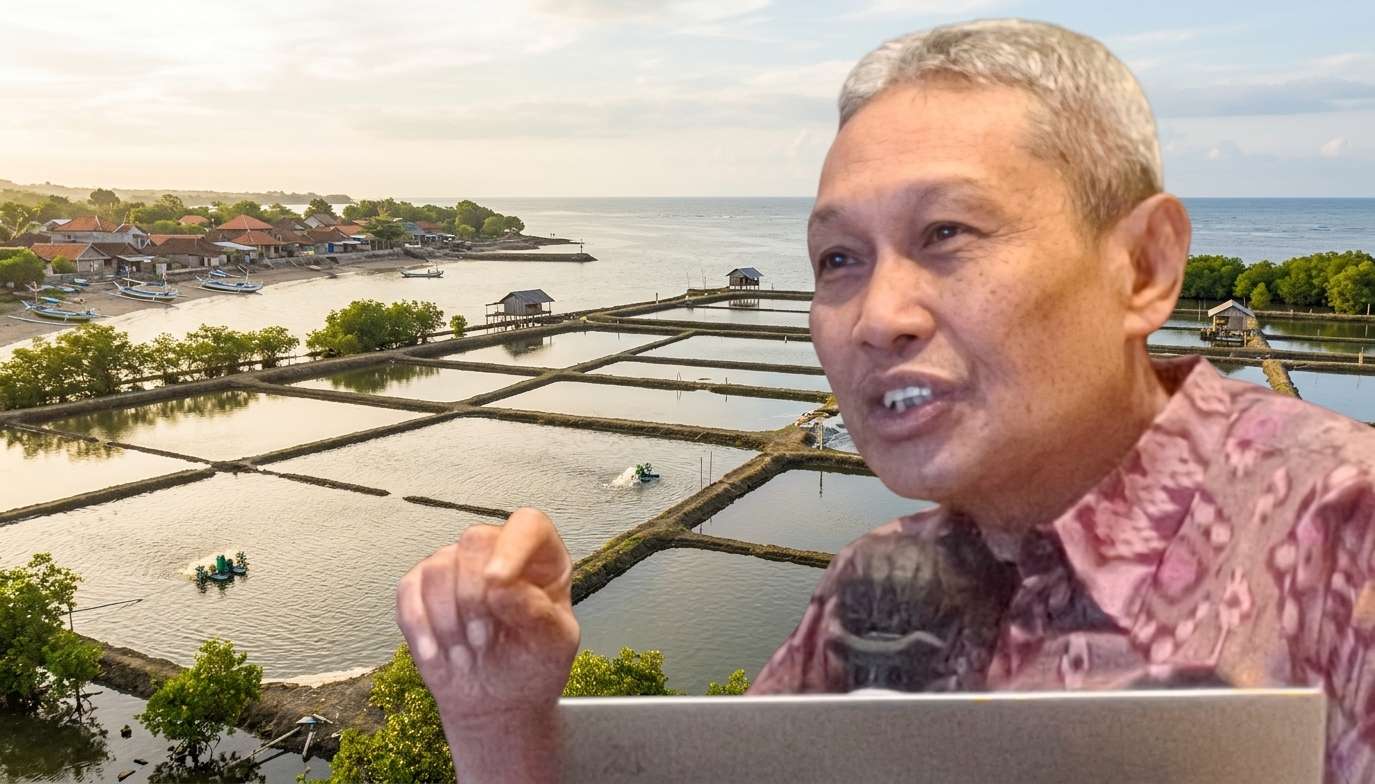
By anchoring sustainability strategies within jurisdictional boundaries, we can integrate policy instruments such as Payments for Ecosystem Services (PES). Through the PES mechanism, the ecosystem services provided by ecosystems—such as mangrove forests that protect shrimp farms—are assigned economic value, so conservation is no longer seen as a burden, but as an asset.
MARITIMEPOSTS.COM — Shrimp is often referred to as “liquid gold” in the aquaculture industry. It is a leading export commodity as well as a crucial source of protein for a rapidly growing global population.
Behind the plates served in upscale restaurants, however, the industry is reaching a critical point. We are caught in a classic contradiction: the ambition to pursue economic growth versus the increasingly evident reality of environmental degradation.
Finding common ground between these interests is not merely a matter of aquaculture technology. In governance studies, this challenge is known as a Wicked Problem.
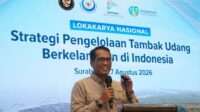
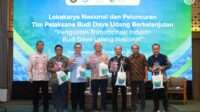
“This is an extremely complex type of problem because every proposed solution often clashes with the interests of different stakeholders—from business profitability and government regulations to the sustainability of coastal ecosystems,” said Dr. Victor Nikijuluw when he spoke at the national workshop on Sustainable Shrimp Aquaculture Management Strategies, organized by the Coordinating Ministry for Food Affairs, the Ministry of Marine Affairs and Fisheries, Bappenas, and Konservasi Indonesia, where Victor serves as a senior fellow focusing on marine and fisheries affairs.
He described the reality and posed a question: why do traditional approaches to managing the shrimp farming industry so often fail?
The answer lies in the complexity of the problem itself, which is difficult to predict. “Based on the analysis of the Jurisdictional Approach, the shrimp industry faces a Wicked Problem because there is no single solution that can instantly satisfy all parties,” explained the man affectionately known as Vic.
He referred to the term Wicked Problem, a social or policy problem that is difficult or impossible to solve because of incomplete or contradictory knowledge, the involvement of multiple viewpoints, significant economic burdens, and its interconnectedness with other problems.
In East Java, Victor said, we have often seen sectoral egos become a major obstacle.
Fisheries agencies focus on production targets, while environmental agencies prioritize conservation, and market players demand certification compliance.
“Now, without synchronization, problems such as liquid waste pollution or the transmission of shrimp diseases across regions will simply become a vicious cycle that never ends,” he said.
Jurisdictional Approach: Bringing Land and Sea Together
Amid this impasse, the Jurisdictional Approach (JA) has emerged as a transformative strategy. According to Victor, JA is not merely a conservation method.
“It is an effort to harmonize the landscape and seascape within a specific administrative jurisdiction,” he explained.
Why are administrative boundaries such as districts or provinces more effective than looking only at ecological maps?
According to Victor, the answer is authority. Policies, budgets, and law enforcement are in the hands of local governments.
“By anchoring sustainability strategies within jurisdictional boundaries, we can integrate policy instruments such as Payments for Ecosystem Services (PES). Through the PES mechanism, the ecosystem services provided by ecosystems—such as mangrove forests that protect shrimp farms—are assigned economic value, so conservation is no longer seen as a burden, but as an asset,” he explained.
Ending “Business as Usual”: Learning from Banyuwangi
What Victor emphasizes through the JA concept—which he says has been discussed repeatedly, including during four similar meetings or workshops—is that we can no longer operate with a “business as usual” mentality.
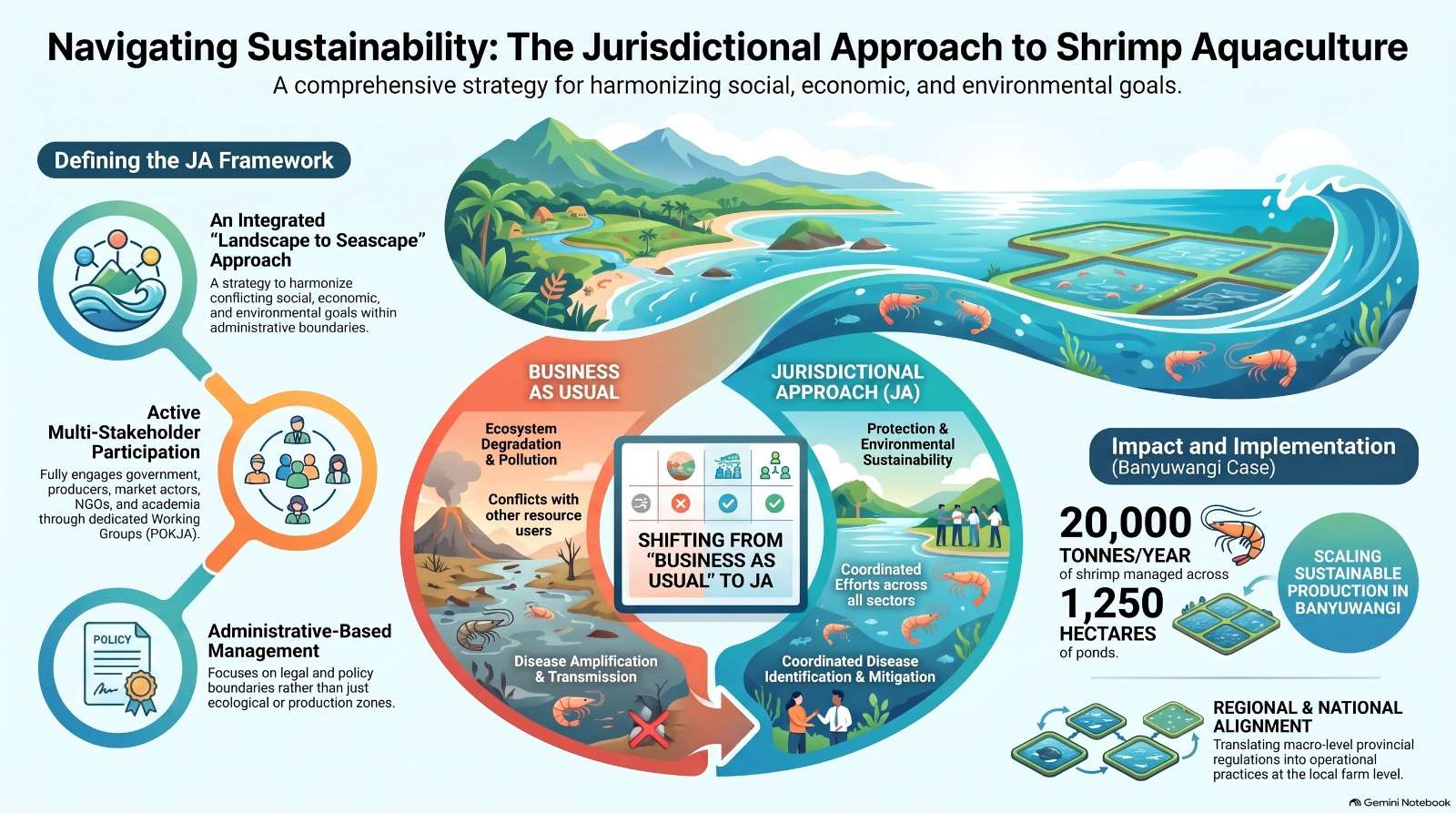
Take Banyuwangi as an example. With production capacity reaching 20,000 tons per year from approximately 1,250 hectares of shrimp ponds, the risks at stake are enormous.
The following provides a sharp comparison between conventional practices and the efficiency offered by the Jurisdictional Approach.
Victor’s explanation can be understood as follows. First, under the Business as Usual (BAU) approach, shrimp farming management tends to be conducted sectorally and focuses on the activities of individual farming units.
This pattern risks driving ecosystem degradation and pollution from waste, increasing conflicts among resource users, and pushing aquatic areas beyond their carrying capacity.
Under such conditions, disease problems can also spread rapidly and massively because there is no coordinated mitigation mechanism across jurisdictions.
By contrast, the Jurisdictional Approach (JA) offers area-based management involving coordination among multiple stakeholders.
This approach places environmental protection and sustainability at the heart of development, while also encouraging joint planning to reduce conflicts among resource users.
In addressing disease threats, JA enables coordinated mitigation across jurisdictions. Responses therefore do not rely solely on individual farms or individual operators, but become part of an integrated area-management system.
In terms of carrying capacity, JA encourages management practices that align aquaculture activities with the ecological capacity of surrounding waters.
These efforts include waste management, effluent reduction, and controlling pressure on ecosystems. Production is therefore not solely focused on increasing volume, but also takes into account the environment’s ability to support aquaculture activities over the long term.
Thus, the shift from BAU to JA is essentially a shift from fragmented management toward coordinated, sustainable, and carrying-capacity-based area governance.
[Caption: Illustration of the Jurisdictional Approach according to a Pelakita.ID infographic]
Under the JA model, Victor said, waste management is no longer solely the responsibility of individual farmers, but becomes part of measurable area-wide management.
In Banyuwangi, initiatives have emerged to facilitate solutions to a number of issues and gaps. In addition to the establishment of an implementation unit, monitoring and various technical and managerial studies on shrimp farming are also being carried out in collaboration with universities and NGOs.
Victor noted that in shrimp farming practices, properly controlled effluent or liquid waste not only protects the environment, but also helps maintain the quality of water flowing back into neighboring farms.
The man who previously served as a senior official at the Ministry of Marine Affairs and Fisheries believes there is often a fatal “mismatch” or lack of synchronization between Governance Reform and Market-Based Approaches.
Governments are busy developing regulations, while global buyers are busy demanding certification, yet the two rarely operate on the same wavelength. As a result, small-scale farmers often become the most burdened stakeholders without receiving meaningful economic incentives.
“JA serves as a bridge that connects these two poles. When local policies are aligned with supply-chain business commitments, a ‘Sustainable Production’ ecosystem with higher market value can be created. JA ensures that farmers’ environmental compliance is directly connected to global market incentives,” said the man who previously served as an echelon-one official at the Ministry of Marine Affairs and Fisheries.
Victor acknowledged that, as noted by marine governance experts, applying JA may not be appropriate for every jurisdiction.
“However, this approach is an important tool within the portfolio of mechanisms available to improve production practices,” he said.
Multi-Stakeholder Collaboration: The “Secret Sauce” of Success
Who needs to sit at the same table? The success of JA in areas such as Banyuwangi depends on active collaboration, not merely on being included on an invitation list.
Victor said this is a collective effort involving academics and research institutions—such as UNAIR, UNTAG, UNPAD, and BRIN—to ensure that decisions are based on scientific evidence (science-based decision-making).
Then there is government. Not only district governments and fisheries agencies, but also technical institutions such as the Marine Affairs and Fisheries Branch Office (CDK) and area managers such as Ijen Geopark, to ensure spatial planning is properly synchronized.
There are also technology innovators. The role of technology companies such as JALA and Aquarev is vital for modernizing shrimp-farm monitoring.
“Associations and local groups such as the Shrimp Club Indonesia (SCI) Banyuwangi and the MIBAMA Cooperative are also important to ensure that the voices of farmers on the ground are heard,” he added.
He said the key is the establishment of an inclusive Working Group (POKJA) capable of moving beyond short-term political interests and focusing on the long-term resilience of the regional shrimp industry.
Investing in a Long-Term Future
At the conclusion of his presentation, Victor Nikijuluw said that implementing the Jurisdictional Approach is ultimately about having the courage to invest time.
The benefits of cross-sectoral coordination may not immediately appear in next month’s financial statements. However, JA is one pathway to addressing the challenges of our time through what is known as Climate-Smart Shrimp (CSS).
CSS is the practical implementation of JA at the farm level—a form of aquaculture that is efficient, low-emission, and resilient to climate change.
Ultimately, the transformation of the shrimp industry comes back to one reflective question:
“Are we ready to set aside sectoral egos today to ensure that future generations will still have responsibly produced shrimp on their plates?”
That, more or less, was the closing message delivered by Victor Nikijuluw at the workshop, which was opened by Dandy Satria Iswara, Deputy for Maritime Resources Coordination at the Coordinating Ministry for Food Affairs.
___
Editor: K. Azis