
MARITIMEPOSTS.COM – Indonesia and the Netherlands present a striking contrast in how maritime potential can be translated into economic strength.
Both countries are deeply connected to the sea—Indonesia as the world’s largest archipelagic nation, and the Netherlands as a historic maritime powerhouse—but their performance across key indicators reveals very different levels of maturity, integration, and strategic focus.
In global maritime power rankings, Indonesia is positioned in the middle-lower tier, around rank 20, while the Netherlands performs more strongly in the middle-upper tier at rank 12.
This difference reflects not only historical advantages but also how each country organizes and leverages its maritime sector. The Netherlands has successfully evolved from a traditional trading nation into a modern, high-efficiency maritime hub, while Indonesia is still in the process of consolidating its vast but underutilized maritime assets.
One of the most telling indicators is the contribution of the maritime sector to national GDP.
In Indonesia, this contribution remains relatively modest at around 2–3 percent, despite its enormous marine resources and strategic location along global shipping lanes.
By contrast, the Netherlands derives a significantly higher share—around 6–7 percent—of its GDP from maritime activities. This reflects a more advanced and value-added maritime economy, encompassing not just shipping but also port services, logistics, shipbuilding, and maritime technology.
Efficiency in logistics further underscores this gap. Indonesia’s logistics costs are estimated at 23–25 percent of GDP, a figure that highlights structural inefficiencies and high distribution costs across its archipelago.
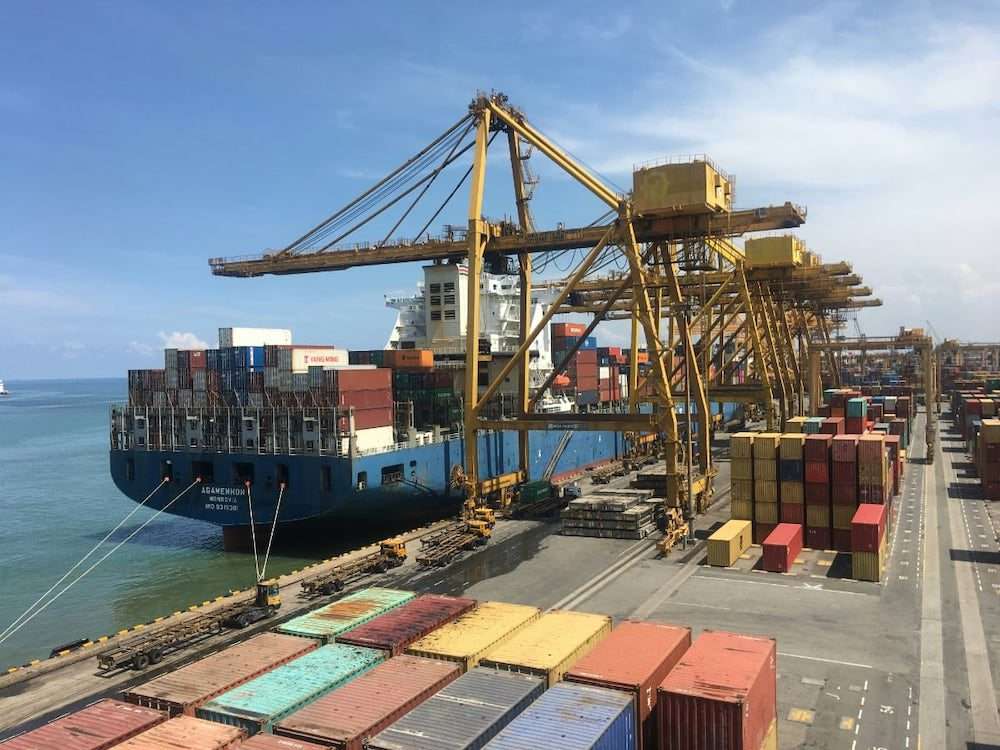
Meanwhile, the Netherlands maintains logistics costs at a much lower 8–10 percent of GDP, supported by world-class infrastructure and seamless connectivity. This efficiency is also evident in dwelling time—the time ships spend in port—which ranges from 3 to 5 days in Indonesia but only 1 to 2 days in the Netherlands. Faster turnaround times in Dutch ports contribute significantly to their competitiveness in global trade.
Economic prosperity, as measured by GDP per capita, mirrors these structural differences. Indonesia’s GDP per capita stands at approximately USD 4,500–5,000, whereas the Netherlands enjoys a much higher level at USD 55,000–60,000.
While many factors contribute to this disparity, the effectiveness of the maritime sector as an economic engine plays a crucial role, particularly in a country like the Netherlands where maritime activities are deeply embedded in national development.
At the systemic level, Indonesia’s maritime sector is still characterized by a fragmented and domestically oriented approach. Ports, industries, and logistics systems often operate in isolation, limiting efficiency and value creation.
In contrast, the Netherlands adopts an integrated and globally oriented system. The Rotterdam maritime cluster, for example, exemplifies how ports, industries, logistics providers, and innovation ecosystems can function as a unified network, creating synergies and driving competitiveness.
Finally, strategic focus distinguishes the two nations. Indonesia’s policies tend to prioritize domestic connectivity and basic infrastructure, often resulting in a low-value maritime chain.
The Netherlands, on the other hand, focuses on high-value maritime services and positions itself as a global logistics hub. This strategic orientation enables it to capture greater economic value from international trade flows.
In conclusion, while Indonesia possesses immense maritime potential, it faces significant challenges in integration, efficiency, and strategic direction. The Netherlands offers a compelling model of how a small country can maximize its maritime advantages through coherent policy, system integration, and a strong global outlook. Bridging this gap will require Indonesia to move beyond fragmented development and toward a more integrated, high-value maritime ecosystem.
The Condition of the Port of Amsterdam
The Port of Amsterdam stands as one of Europe’s most advanced and efficiently managed maritime hubs, reflecting the Netherlands’ integrated and globally oriented maritime system. Although smaller than the nearby Rotterdam port, Amsterdam plays a critical role as a multifunctional logistics and industrial gateway connected to global trade routes.
Highly Integrated Maritime Ecosystem
The port is not just a docking area—it is a fully integrated maritime cluster. Industrial zones, energy terminals, warehouses, and logistics companies are seamlessly connected within the port area. This integration reduces bottlenecks and allows goods to flow efficiently from ship to storage to inland distribution networks across Europe.
Efficient Operations & Low Dwelling Time
One of the defining characteristics of the Port of Amsterdam is its operational efficiency. Ships experience relatively short dwelling times, typically around 1–2 days, supported by advanced port management systems, digital tracking, and streamlined customs procedures. This efficiency contributes to the Netherlands’ low national logistics costs.
Energy & Bulk Cargo Hub
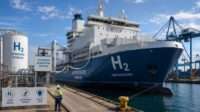
Amsterdam is known as a major hub for bulk cargo, especially energy products such as fuel, coal, and biofuels. The port has also been transitioning toward renewable energy logistics, supporting Europe’s broader sustainability goals. This makes it not only a trade hub but also a strategic energy gateway.
Sustainability & Innovation Focus
The port authority has actively invested in green initiatives, including circular economy practices, emission reduction programs, and clean energy infrastructure. Innovation is embedded in its development strategy, with smart port technologies and data-driven logistics enhancing performance and environmental responsibility.
Strong Hinterland Connectivity
A key strength of the Port of Amsterdam is its excellent connectivity. It is linked to inland Europe through canals, railways, and highways, allowing efficient distribution of goods to major markets like Germany, Belgium, and beyond. This multimodal transport system ensures that the port functions as a true logistics hub rather than a standalone facility.
In Essence
The Port of Amsterdam illustrates how a well-integrated, efficient, and innovation-driven maritime system can generate high economic value. It is a clear example of how infrastructure, policy, and industry alignment can transform a port into a global competitive advantage.