
Palu, Central Sulawesi — June 16, 2026
MARITIMEPOSTS.COM – A powerful magnitude 6.7 earthquake struck Central Sulawesi on Tuesday, June 16, 2026, sending residents rushing into the streets and triggering fresh concerns in a region still marked by memories of the devastating 2018 Palu disaster.
Although authorities confirmed that the quake posed no tsunami threat, the strong shaking caused casualties, injuries, displacement, and damage to infrastructure across several districts.
According to Indonesia’s Meteorology, Climatology, and Geophysics Agency (BMKG), the earthquake occurred at approximately 11:27 a.m. local time (WITA).
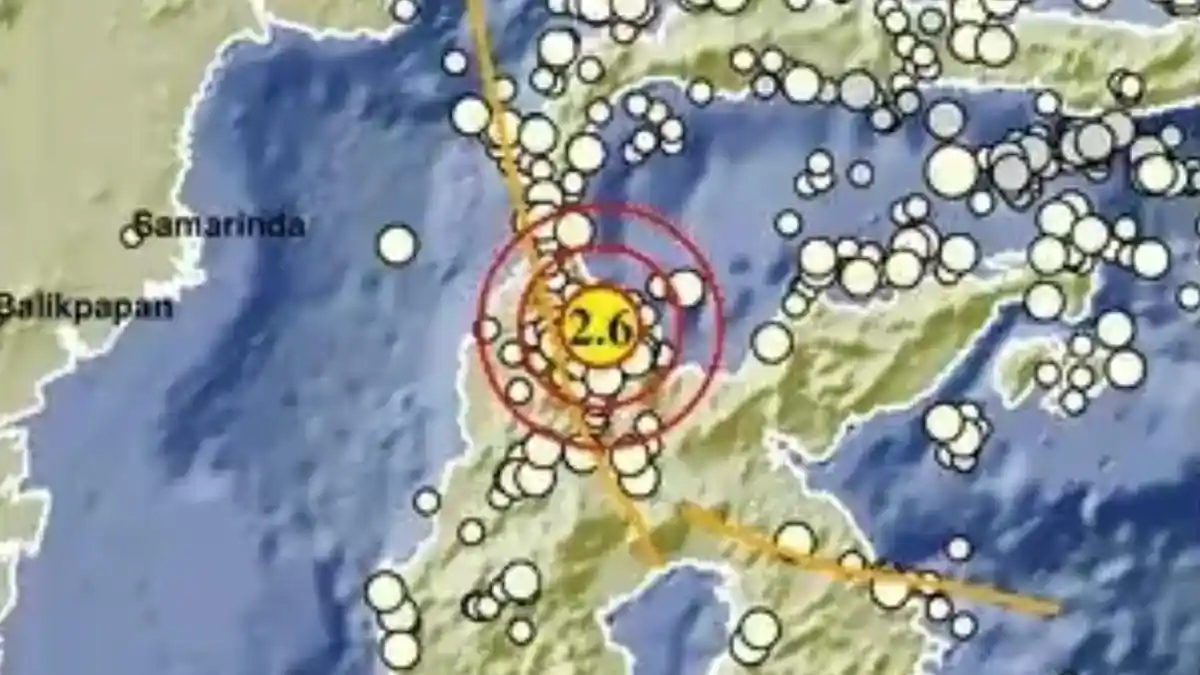
The quake originated at a shallow depth of around 10 kilometers, with its epicenter located roughly 42–43 kilometers southeast of Palu. Shallow earthquakes often produce stronger ground shaking at the surface, and residents across Palu and neighboring areas reported intense tremors.
The earthquake was powerful enough to prompt evacuations from homes, offices, hospitals, schools, and public buildings. Witnesses described scenes of panic as people sought safety in open areas, fearing the possibility of a larger disaster.
For many residents, the event immediately brought back memories of the catastrophic earthquake and tsunami that struck Palu in September 2018, one of Indonesia’s deadliest natural disasters in recent history.
Initial reports indicated that at least one person lost their life as a result of the earthquake, while at least 38 others sustained injuries. Emergency officials also reported that more than 300 residents were displaced from their homes due to structural damage or safety concerns. Authorities cautioned that casualty and damage figures could change as assessment teams continued surveying affected communities.
Preliminary damage assessments revealed impacts on residential housing, places of worship, government facilities, and public infrastructure.
Several roads near the epicentral region suffered damage, including a provincial transportation route that experienced disruptions, complicating access for emergency responders and relief efforts. Hospitals in Palu were among the facilities that implemented precautionary evacuations, moving patients outdoors while buildings were inspected for structural safety.
In the hours following the main shock, BMKG recorded at least 71 aftershocks.
Officials urged residents to remain vigilant, particularly when entering buildings that may have sustained hidden structural damage. Emergency agencies continued monitoring the situation while local governments coordinated response and recovery measures.
The significance of the earthquake extends beyond its immediate impacts. Central Sulawesi lies within one of Indonesia’s most seismically active regions, situated along complex fault systems associated with the Pacific Ring of Fire.
The region’s geological setting makes it particularly vulnerable to earthquakes, underscoring the importance of disaster preparedness and resilient infrastructure.
While the June 16 earthquake was far less destructive than the 2018 Palu catastrophe—which claimed more than 4,000 lives through a combination of earthquake shaking, tsunami waves, and widespread liquefaction—it serves as a stark reminder that seismic risks remain ever-present in Central Sulawesi.
For residents of Palu, the latest quake was not only a geological event but also an emotional one, reopening memories of a tragedy that continues to shape the city’s collective consciousness.
As emergency assessments continue and communities begin recovery efforts, authorities are emphasizing vigilance, preparedness, and adherence to disaster mitigation measures.
The earthquake once again highlights Indonesia’s ongoing challenge of living safely within one of the most active seismic zones on Earth.
You can strengthen the article by adding a firsthand account section that brings a human dimension to the disaster.
Residents Remain Vigilant as Aftershocks Continue
Beyond the official statistics, residents across Palu and neighboring districts spent the day and evening coping with persistent aftershocks and lingering uncertainty.
According to Ibnu Mundzir, a resident of Palu City, the strongest shaking occurred around midday when the magnitude 6.7 earthquake struck. Although conditions gradually improved throughout the day, aftershocks continued to be felt well into the evening.
“Alhamdulillah, after the main earthquake this afternoon, measuring 6.7 on the Richter Scale, aftershocks have continued until tonight, although their intensity is becoming weaker,” he said.
Mundzir noted that local monitoring reports had recorded nearly 177 aftershocks by nighttime, reflecting the ongoing seismic activity across the region. He also reported damage in parts of neighboring Sigi Regency, where several homes were damaged and sections of road infrastructure were reportedly cut off or rendered inaccessible.
The psychological impact of the earthquake was also evident. Many families chose not to sleep inside their homes, preferring instead to spend the night on terraces or in open areas out of concern about additional aftershocks.
“Tonight, several families are sleeping outside on their porches,” Mundzir explained. “Since this afternoon, many vehicles have also been lining up at fuel stations. There has been a kind of panic buying, with people worried that fuel supplies might run out.”
Despite these challenges, Mundzir observed that the overall situation was gradually stabilizing as the evening progressed. Emergency services remained active, residents continued monitoring official information, and communities began adapting to the post-earthquake conditions.
“Overall, the situation is gradually improving,” he said.
The account highlights how the earthquake’s impact extended beyond physical damage, affecting public behavior, mobility, and the sense of security among residents who still carry memories of the devastating 2018 Palu disaster.
Sources
- Reuters. Magnitude 6.7 quake hits Indonesia’s Sulawesi island, agency says (16 June 2026).
- Associated Press. A 6.7 magnitude earthquake shakes part of Indonesia, killing at least 1, causing damage and injuries (16 June 2026).
- BMKG (Badan Meteorologi, Klimatologi, dan Geofisika), official earthquake monitoring data.
- Gulf News. Magnitude 6.7 Earthquake Jolts Indonesia’s Palu City in Central Sulawesi Province (16 June 2026).