
MARITIMEPOSTS.COM – MAKASSAR – The future of Indonesia’s blue economy may no longer be determined solely by the vastness of its seas. Instead, it will depend on how effectively the country combines technology, scientific data, and the social capital of its coastal communities.
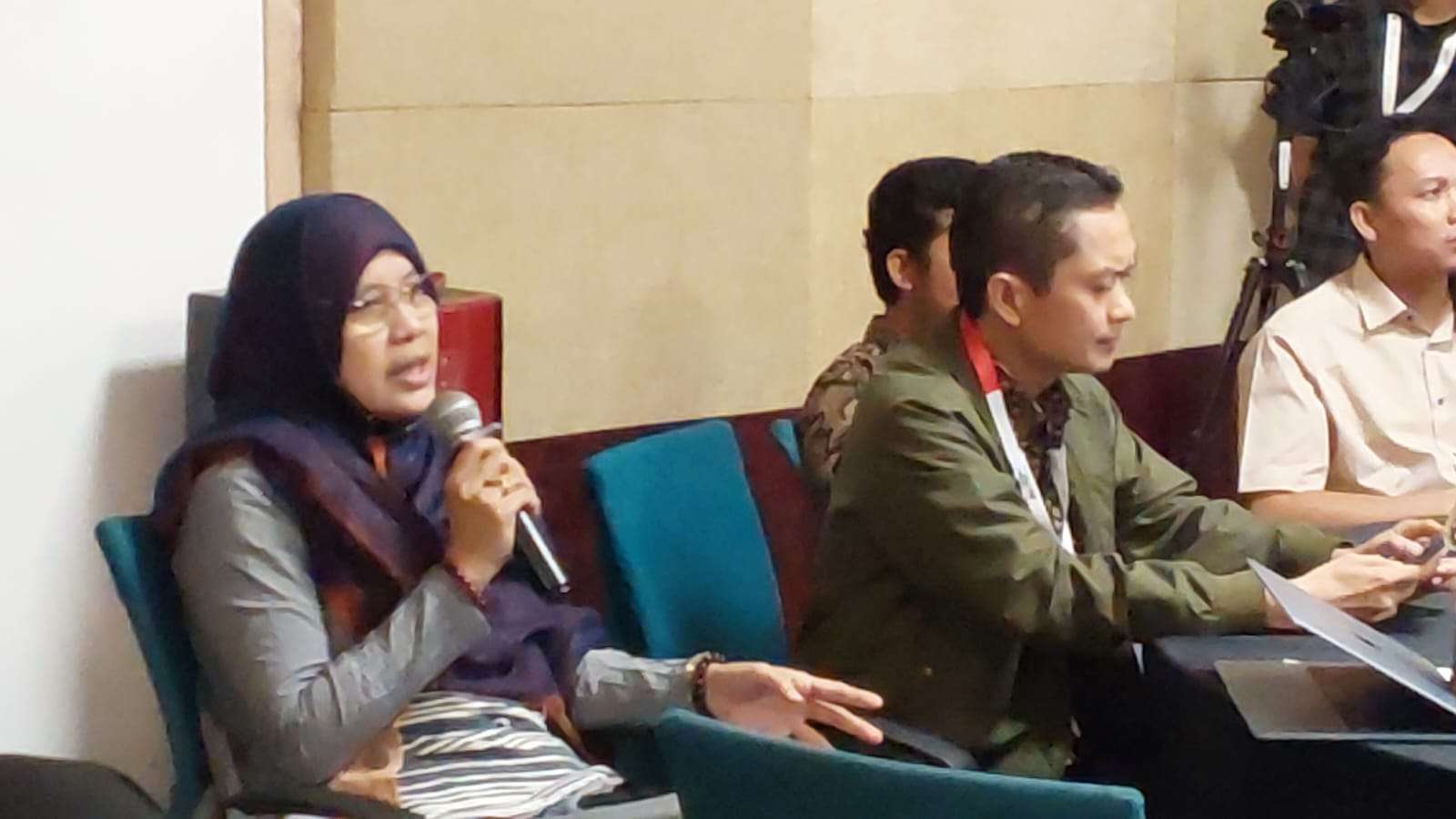
That was the central message delivered by Prof. Nurjannah Nurdin, a member of the Partnership for Australia–Indonesia Research (PAIR) team, during the PAIR Annual Meeting 2026 in Makassar.
The research demonstrates that seaweed productivity can increase severalfold without expanding cultivation areas, provided farmers adopt appropriate technologies and are supported by strong community networks.
The findings offer significant promise for Indonesia, one of the world’s largest seaweed producers. Despite its extensive coastline, the sector continues to face persistent challenges, including stagnant farming practices, climate variability, and limited access to information for coastal farmers.
According to Prof. Nurjannah, overcoming these challenges requires a new approach that integrates Sea-Tech—marine technology powered by data—with stronger social capital among coastal communities.
Fivefold Productivity Without Expanding Sea Space
One of the study’s most striking findings is the effectiveness of the double-line cultivation system.
Field data revealed remarkable productivity gains. In Polewali Mandar, West Sulawesi, the double-line method produced 8.5 kilograms per square meter, equivalent to 85 tonnes per hectare, compared to only 1.75 kilograms per square meter under the conventional single-line system.
Even higher productivity was recorded in South Sulawesi, where yields reached 13.6 kilograms per square meter.
These results indicate that seaweed production can increase by more than five times at the same location without requiring additional marine farming areas.
The approach aligns closely with circular economy principles by increasing production while minimizing pressure on marine ecosystems and protected coastal zones.
“Production potential is real and mapped. Output can rise without using more sea,” the research team emphasized during the presentation.
Social Capital Outperforms Experience
The study also challenges conventional assumptions about experience in aquaculture.
While years of farming are often viewed as an advantage, the researchers identified what they describe as an “experience paradox.”
Farmers with long-established practices but little willingness to adopt innovation were found to be 64 percent less likely to embrace new technologies.
By contrast, social capital emerged as a much stronger driver of innovation.
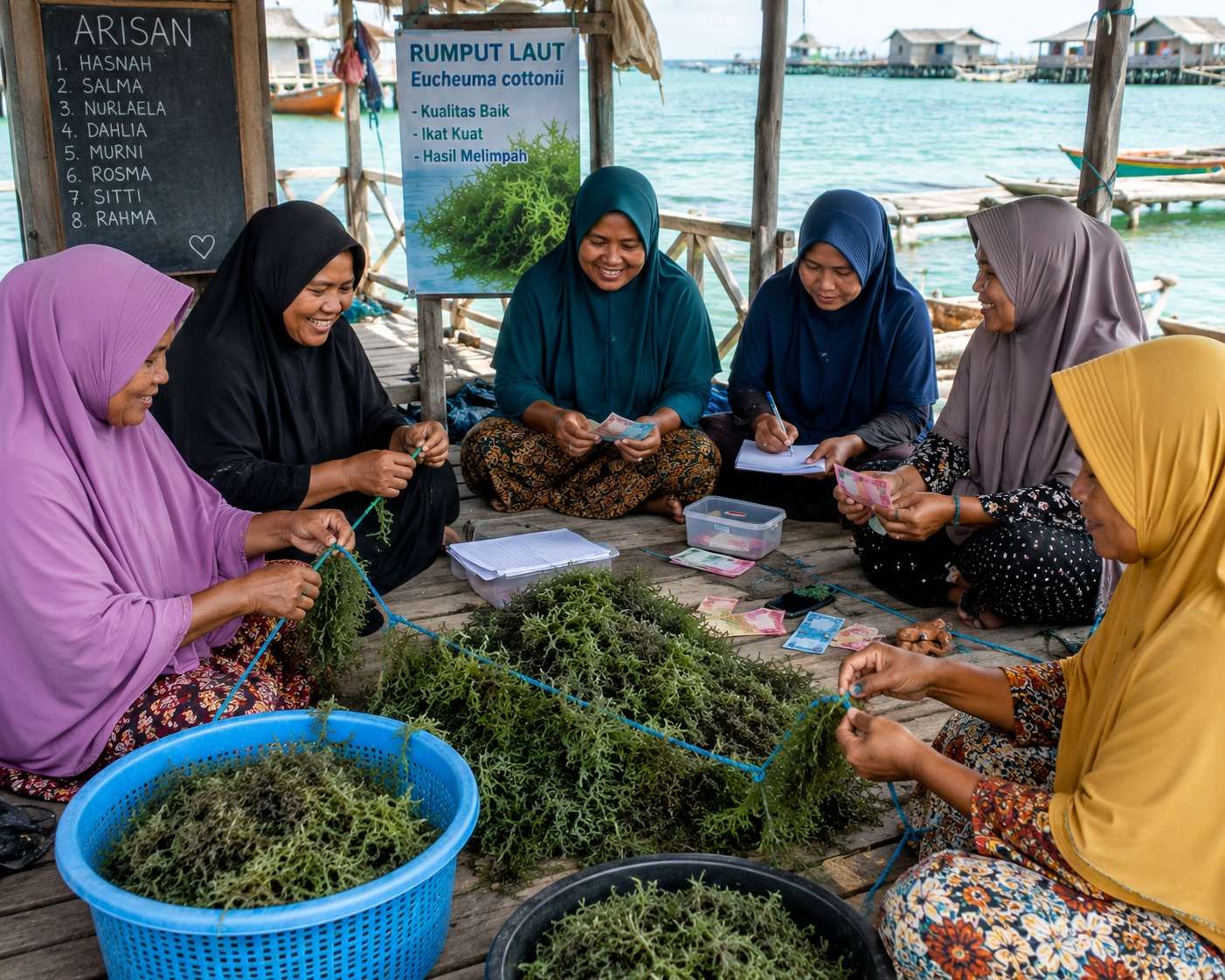
Community savings groups, locally known as arisan, serve not only as social gatherings but also as platforms for knowledge exchange, trust-building, and peer learning.
The research found that farmers actively participating in these community groups were 13 times more likely to achieve higher incomes.
Likewise, farmers who attended annual training programs were six times more likely to improve their farming performance.
These findings suggest that innovation spreads more effectively through trusted community networks than through conventional top-down extension services.
Ocean Currents and Salinity Matter More Than Temperature
The research also overturns a common assumption regarding environmental conditions for seaweed farming.
Based on ten years of oceanographic analysis, Indonesia’s average sea surface temperature of 29.38°C is not considered the primary limiting factor for cultivation.
Instead, successful production depends largely on maintaining optimal salinity levels (33–34 psu) and current velocities (0.12–0.14 meters per second).
These insights underscore the need for real-time water quality monitoring systems.
Using a digital dashboard already piloted in Mamuju, farmers can monitor salinity, temperature, and other oceanographic variables, enabling them to anticipate environmental anomalies before they affect production.
AI Chatbots and Drones Enter Seaweed Farms
Digital innovation forms another pillar of the Sea-Tech concept.
The PAIR team is introducing unmanned aerial vehicles (UAVs) to map cultivation areas and estimate production more efficiently than traditional manual surveys.
At the same time, an AI-powered WhatsApp chatbot is being tested in Takalar and Pangkep.
The chatbot is designed to function as a digital assistant, providing farmers with daily market prices, disease management advice, weather and sea condition updates, and practical cultivation recommendations.
Importantly, the platform supports Bahasa Indonesia and Makassarese, while Buginese language integration is also under consideration to improve accessibility for local communities.
The developers are also addressing real-world challenges, including limited mobile connectivity at sea and the widespread practice of buyer-credit arrangements that influence farmers’ business decisions.
Policy Recommendations for a Smarter Blue Economy
Beyond technological innovation, the research outlines several policy recommendations.
Regional governments, particularly provincial fisheries agencies and development planning boards, are encouraged to implement GIS-based marine zoning to ensure more precise spatial planning for aquaculture.
The research team also recommends establishing multi-year funding for oceanographic monitoring to guarantee the continuity of environmental data and digital dashboard operations.
In addition, government assistance—including quality seed distribution and subsidized credit schemes—should be linked to farmers’ adoption of the double-line cultivation system and digital farm record-keeping, ensuring that public investments produce measurable outcomes.
From a social perspective, the study highlights the importance of applying Gender Equality, Disability, and Social Inclusion (GEDSI) principles by ensuring that women account for at least 40 percent of participants in training programs and digital literacy initiatives.
Science, Technology, and Community Trust
Prof. Nurjannah’s presentation emphasized that transforming Indonesia’s blue economy requires more than advanced technology.
Sustainable innovation emerges when scientific knowledge is combined with the trust, cooperation, and collective action that already exist within coastal communities.
Through PAIR, researchers aim to bridge the gap between science, technology, and local livelihoods, ensuring that research outcomes move beyond academic publications to become practical solutions for coastal development.
For Indonesia, one of the world’s leading maritime nations, the message is clear: the future of seaweed farming will depend not only on the country’s vast marine resources, but also on its ability to harness data, innovation, and strong community networks to create a more productive, resilient, and sustainable blue economy.
The research was conducted by PAIR Team C.E.1.6, led by Prof. Andi Dirpan (Hasanuddin University), with team members Prof. Nurjannah Nurdin (Hasanuddin University), Prof. Lilik (Universitas Gadjah Mada), and Prof. Nur Cahyadi (Institut Teknologi Sepuluh Nopember/ITS), supported by research assistants, administrative staff, and field surveyors who contributed to data collection and community engagement across multiple research sites in Sulawesi.
By Kamaruddin Azis
Founder, Pelakita.ID | MaritimePosts.com