

- Although Indonesia has adopted high-stocking-density technology, technological support aimed at improving efficiency and competitiveness, as seen in Ecuador, has not yet been implemented on a massive scale and remains largely experimental. As a result, production costs remain relatively high, reaching approximately USD 3.90 per kilogram of shrimp.
- The objections voiced by shrimp farmers, who are members of the SCI (Shrimp Club Indonesia) association, regarding the importation are understandable and represent a form of protection for their members. However, in an era of rapidly advancing openness and disruption, this conservative perspective must shift toward strengthening the competitiveness of the national shrimp industry.
MARITIMEPOSTS.COM — The importation of 120 tons of Vannamei shrimp from Ecuador through a bonded zone in East Java in April 2026 caused concern among a number of shrimp farmers across Indonesia.
The issue became one of the major topics discussed at the National Workshop on Integrated and Sustainable Governance of the National Shrimp Aquaculture Industry, held at the Movenpick Hotel Surabaya on Thursday (27 September 2026).
Organized by the Coordinating Ministry for Food Affairs of the Republic of Indonesia in collaboration with the Indonesian Conservation Foundation, the workshop was officially opened by Deputy for Maritime Resources Coordination, Dandy Satria Iswara.
The event focused, among other things, on improving shrimp aquaculture governance through a “green” governance approach aimed at increasing productivity and efficiency while ensuring environmental sustainability through a jurisdictional approach.
Banyuwangi serves as a role model for this approach and is expected to become an example for other regions in Indonesia. The approach is primarily directed at optimizing the potential of traditional and semi-intensive shrimp ponds, which account for approximately 300,000 hectares, or 97 percent of the country’s total shrimp pond area.
During one of the discussion sessions, concerns were raised that shrimp imports, if continued over the long term, could potentially disrupt the stability of the domestic shrimp-farming business, which provides livelihoods for hundreds of thousands of workers.
Beyond the immediate issue, the case serves as a strong warning about the weak competitiveness of Indonesia’s shrimp aquaculture industry, one of the country’s key fisheries and marine sectors. Solutions are urgently needed to ensure that the industry remains sustainable amid increasingly intense global competition.
Imports can occur due to two main factors.
First, price differences, particularly because the cost of producing shrimp is lower in other countries.
Ecuadorian shrimp farmers are able to reduce production costs to as low as USD 2.85 per kilogram of shrimp. This is reportedly the lowest among several major shrimp-producing countries, including Ecuador, China, India, Vietnam, Indonesia, and Thailand.
Ecuador’s strategy is based on low stocking densities in traditional and semi-intensive ponds. However, these systems are strengthened through nursery-based production using a two-step approach.
In addition, the genetic strategy focuses on rapid growth and greater resistance to disease threats, using post-larvae characterized as Specific Pathogen Resistant (SPR).
Although Ecuador applies relatively simple shrimp-farming technologies, it is supported by efficiency-enhancing technologies, including sensor-based automatic feeders and aeration systems such as paddle wheels and blowers.
Water-quality monitoring is likewise widely based on the Internet of Things (IoT). Collectively, these technologies have made Ecuador’s shrimp industry more efficient and highly competitive, with export volumes reaching 1.4 million tons in 2025, valued at USD 7.8 billion.
Meanwhile, Indonesia’s shrimp production in 2025 was estimated at approximately 500,000 tons, with exports of around 200,000 tons and foreign-exchange earnings of USD 1.87 billion, representing approximately 30 percent of total fisheries exports.
Around 80 percent of this production and export volume is contributed by high-density shrimp farms, both intensive and super-intensive, which occupy only about 3 percent—or approximately 9,000 hectares—of the country’s total shrimp-farming area of around 303,000 hectares.
Although Indonesia has adopted high-stocking-density technology, technological support aimed at improving efficiency and competitiveness, as seen in Ecuador, has not yet been implemented on a massive scale and remains largely experimental. As a result, production costs remain relatively high, reaching approximately USD 3.90 per kilogram of shrimp.
High logistics costs are also one of the factors contributing to elevated production costs. In western Indonesia, logistics costs account for approximately 9 percent of the value of transported goods.
In eastern Indonesia, the figure can reach 27 percent. This is partly a consequence of Indonesia’s geography as an archipelagic country, as well as the concentration of upstream and downstream off-farm industries in the western part of the country.
Second, under existing regulations, shrimp imports are permitted when there is a proposed RKI (Rencana Kebutuhan Impor / Import Requirement Plan) from the Ministry of Marine Affairs and Fisheries (KKP), subject to consideration by other relevant technical ministries.
Based on the investigation conducted, the KKP did not issue an RKI proposal in this particular case. This indicates that the government, in this case the KKP, is taking a position in favor of protecting the existence and interests of domestic shrimp farmers.
Bonded zones operate under customs regulations that allow the importation of raw materials or supporting materials for subsequent re-export. These materials are not intended to be marketed domestically. This provision needs to be anticipated and carefully monitored.
The regulation is primarily oriented toward strengthening the competitiveness of industries within its jurisdiction, thereby allowing them to import raw materials and supporting materials.
Similar arrangements have also been implemented in countries such as China, Vietnam, and Thailand as part of efforts to strengthen the competitiveness of their downstream industries.
The objections voiced by shrimp farmers, who are members of the SCI (Shrimp Club Indonesia) association, regarding the importation are understandable and represent a form of protection for their members. However, in an era of rapidly advancing openness and disruption, this conservative perspective must shift toward strengthening the competitiveness of the national shrimp industry.
The government is being urged to develop a roadmap toward this objective. Industry associations alone are considered unlikely to have sufficient capacity to build such competitiveness.
Indonesia’s high shrimp production costs are influenced by various factors, including regulatory issues.
The association hopes that the roadmap can be developed in the near future as a guide for strengthening the competitiveness of the national shrimp industry.
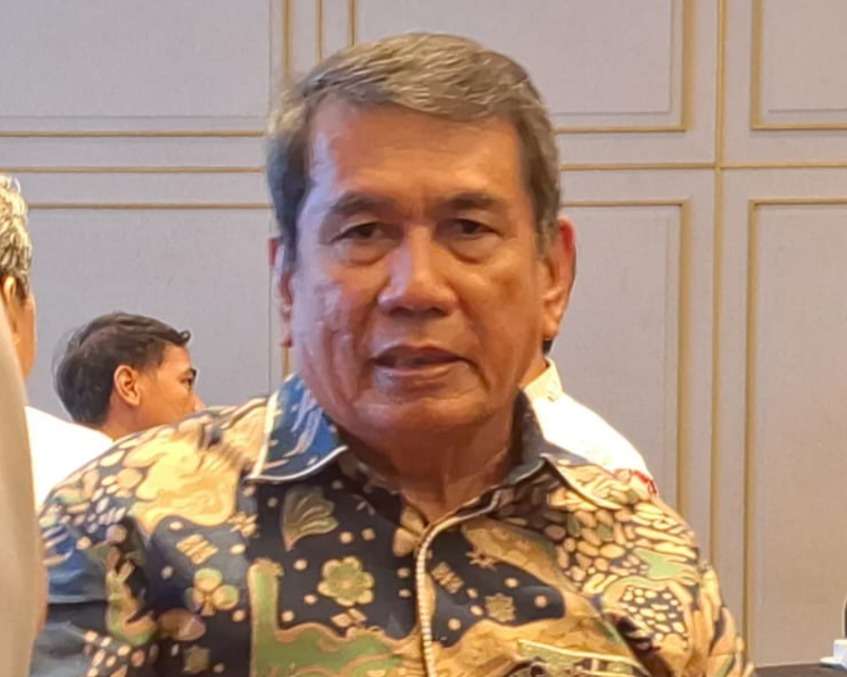
About Hasanuddin Atjo
Dr. Hasanuddin Atjo — Dr. Ir. Hasanuddin Atjo, M.P. is one of Indonesia’s senior aquaculture figures, with extensive experience as both a government official and shrimp-farming practitioner. He began his career as a fisheries extension officer in Barru Regency after completing his fisheries education at IPB University, before pursuing a master’s degree at Hasanuddin University and a doctoral degree in fisheries at the same university.
He previously served as Head of the Marine Affairs and Fisheries Agency of Central Sulawesi Province and is widely recognized for his work in developing super-intensive shrimp-farming technology, including water-quality management, pond waste management, pond construction, seed quality, feed, and business management. In recent years, Atjo has remained active as a consultant and practitioner in the development of intensive shrimp aquaculture.
___
Editor: Kamaruddin Azis