
Lessons from Tanakeke, Sabangko and Saugi: Why Indonesia’s island energy transition must begin with people
By Kamaruddin Azis
MARITIMEPOSTS.COM – There is an uncomfortable question that should be asked before another solar panel is transported by boat and installed on a remote Indonesian island: what happens after the ceremony, after the photographs, and after the project team leaves?
The question is not intended to challenge renewable energy. Solar power has enormous potential for Indonesia’s small islands, where communities continue to face expensive fuel, unreliable electricity and difficult access to mainland infrastructure.
The problem is the development model. Too often, we approach an island as a technical problem: there is insufficient electricity, therefore we bring solar panels. We measure success through installations, connections, capacity and project completion.
But an island is never merely a technical space. It is a social-ecological system, where livelihoods, ecosystems, households, institutions, transportation, local leadership and economic relationships interact continuously.
My reflections come from years of working with coastal communities, including experiences and observations around Tanakeke, Sabangko and Saugi in South Sulawesi. These islands are different, but together they offer lessons about why technology must be accompanied by social preparation.
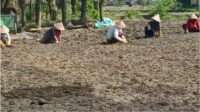
Tanakeke was one of the places that strengthened my understanding of island communities. During my journey there, I encountered a community whose everyday life was closely connected with mangroves, fisheries, water, transportation and coastal livelihoods. I later documented those observations in Tanakeke, Kampung dari Dahan Bakau.
The important lesson from Tanakeke is that infrastructure cannot be separated from the social and ecological conditions surrounding it. A project that works technically may still fail developmentally if it does not fit the community’s livelihood patterns, institutional capacity and everyday realities.
This is particularly relevant for renewable energy. Before deciding what technology should be installed, we should understand how electricity will actually be used, who needs it most, what economic activities can benefit from it and whether local people are prepared to operate and maintain the system.
A recent study on renewable-energy options in Tanakeke reinforces this broader perspective by considering not only energy potential, but also technical feasibility, investment and operational costs, reliability, social acceptance and environmental considerations.
That is precisely the kind of thinking that small-island energy programs need. The question should not be which technology is fashionable, but which energy system is technically appropriate, socially accepted, economically useful and institutionally sustainable.
Sabangko offers another useful lesson because renewable energy there has been connected with practical community needs. Solar-powered water infrastructure has been introduced at SDN 41 Pulau Sabangko, addressing a very concrete problem involving water availability for a public facility
But another Sabangko experience is even more interesting from a development perspective. Documentation of centralised solar power development describes electricity being connected to productive activities, including electric boats and small businesses operated by women producing food products from marine resources.
This is the direction we should pursue. Instead of asking only how many homes can receive electricity, we should ask how electricity can strengthen the island economy. Can it support cold storage, fish processing, seaweed processing, water supply, communications, tourism, small enterprises or boat operations?
That shift changes the meaning of renewable energy. Electricity is no longer merely a service delivered to households; it becomes an economic platform that can support livelihoods, generate income and potentially create the resources necessary for communities to maintain their own energy infrastructure.
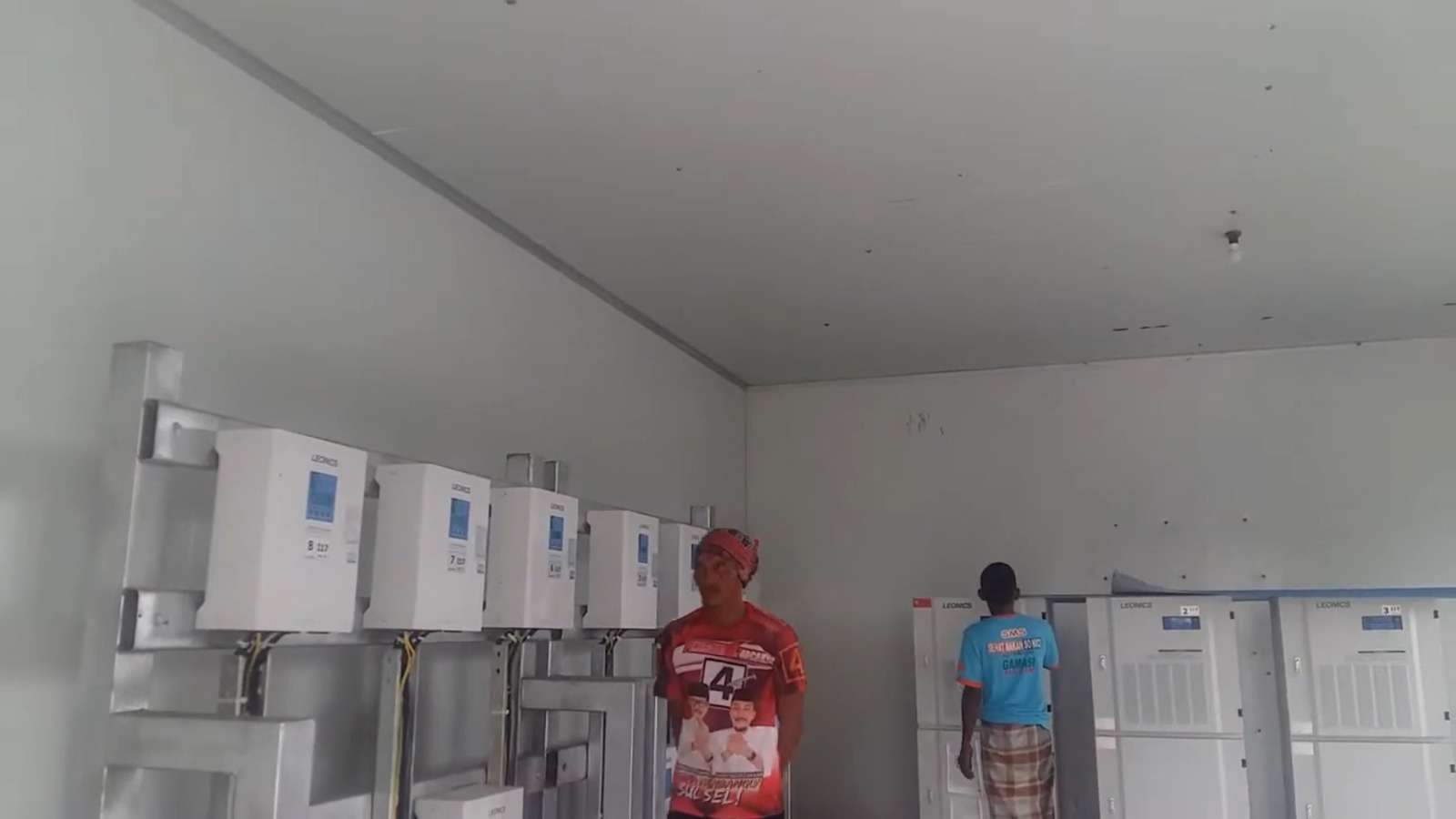
Saugi provides another valuable case. In 2017, a 50-kWp centralised solar system was reported to provide electricity to approximately 130 homes, replacing community dependence on generators that previously operated for limited periods.
The significance of that experience goes beyond the installed capacity. Residents were already accustomed to paying for generator-based electricity, meaning that the economic value of reliable energy was part of the community’s everyday experience before the solar system arrived.
More recently, PLN’s SuperSUN technology has also been deployed on Saugi, including for public facilities such as the island’s auxiliary health centre. The initiative demonstrates the continuing relevance of solar technology for remote island services and public infrastructure.
But here is where we need to move beyond celebrating installation. The real measure of an island energy project is not whether the system works when it is inaugurated, but whether it remains functional after the project team has disappeared from the island.
Who operates the system when something goes wrong? Who understands the inverter? Who checks the battery? Who cleans and inspects the panels? Who keeps records of electricity use? Who calls for technical assistance when the system stops functioning?
More importantly, who pays for replacement components? These questions are not minor administrative details. On a small island, a failed component can require a boat journey, transportation costs, technical expertise and several days or weeks before the system becomes operational again.
This is why I believe social preparation should be treated as infrastructure. A trained local operator, a maintenance fund, a functioning community institution and a clear ownership arrangement can be just as important as the physical equipment itself.
We often describe community participation as a meeting held before construction begins. People are invited, officials explain the project, photographs are taken, participants sign attendance sheets, and everyone goes home.
That is consultation, but it is not necessarily participation. Real participation means that people understand the technology, influence decisions about its use, agree on responsibilities, know the costs and have a genuine stake in keeping the system functioning.
The community should therefore be involved before procurement and installation. It should help identify energy priorities, determine productive uses, select local operators, discuss maintenance arrangements and establish rules for access, payment and future replacement.
Women and young people should not be treated merely as beneficiaries. They can become operators, entrepreneurs, managers and users of productive energy systems. On many small islands, they are already central to household economies and value-added processing.
The same principle applies to local government. Village and district authorities should understand exactly what asset is being installed, who owns it, what responsibilities accompany that ownership and what resources are available when the initial project financing disappears.
Without these arrangements, we risk creating what I would call “orphan infrastructure”—infrastructure that belongs to everyone on paper but to nobody in practice when something goes wrong.
This is particularly dangerous for small islands because distance magnifies every weakness. A broken system in a city can sometimes be repaired within hours. A broken solar system on an island may require transportation, specialised personnel and additional costs that were never included in the original project design.
Therefore, every small-island solar project should answer one question before installation: Who will make sure this system is still working five years from now?
If the answer is unclear, the project design is incomplete.
We also need to rethink what we mean by technical readiness. A technically sophisticated solar system is not necessarily appropriate if the community has no capacity to maintain it, if replacement components are unavailable locally or if electricity demand has not been properly understood.
Technology must therefore be matched with local capacity. A simpler system that local people understand and can maintain may ultimately produce greater development benefits than a sophisticated system that depends permanently on outside technicians.
The same applies to energy demand. A system designed only for lighting may become inadequate when communities begin purchasing refrigerators, pumps, televisions, computers, freezers or equipment for productive activities.
That is why community energy planning must consider both present and future demand. We should design not merely for today’s electricity consumption, but for the economic activities that the community wants to develop tomorrow.
This is where the concept of productive use becomes critical. Solar energy should not stop at household lighting if it can support refrigeration, fish processing, seaweed enterprises, water pumping, digital businesses or other activities that strengthen household incomes.
The development sequence should therefore become solar, electricity, productive use, income, local capacity, maintenance and sustainability. That is fundamentally different from the conventional sequence of installation, inauguration, handover and project closure.
The difference is not semantic. It determines whether renewable energy becomes an enduring community asset or another piece of infrastructure waiting for a future rehabilitation project.
This is why project indicators also need to change. Counting installed panels is useful, but it tells us very little about long-term impact. We should also measure system uptime, local technical capacity, productive energy use, income effects and maintenance performance.
A solar system that continues operating after five years under local management should be considered a major development success. Five hundred newly installed systems that become dysfunctional because nobody can maintain them should not automatically be considered successful.
The most photogenic moment of a project is usually the inauguration. The most important moment is often much later, when the equipment fails for the first time and the community has to decide what to do.
That is when we discover whether ownership was real, whether capacity was transferred, whether financing mechanisms exist and whether the community sees the infrastructure as ours rather than the project’s.
This distinction is fundamental. A project can install hardware in a community, but it cannot simply install ownership. Ownership develops through participation, responsibility, knowledge, contribution and the ability to influence decisions.
The same applies to social capital. Trust between community members, local government, technical providers and development agencies can determine whether problems are solved collaboratively or whether everyone waits for someone else to take responsibility.
For that reason, I would propose a Social Readiness Before Solar approach for small-island renewable-energy programs. Before installation, every project should assess community needs, local institutions, technical capacity, ownership, maintenance financing, productive uses and long-term governance.
The assessment should not become another bureaucratic document. It should be a practical mechanism for determining whether the community is ready and whether the proposed energy system is appropriate for its social and economic circumstances.
I would also propose establishing a local Island Energy Technician model. Young people living on the island can be trained in basic operation, troubleshooting and maintenance, equipped with essential tools and connected to a regional technical support network.
This would create an important shift from external dependency to local capacity. The external provider would remain available for complex repairs, but routine problems could increasingly be addressed by people who actually live in the community.
A maintenance fund should also be established before installation. The question of battery replacement should never be postponed until the battery fails. Communities, governments, utilities and project partners need to agree in advance on how major replacement costs will be financed.
Productive-use planning should become another standard component. Every energy project should identify at least several realistic ways electricity can support livelihoods, because productive electricity can generate income that strengthens household welfare and potentially contributes to the sustainability of the energy system itself.
This is particularly important for islands where economic opportunities are limited. Reliable electricity can help move communities from selling raw resources toward processing, storage, packaging and marketing products with greater added value.
In that sense, renewable energy should be understood not simply as an energy intervention, but as a possible community economic development intervention.
The examples of Tanakeke, Sabangko and Saugi remind us that the island context matters. Tanakeke teaches us to understand the social-ecological system. Sabangko demonstrates the importance of connecting electricity with practical needs and productive activities. Saugi shows the potential of community-based operation and renewable energy for public services.
These are not identical cases, and I would not describe every project as either a success or a failure without systematic evaluation. The point is more fundamental: the sustainability of island energy systems depends on more than the technology installed on the island.
Indonesia has thousands of islands, and their social, ecological and economic circumstances vary enormously. A technology package that works in one community cannot automatically be transferred unchanged to another community simply because both are geographically classified as small islands.
A fishing community is different from a tourism community. An island with strong cooperatives is different from one with weak institutions. A densely settled island is different from an island with scattered households. The energy system must respond to those differences.
Therefore, the next generation of island energy policy should move away from technology deployment toward community energy systems. Technology deployment asks where panels can be installed; community energy planning asks where technology can become locally useful, locally managed and economically sustainable.
This is not about slowing down the energy transition. It is about making the transition more durable.
If we spend millions installing equipment but fail to invest in local capacity, maintenance and ownership, we may eventually spend much more rehabilitating infrastructure that should have been sustainable from the beginning.
So, my message is deliberately provocative:
Stop installing solar panels on small islands without social preparation.
Do not stop solar energy. Stop the assumption that hardware alone constitutes development.
Bring solar power to the islands, but bring it with community preparation, local technicians, maintenance financing, productive-use planning, transparent ownership and long-term monitoring.
Bring the technology, but first listen to the people. Ask them what they need, what they can manage. Ask them what they want to produce, who will maintain the system, what happens when the battery dies. And ask them what they want their island to look like five or ten years after the project has ended.
Because a solar panel can produce electricity, but it cannot produce ownership, capacity, trust, maintenance or local economic transformation.
Those things must be built by people. That is the most important lesson I have taken from Tanakeke, Sabangko and Saugi: the future of renewable energy on small islands will not be secured by installing more panels alone, but by building stronger communities around the panels.
The panel is the hardware. The community is the operating system. Without the operating system, even the best hardware eventually stops working.
___
Gowa, 12 August 2026