
MARITIMEPOSTS.COM– July brings two important commemorations that are deeply interconnected. National Family Day reminds us that the family is the cornerstone of a nation’s development, while World Mangrove Day, observed every July 26, calls on us to protect the natural barriers that safeguard coastal ecosystems and the communities that depend on them.
These two observances are not merely about families and the environment as separate issues. Along Indonesia’s coastlines, they converge in one often-overlooked figure: women.
A common question arises: why are women always central to discussions about climate change, mangrove conservation, coastal economies, and family resilience?
The answer is simple. Women stand at the intersection of family, the economy, and the environment.
In coastal communities, climate change is no longer an abstract global issue discussed only in international conferences. Its impacts are felt every day.
Increasingly unpredictable seasons force fishers to travel farther offshore with no guarantee of better catches. Coastal erosion steadily eats away at shorelines, while environmental degradation affects fisheries, aquaculture, and ultimately the food security of coastal families.
In such circumstances, women are often the first to experience these challenges—and the first to seek solutions.
When fish catches decline, it is often mothers who figure out how to stretch the household budget until the end of the month.
When family incomes fall, women look for ways to transform fish, shrimp, or crabs into higher-value products. As children grow, women are also the first to teach them not to litter the sea and to respect nature as the source of life.
Women, therefore, are not merely among those most affected by environmental change; they are also key actors in building resilience from the household level upward.
Mangroves play a remarkably similar role. Their contribution often goes unnoticed, yet their benefits are felt every day. Mangrove forests protect coastlines from erosion, provide nursery grounds for countless marine species, store vast amounts of carbon, and sustain the livelihoods of coastal communities.
Protecting mangroves means safeguarding food supplies, securing household incomes, and ensuring a better future for generations to come. The theme of World Mangrove Day 2026, “Protecting Mangroves, Securing Future Generations,” reminds us that mangrove conservation is not simply an environmental agenda—it is a long-term investment in coastal resilience and family well-being.
For this reason, empowering women and conserving mangroves are not separate agendas. They reinforce one another.
Women equipped with knowledge, skills, and access to economic opportunities are better positioned to develop sustainable businesses based on local natural resources. Likewise, healthy coastal ecosystems provide women with opportunities to expand their enterprises, increase household incomes, and build more prosperous lives.
Experiences from the coastal communities of East Kalimantan clearly illustrate this connection.
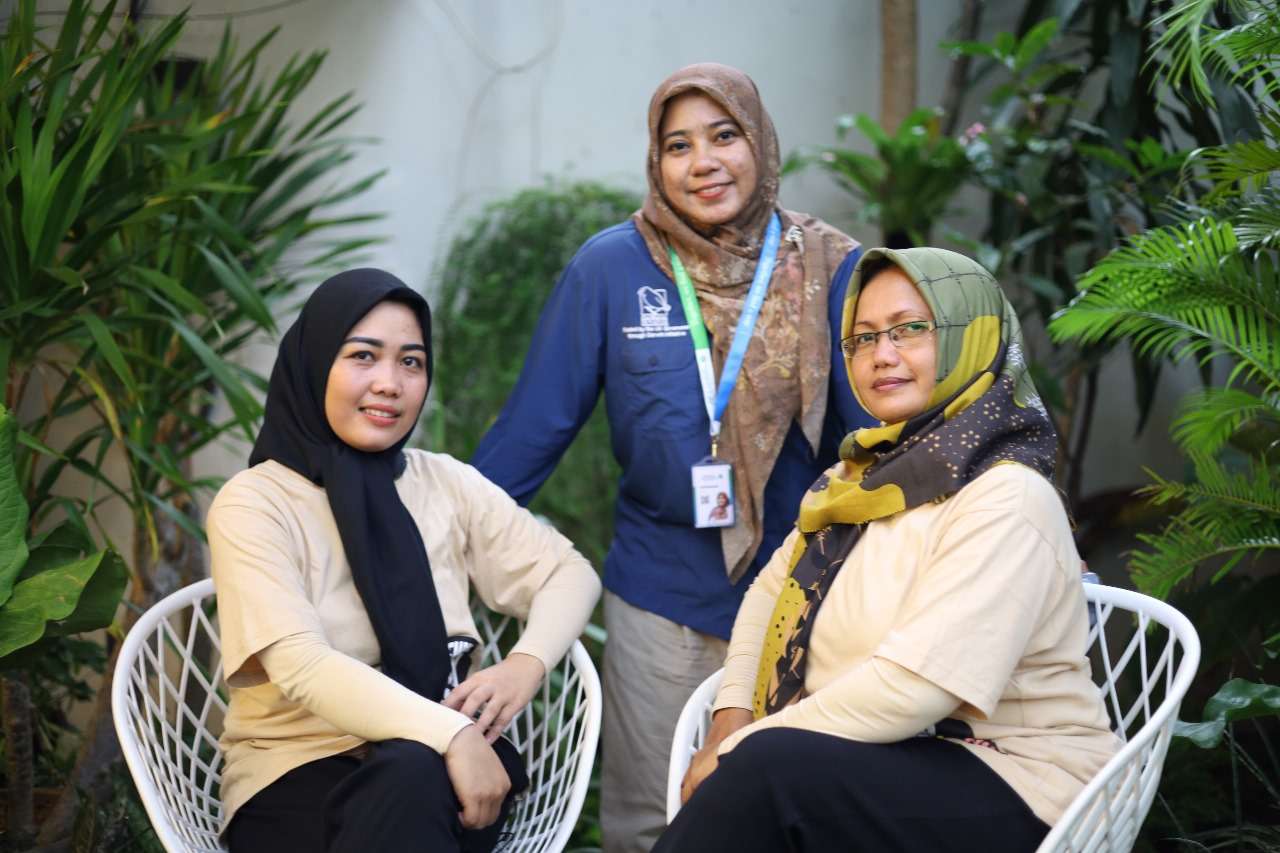
In Pegat Batumbuk Village, the women’s group Poklahsar Kerja Sama Jaya, led by Mrs. Riska Febriani, has received training on sustainable mangrove utilization, business development, and financial management.
The group has also successfully transformed shrimp head waste into a high-value snack called Uludang Crispy, creating an additional source of household income.
Meanwhile, in Teluk Semanting, the Kelompok Tenggiri women’s group, chaired by Mrs. Zuhainah, processes more than one metric ton of fish every month into traditional fish crackers (amplang) and other seafood products, generating monthly revenues exceeding IDR 45 million.
Their success demonstrates that empowering coastal women not only strengthens household economies but also promotes the sustainable use of local marine resources.
These stories demonstrate that coastal development cannot be measured solely by the amount of infrastructure built or increases in fisheries production. True development is, above all, about investing in people.
When discussing human development, women should no longer be regarded as merely supporting actors. They deserve greater opportunities to learn, develop their skills, expand their networks, and strengthen their confidence as agents of change in the face of climate challenges.
Empowered women build resilient families. Healthy mangrove ecosystems create resilient coastlines. When these two forces work hand in hand, we are not only protecting nature—we are ensuring that future generations inherit secure homes, sustainable livelihoods, and hope for a better tomorrow.
There is a timeless saying that reminds us of this responsibility: “We do not inherit the Earth from our ancestors; we borrow it from our children.”
Protecting mangroves, therefore, is ultimately about protecting families. Empowering women is one of the most effective ways to ensure that both continue to thrive.
The observance of National Family Day and World Mangrove Day should remind us that coastal resilience is built through collaboration. Governments, businesses, universities, civil society organizations, and local communities all have equally important roles to play.
We can begin with simple actions: never littering, participating in mangrove planting initiatives, and purchasing and promoting products made by coastal women’s groups.
The small actions we take today will become significant investments in the future of East Kalimantan’s coastal communities—and for generations yet to come.
___
Author: Andi Trisnawati, East Kalimantan Oceans Sustainable Practices Associate, YKAN.