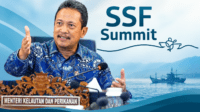

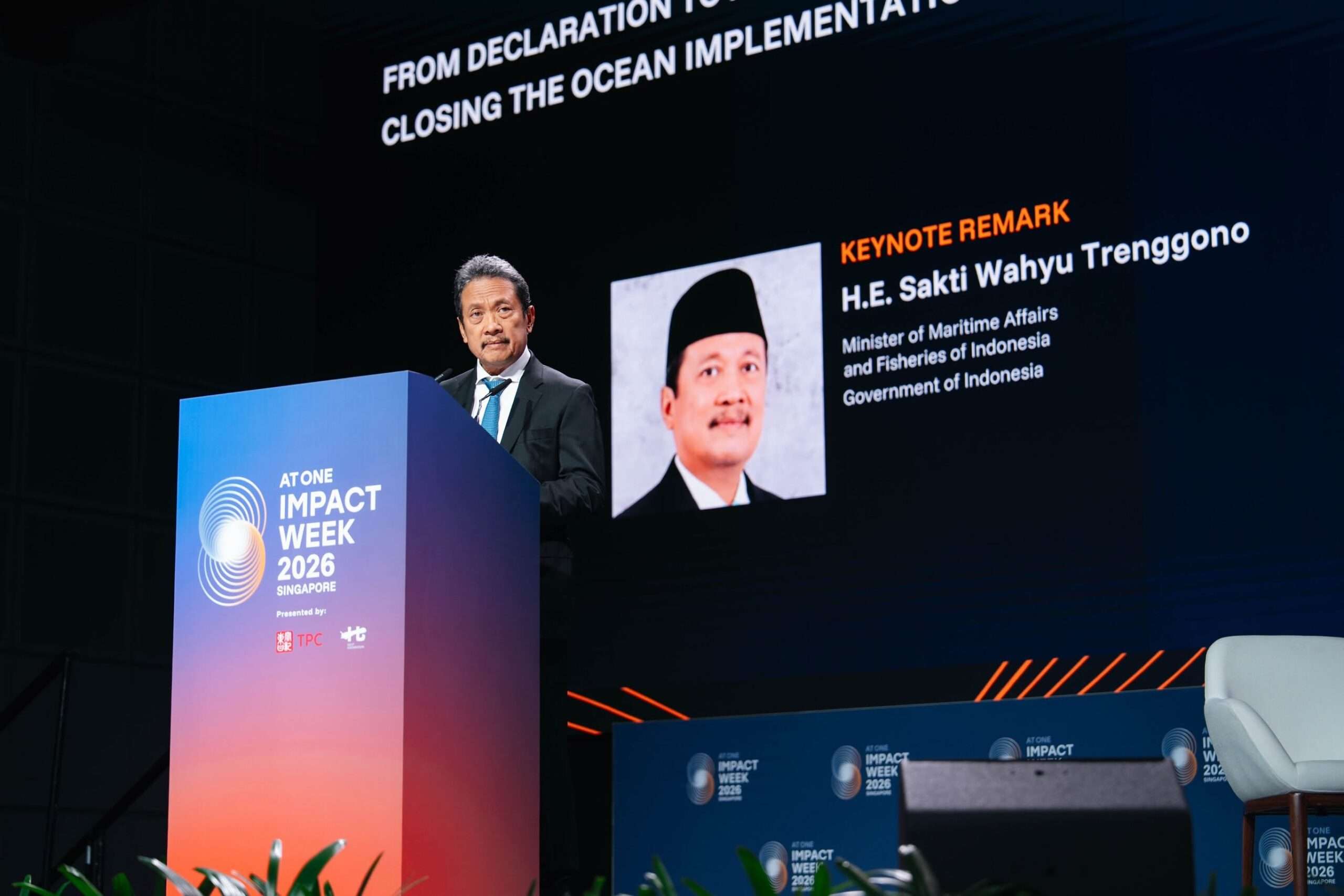
MARITIMEPOSTS.COM – SINGAPORE, September 12, 2026 — Indonesian Minister of Marine Affairs and Fisheries Sakti Wahyu Trenggono emphasized the importance of turning global commitments to ocean sustainability into concrete action that delivers benefits for ecosystems while improving the welfare of coastal communities.
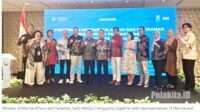
Trenggono made the remarks during his participation in AT ONE Impact Week 2026 in Singapore, held from September 8–12, 2026, a forum bringing together leaders from government, business, investment, policymaking, science, and various change-making communities to advance an economy oriented toward prosperity and sustainability.
The Ocean Ecosystem was one of four transformation ecosystems serving as a central framework for the event.
At the forum, Trenggono was honored as one of the “Impact Architects” within the Ocean Ecosystem, alongside global leaders and stakeholders working to advance new ideas and actions for ocean sustainability and the development of the blue economy.
For Indonesia, Trenggono emphasized, the ocean cannot be viewed merely as an economic resource. It is an essential part of the nation’s identity and a living space for communities that, for generations, have depended on coastal and marine resources for their livelihoods, food, employment, and future.
“For the Indonesian people, the ocean is not merely a resource; it is an identity,” Trenggono said in reflecting on Indonesia’s participation in the global forum.
This position is strongly aligned with the policy direction of the Ministry of Marine Affairs and Fisheries. Under Indonesia’s 2026 development policy, the blue economy has been positioned as a key foundation for the development of the marine and fisheries sector, seeking to balance the utilization of marine resources with ecosystem conservation.
Its five main agendas include expanding marine conservation areas, implementing quota-based measured fishing, developing sustainable aquaculture, strengthening the management and supervision of coastal areas and small islands, and reducing marine debris through fisher participation.
For this reason, Trenggono stressed that protecting the ocean must go beyond conservation alone. Ecosystem protection must advance alongside human development, the strengthening of coastal economies, increased productivity, and the creation of greater prosperity for communities whose lives depend on the sea.
This perspective is consistent with the Ministry’s approach of positioning coastal communities not merely as beneficiaries, but as essential actors in implementing the blue economy. The Ministry emphasizes that marine conservation must be inclusive, participatory, and equitable, so that ecosystem protection can simultaneously create opportunities to strengthen the coastal economy.
In this context, Indonesia’s blue economy is intended to bridge two interests that are often portrayed as conflicting: the need to maintain healthy ecosystems and the need to improve community welfare. For Trenggono, these are not competing choices, but two objectives that must be achieved simultaneously.
“Protecting the ocean means protecting livelihoods and improving the welfare of communities that depend on the sea,” is at the heart of the perspective Trenggono brought to discussions on the future of the ocean economy.
The Ocean Ecosystem agenda at AT ONE Impact Week also demonstrated how global conversations about the ocean are moving beyond conventional conservation approaches.
The program addressed marine innovation, blue finance, regenerative businesses, coastal communities, and ways to accelerate the transformation of ideas into implementation. One of the sessions specifically explored Regenerative Blue Enterprises, business models that seek to restore marine ecosystems while strengthening coastal communities and local economies.
For Indonesia, such spaces for dialogue are important because the strength of the ocean economy is determined not only by the size of its marine territory, but also by the ability to manage ecosystems, resources, technology, investment, institutions, and communities in an integrated manner.
On previous occasions, Trenggono has also voiced similar ideas in international forums.
At the World Economic Forum 2026 in Davos, for example, he called for collective efforts to restore marine ecosystems in response to threats including climate change, pollution, ocean warming, acidification, declining fish stocks, and illegal fishing. He emphasized that Indonesia, through its blue economy agenda, is ready to contribute to global efforts to protect marine ecosystems.
These commitments have subsequently been translated into various national policy instruments. In June 2026, the Ministry of Marine Affairs and Fisheries, together with the World Resources Institute Indonesia, introduced the Ocean Calculator, a geospatial platform designed to calculate the economic value of marine and coastal ecosystems, including mangroves, seagrass meadows, and coral reefs. The instrument is expected to strengthen data-driven decision-making while demonstrating the links between ecosystem health, blue carbon, coastal protection, and community livelihoods.
At the community development level, the government has also developed various programs aimed at increasing productivity and improving the welfare of coastal communities.
The Red and White Fishermen’s Village (Kampung Nelayan Merah Putih) program, for example, is designed to strengthen production facilities, economic activities, and the quality of life of fishing communities, transforming coastal areas from merely places of residence into new centers of economic growth.
Trenggono believes that the greatest challenge ahead is no longer simply how to produce new commitments. The world already has numerous declarations, targets, and sustainability agendas. The challenge is ensuring that these commitments are translated into policies, investments, innovations, collaborations, and tangible changes on the ground.
“We do not lack commitments. What we need is the courage to turn commitments into action, and action into real impact,” Trenggono said.
The message also places Indonesia in a more active position in the global conversation about the future of the ocean. As an archipelagic nation with a vast coastal population, Indonesia’s success in building a blue economy is important not only for national interests, but also for global agendas concerning food security, climate change, biodiversity, and sustainable development.
For Trenggono, Indonesia is ready to collaborate with countries, international institutions, businesses, scientists, communities, and civil society organizations to ensure that the ocean remains healthy while continuing to support productive economic activity.
Ultimately, the future of the blue economy will not be determined solely by how much marine resources can be utilized, but by how wisely humanity manages and protects the life-support systems upon which that economy depends.
From Singapore, Indonesia’s message is clear: a healthy ocean and prosperous coastal communities are not two separate agendas. They are built on the same foundation for the future of the blue economy.