
MARITIMEPOSTS.CO – The development of scientific diving in Indonesia requires more than just skilled divers. Marine research requires human resources who understand safety procedures, underwater observation methods, and data collection standards, and who can apply diving skills to support academic activities and scientific research.
An important development in this effort has emerged from Universitas Khairun (Unkhair) in Ternate, North Maluku.
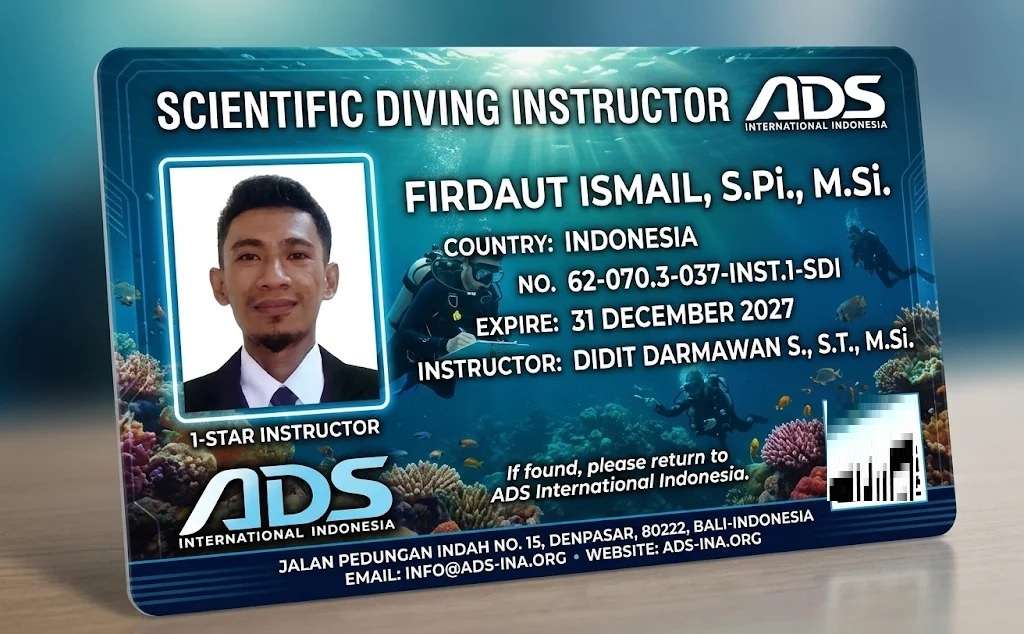
Firdaut Ismail, S.Pi., M.Si., an academic at Unkhair’s Faculty of Fisheries and Marine Science (FPIK), is now certified as a 1-Star Instructor for Scientific Diving Instructor under ADS International Indonesia. His certificate, registration number 62-070.3-037-INST.1-SDI, is valid until December 31, 2027.
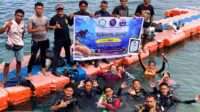
Firdaut earned this qualification after taking part in a three-day Scientific Diving training and certification program held at FPIK Unkhair from November 20 to 22, 2026.
The program featured Didit Darmawan, S.T., M.Si., as both speaker and instructor, and involved 12 Marine Science students and one lecturer. The training consisted of one day of classroom sessions followed by two days of diving practice in the waters around Taman Nukila, Ternate.
Firdaut’s qualification as an instructor adds to the growing number of Indonesian academics and practitioners with specialized expertise in scientific diving.
Experts such as Prof. Jamaluddin Jompa, Prof. Munasik Motali, Dr. Syafyudin Yusuf, and Didit Darmawan are part of a professional network contributing to the development of scientific diving capacity and practices. Unkhair now has an additional instructor from its own academic community, whose qualification emerged through a training process hosted by the university.
Rooted in Marine Science
Firdaut is no stranger to the underwater world. As an academic in Unkhair’s Marine Science Study Program, his teaching and research focus on tropical coastal and marine ecosystems, particularly those found in North Maluku.
His scientific publications reflect an interest in various aspects of marine ecology, ranging from coralogy and megabenthos in coral reef ecosystems to the structure of reef fish communities in island waters.
Beyond coral reefs, his academic interests also encompass mangrove ecosystems and marine algae. His research topics have included assessments of mangrove ecosystem conditions and DNA barcoding of red algae, or Rhodophyta, in the waters around Ternate Island.
Alongside his research activities, Firdaut has also been involved in community service, including supporting micro-enterprises in Ternate through the development and processing of fisheries products.
From Training Participant to Instructor
The Scientific Diving training at FPIK Unkhair provided an opportunity to develop the competencies of both students and academic staff. Didit explained that the program was not solely intended to improve diving skills, but also to introduce the standards, procedures, and methods required for underwater research.
Marine Science students, for example, need to master techniques for observing and collecting data on coral reef ecosystems. They are already familiar with methods such as reef checks and other survey approaches, but these skills need to be supported by measurable scientific diving competencies and standardized certification.
During the three-day training, Firdaut took part in the competency development process that led to his qualification as a Scientific Diving instructor.
This achievement is particularly significant for Unkhair because capacity building has not been limited to students; it has also produced an instructor from within the university’s own academic community.
Previously, a lecturer at the university had obtained an ADS diving instructor qualification, but did not yet hold a specific certification as a Scientific Diving instructor.
The development of such competencies is intended to enable universities to become more self-reliant in conducting training and certification programs for their students.
The Scientific Diving certification system itself comprises three levels: Basic Scientific Diving, Intermediate, and Advanced. These levels provide a structured pathway for divers to progressively develop their capabilities according to their competencies and the requirements of scientific activities.
Strengthening Marine Research Capacity in Eastern Indonesia
The presence of a Scientific Diving instructor at Unkhair is also relevant to efforts to strengthen marine research capacity in eastern Indonesia. North Maluku has important coastal and marine ecosystems that warrant further research, including coral reefs, mangroves, and marine biodiversity.
These resources require the support of researchers and scientific divers who understand local conditions and can conduct observations using methods that meet established standards.
Didit Darmawan said the training at Universitas Khairun has the potential to become a pilot project for developing similar programs at other universities in eastern Indonesia. So far, scientific diving instructors and experts have built capacity in several parts of western Indonesia and Papua. The initiative in Ternate represents one step toward extending this expertise to a wider geographical area.
In this context, support from professional and institutional networks is essential. Prof. Jamaluddin Jompa, as Chairman of ADS International Indonesia, has also shown an interest in the development of the scientific diving community.
Connections with the Indonesian Coral Reef Experts Association (Himpunan Ahli Terumbu Karang Indonesia or ATKI) are also part of efforts to strengthen the network of experts and instructors and encourage the development of competency standards for coral reef research.
For Unkhair, the addition of an instructor from its academic community creates opportunities to establish continuity in learning and training. Students can gain closer access to scientific diving guidance, while lecturers have opportunities to integrate these skills into education, research, and community service activities.
The Sea as a Scientific Laboratory
Firdaut Ismail’s achievement demonstrates how scientific diving can develop through university-based education and professional competency building. Instructor certification is not the final destination, but the beginning of a responsibility to train divers, uphold safety standards, and ensure that diving skills are properly applied in scientific activities.
With his background in marine science and research on North Maluku’s coastal ecosystems, Firdaut has the opportunity to play a greater role in advancing scientific diving. His presence strengthens Unkhair’s institutional capacity while adding another centre of expertise in eastern Indonesia.
The sea should not be viewed merely as an object of study or a space for exploration. For the academic community, it is also a natural laboratory that demands technical skills, methodological discipline, and accountable competency standards.
This is where instructors such as Firdaut play an important role: connecting diving capabilities with the needs of scientific knowledge and the future of marine research in Indonesia.
___
Editor Denun