
MARITIMEPOSTS.COM, GOWA – Understanding rural communities requires more than classroom theories and academic discussions. Students need to engage directly with residents, observe their everyday activities, and understand how communities manage local resources and develop livelihood strategies.
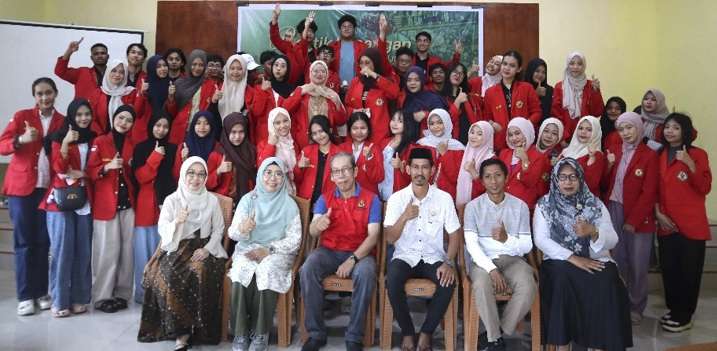
This approach was put into practice by 48 students from the Sociology Study Program, Faculty of Social and Political Sciences (FISIP), Hasanuddin University, during a field practicum in Mandalle Village, Bajeng Barat District, Gowa Regency, from November 20–22, 2026.
Carrying the theme “Social Dynamics and Livelihood Strategies of Agrarian-Coastal Village Communities,” the program was part of the coursework for Rural Sociology and Maritime Communities.
Mandalle Village was selected as a learning site where students could explore the relationships between social conditions, economic activities, cultural practices, and community livelihood patterns.
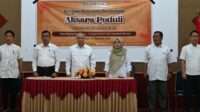
The student delegation, accompanied by faculty members, was welcomed by Haerian, S.P., Chair of the Mandalle Village Consultative Body (BPD), representing the Mandalle Village Government.
The reception reflected the village government’s openness to academic initiatives and higher education institutions seeking to gain a deeper understanding of local community life.
Over three days, students carried out a range of field activities, including area mapping, social observation, and interviews with local residents.
Through these activities, they sought to identify community characteristics, social relationships, economic resources, local potential, and the challenges shaping household livelihood strategies in the agrarian-coastal setting.
The practicum also provided an opportunity for students to strengthen their social research skills, sharpen their sociological analysis, improve communication with communities, and develop greater sensitivity to rural development issues.
M. Reza Adinata S., Head of the Field Practicum Team, said that direct engagement with residents offered students a more concrete understanding of the subjects they had studied in the classroom.
“Through this field practicum, we can learn directly from the community about the dynamics of village life, its existing potential, and the various challenges residents face,” he said.
The program was supervised by three faculty members: Dr. Arsyad Genda, M.Si., Dr. Ria Renita Abbas, M.Si., and Cindy Anshar, M.Si.
Dr. Arsyad Genda explained that field-based learning plays an essential role in sociology education, giving students the opportunity to test their theoretical understanding through direct observation of social phenomena within communities.
“Students are expected not only to understand theories but also to interpret social realities, identify problems, and develop analyses based on the actual conditions of the communities they encounter,” he explained.
The field practicum also received support from the Sociology Alumni Association of FISIP Hasanuddin University (IKASOS FISIP Unhas). The alumni organization had previously designated Mandalle Village as one of its community development partner villages under the initiative Desa Mandalle Bertumbuh (Mandalle Village Growing Together).
This initiative creates opportunities for a more sustained relationship between the university, its alumni, and the village community.
Dr. Busman Dahlan Shirat, M.Hum., Chair of IKASOS FISIP Unhas, welcomed the involvement of students and faculty members in the program.
He emphasized that academic collaboration of this kind should go beyond fulfilling educational requirements and generate tangible benefits for local communities.
“We hope this initiative will serve not only as a learning platform for students but also make a meaningful contribution to developing local potential and empowering the people of Mandalle Village in a sustainable manner,” he said.
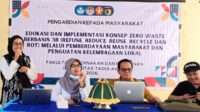
Beyond the academic activities, the university’s visit also included a community engagement program involving 15 women from the village.
The program focused on strengthening women’s capacities in household economic management and making better use of local resources and opportunities.
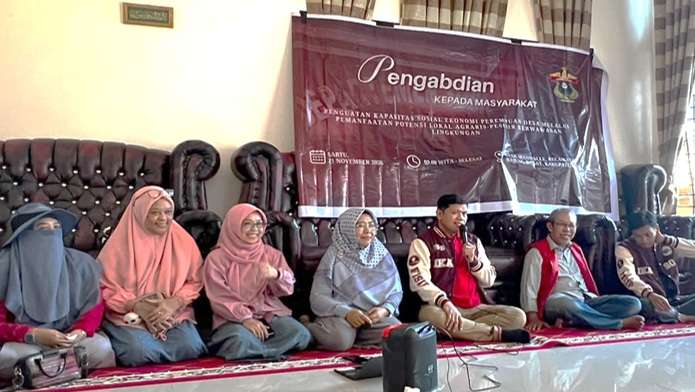
Dr. Fatmawati, S.S., M.A., from the Research and Community Engagement Division of IKASOS FISIP Unhas, explained that the initiative was designed as part of broader efforts to develop community engagement programs that respond to local needs and potential.
“Strengthening women’s capacities is an important step toward building household economic independence. We hope this initiative will encourage village women to become more actively involved in identifying local opportunities and developing their abilities to manage household economic resources,” she said.
The interaction among students, lecturers, alumni, village authorities, and Mandalle residents demonstrated how academic fieldwork can evolve into a broader platform for collaboration. The field experience not only enriched students’ knowledge but also opened opportunities to identify community needs and formulate relevant forms of engagement.
Through this initiative, the Sociology Study Program of FISIP Hasanuddin University, together with IKASOS, hopes Mandalle Village will continue to serve as a space for social learning and a partner in community development.
The collaboration represents one practical expression of the university’s Three Pillars of Higher Education (Tri Dharma Perguruan Tinggi), particularly in connecting education, research, and community engagement with the realities of development at the village level.