
Unhas Rector’s Habibie Prize 2026 recognizes decades of contributions to marine science, coral reef ecology and biodiversity research, while reaffirming the importance of scientific leadership in shaping Indonesia’s future.
JAKARTA — For Prof Jamaluddin Jompa, becoming rector of a major public university has never meant leaving the laboratory behind. Even while carrying the considerable responsibilities of leading Universitas Hasanuddin (Unhas), he continues to identify himself first and foremost as a scientist and researcher.
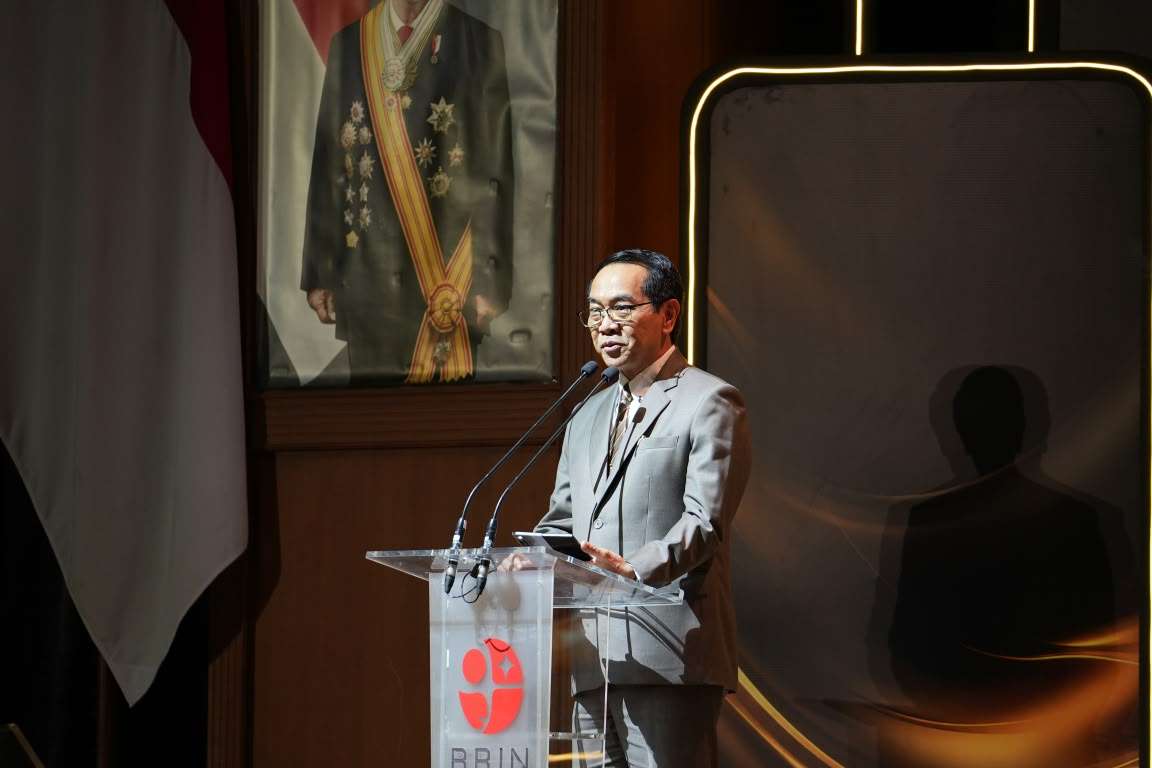
That conviction gained national recognition on November 10, 2026, when Prof. Jamaluddin, widely known as Prof. JJ, received the prestigious Habibie Prize 2026 in Basic Science (Ilmu Pengetahuan Dasar) at Gedung Habibie, the National Research and Innovation Agency (BRIN), Jakarta.
The award recognizes his longstanding contributions to science, particularly in marine ecology, coral reef research and biodiversity monitoring.
More than an individual achievement, the recognition reflects the value of sustained scientific inquiry in a country whose extraordinary natural resources demand deeper understanding, stronger research institutions and evidence-based policies.
For Prof. JJ, however, the distinction also carries a message about academic leadership: scientific curiosity should not disappear when a researcher assumes an executive position.
“I always prioritize my primary responsibility as a scientist and researcher. Being rector is an additional responsibility. This is one way I lead by example,” he said.
It is a statement that captures a defining feature of his academic journey. Rather than treating research and university administration as competing responsibilities, he sees scientific productivity as an essential foundation of institutional leadership.
He also acknowledges that this commitment would not be possible without the dedication of his laboratory team, whose work sustains research activities even amid the demands of university governance.
A scientific legacy rooted in the marine environment
Jamaluddin Jompa’s scientific contributions are closely associated with the marine environment, particularly the ecology and conservation of coral reef ecosystems.
In a country positioned at the heart of the Coral Triangle, research into reef systems, marine biodiversity and ecological resilience has implications extending far beyond academic publication.
Indonesia’s marine ecosystems support fisheries, coastal livelihoods, tourism and the ecological balance of thousands of islands. Yet these resources face mounting pressures from climate change, habitat degradation, pollution and unsustainable exploitation.
Understanding how marine ecosystems function, how biodiversity changes and how coral reef communities respond to environmental pressures is therefore fundamental to developing effective conservation and management strategies.
Through his research and academic work, Prof. JJ has contributed to strengthening the scientific understanding of these interconnected challenges. His field of expertise also highlights the importance of long-term ecological observation, systematic biodiversity monitoring and the translation of scientific findings into practical knowledge for marine resource management.
Such work is particularly relevant for Indonesia, where marine policy and development decisions must be informed by reliable ecological evidence. The future of coastal communities cannot be separated from the condition of the ecosystems upon which their livelihoods depend.
His Habibie Prize recognition consequently represents more than an acknowledgement of an established academic career. It brings attention to the strategic importance of basic science in a country seeking to strengthen its position in global research and innovation.
Leading a university without abandoning research
One of the more compelling aspects of Prof. JJ’s leadership philosophy is his insistence that the identity of a scientist should remain intact, even when institutional responsibilities become increasingly demanding.
University leadership involves complex administrative and strategic responsibilities, from managing human resources and research funding to developing international partnerships and improving academic performance.
These demands can easily consume the time and energy that researchers once devoted to scientific investigation.
Prof. JJ offers a different perspective. He regards his responsibility as a researcher as fundamental, while the rectorate represents an additional institutional assignment.
His approach is an example of leading by example: encouraging a research culture not merely through policies, targets and institutional regulations, but through personal commitment to scientific work.
Importantly, this philosophy does not suggest that a rector must personally conduct every research activity. Rather, it underscores the importance of building a functioning research ecosystem in which laboratories, research groups, young academics and students can continue producing knowledge.
This is where his individual achievement intersects with the institutional ambitions of Unhas. A university’s scientific reputation cannot rest on one distinguished professor alone. It must be sustained through an environment that encourages intellectual independence, collaboration, research excellence and the development of future generations of scientists.
From basic science to national innovation
The Habibie Prize also provides an opportunity to reconsider the place of basic science in Indonesia’s development agenda.
In recent years, technological discussions have increasingly focused on artificial intelligence, digital transformation and industrial innovation. Generative AI, in particular, has captured considerable attention across academic institutions, governments and businesses.
Yet technological progress ultimately depends on deeper scientific foundations. Without strong capabilities in mathematics, biology, physics, chemistry, marine science and other fundamental disciplines, the ability to develop original technologies and adapt them to national needs will remain limited.
At the award ceremony, BRIN Head Prof. Dr. Arif Satria emphasized the importance of strengthening basic science as a foundation for long-term economic growth and technological competitiveness.
Drawing on the economic growth framework associated with Nobel laureate Paul Romer, he highlighted the central roles of human capital and technological innovation in sustaining national development.
He also pointed to emerging technological frontiers that Indonesia needs to anticipate, including Agentic AI, Multi-Agent AI, Physical AI and genomic technologies.
These developments represent a transition beyond the current wave of generative AI. Agentic systems are designed to undertake goal-oriented tasks, Multi-Agent AI enables coordination among multiple intelligent systems, while Physical AI connects intelligence with robotics and real-world environments. Genomic technologies, meanwhile, offer opportunities to strengthen agriculture, food security and biological innovation.
For Indonesia, the challenge is not simply to become a consumer of these technologies. It is to develop the scientific talent, research infrastructure and institutional capacity required to participate in creating them.
In this context, recognition of Prof. JJ’s contributions to basic science carries an important message: technological ambition must be built upon a strong foundation of scientific knowledge.
Unhas and the future of scientific excellence in Eastern Indonesia
For Universitas Hasanuddin, the Habibie Prize is also an important institutional milestone.
As one of Indonesia’s leading universities outside Java, Unhas occupies a strategic position in developing scientific knowledge relevant to the country’s eastern regions. Its geographical and academic environment provides opportunities for research into marine resources, biodiversity, tropical ecosystems, agriculture, public health and sustainable development.
Prof. JJ’s recognition reinforces the importance of strengthening this regional research capacity and connecting it with national and international scientific networks.
The next challenge is to ensure that research excellence translates into tangible public benefits.
In marine science, this means connecting ecological research with coastal management, fisheries sustainability, conservation planning and the resilience of coastal communities. It also means strengthening collaboration between universities, government agencies, industries, local communities and international research institutions.
The process of translating scientific findings into practical solutions, often described as research translation or hilirisasi, should become an integral part of the university’s development strategy.
Basic research and applied innovation should not be treated as separate worlds. The former generates fundamental understanding, while the latter creates opportunities to transform that knowledge into technologies, policies and solutions that respond to societal needs.
For Eastern Indonesia, where marine and terrestrial resources are both economically significant and ecologically sensitive, this connection is particularly important.
A legacy measured by the next generation
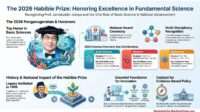
Established in 1999 as the Habibie Award by the Yayasan Sumber Daya Manusia Ilmu Pengetahuan dan Teknologi, the distinction was created to honour the scientific vision and dedication of Indonesia’s former president and renowned technologist, B.J. Habibie. It was subsequently renamed the Habibie Prize in 2020 and is now associated with BRIN and Yayasan SDM IPTEK, with support from the Education Endowment Fund (LPDP).
Its significance lies not only in celebrating individual achievements but also in encouraging a national culture that values scientific excellence, intellectual integrity and long-term investment in knowledge.
The presence of national figures, scientists, university leaders and policymakers at the November 10 ceremony reflected the broader importance attached to the award. Among those attending were Youth and Sports Minister Erick Thohir, former Coordinating Minister for Political, Legal and Security Affairs Mohammad Mahfud MD, and Ilham Akbar Habibie, son of B.J. Habibie.
For Prof. Jamaluddin Jompa, the recognition marks an important moment in a career devoted to understanding the natural world and advancing scientific knowledge.
But the more enduring measure of his legacy may lie in what comes next: the research institutions he helps strengthen, the young scientists he inspires, the collaborations he encourages and the scientific questions that future generations will be equipped to answer.
A Habibie Prize can recognize a lifetime of achievement. A scientific legacy, however, is measured by its capacity to outlive the recognition itself.
In this sense, Prof. JJ’s most important contribution may not simply be the body of knowledge he has helped build through marine and biodiversity research. It is also the example he sets for academic leadership: that managing a university should not mean abandoning the pursuit of knowledge.
For a country seeking to move beyond technological dependence and establish itself as a contributor to global innovation, that principle matters. Indonesia needs not only more sophisticated technologies, but also scientists who remain committed to asking fundamental questions, generating original knowledge and preparing the next generation to take science further.
The real legacy of a scientist is not only what he discovers during his lifetime, but also the scientific capacity he leaves behind for those who follow.
___
Editor K. Azis