
The inaugural meeting of an international consortium on toxicology, radiation, and health in Bali provides a platform for cross-country knowledge exchange. Dr. Hasnawati Amqam participated as an invited speaker, presenting research findings on heavy metal biomonitoring among pregnant women in Makassar City.
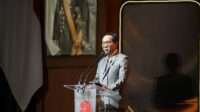
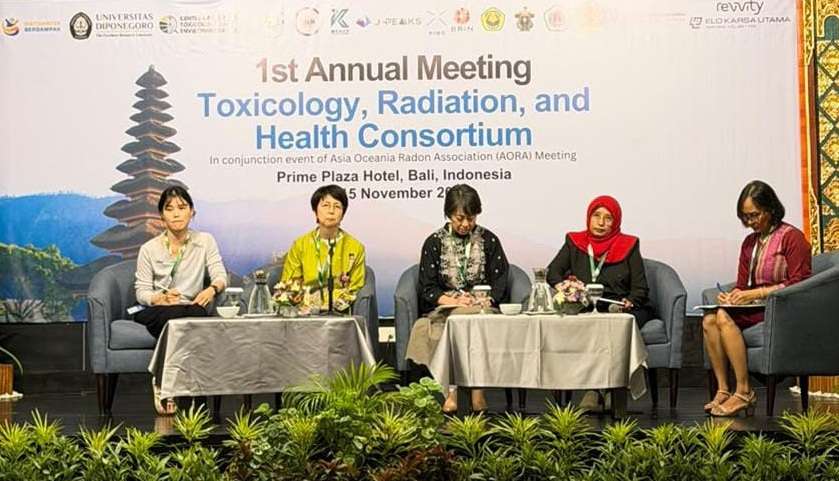
MARITIMEPOSTS.COM – The 1st Annual Meeting of the Toxicology, Radiation, and Health Consortium (TRaHC) officially opened on November 13, 2026, at the Prime Plaza Hotel in Bali. The inaugural meeting of this international consortium was formally opened by the Dean of the Faculty of Medicine, Diponegoro University, Prof. Dr. dr. Yan Wisnu Prajoko, M.Kes., Sp.B., Subsp.Onk(K).
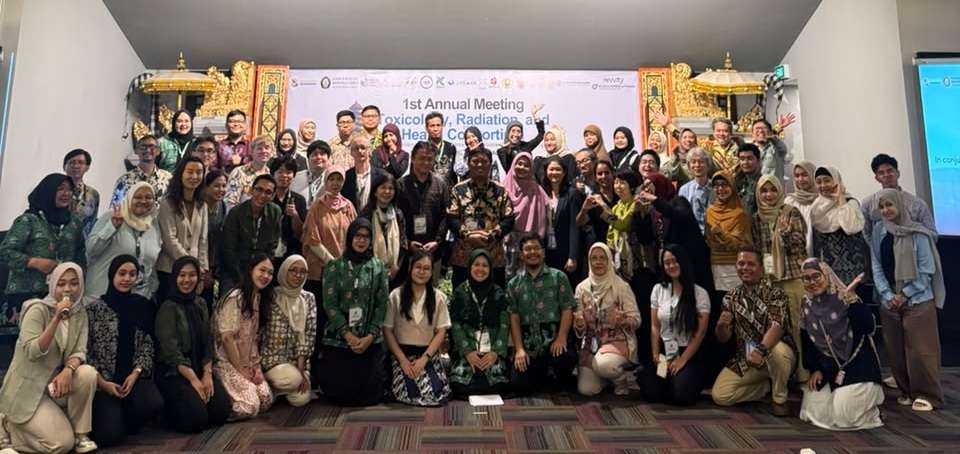
TRaHC is an international consortium bringing together academics and researchers from Asia, Europe, and Australia to advance scientific knowledge and strengthen collaboration in toxicology, radiation, and their impacts on human health.
The forum is designed as a platform for exchanging ideas, fostering scientific innovation, and addressing emerging environmental and public health challenges through sustainable research partnerships.
The 2026 TRaHC meeting is being held concurrently with the meeting of the Asia Oceania Radon Association (AORA).
The initiative was developed through a collaboration among six institutions affiliated with the Study of Indonesian Mother, Children and Environmental Health network. These include the Faculty of Medicine, Diponegoro University; University of Jember; University of Gorontalo; Faculty of Public Health, Hasanuddin University; and the National Research and Innovation Agency (BRIN).
The Faculty of Medicine at Diponegoro University serves as the host institution, while the other institutions participate as co-hosts, with support from the Faculty of Public Health, Udayana University. The organizing partnership also involves international collaborators, including Kagoshima University and Hirosaki University in Japan.
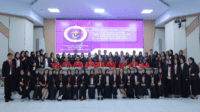
Taking place from November 13–15, 2026, the meeting features a number of distinguished academics and researchers as keynote speakers on its first day. They include Prof. Dr. dr. Yan Wisnu Prajoko, M.Kes., Sp.B., Subsp.Onk(K), Prof. Shinji Tokonami, Dr. rer. biol. hum. Heru Prasetio, Nur Rahmah Hidayati, Dr. Eka Djatnika Nugraha, and Muflihah Muniroh, Ph.D.
The scientific program continues with invited speaker sessions featuring Prof. Atsuko Ikeda, Dr. Aram Lee, Prof. Mayumi Tsuji, and Dr. Hasnawati Amqam.
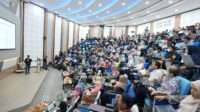
The presentations cover a wide range of perspectives, including toxicology, heavy metal biomonitoring, environmental health, radiation, and environmental epidemiology. These diverse themes enrich scientific exchange while creating opportunities for cross-border research collaboration.
Hasanuddin University’s Faculty of Public Health Presents Research on Heavy Metal Biomonitoring in Pregnant Women
One of Hasanuddin University’s key academic contributions to this international forum comes from Dr. Hasnawati Amqam, S.KM., M.Sc., Head of the Undergraduate Public Health Study Program at the Faculty of Public Health, Hasanuddin University (FKM Unhas).
In addition to participating as an invited speaker, Hasnawati also serves on the Scientific Committee, contributing to the organization of the scientific sessions.
Her presentation, under the theme Human Biomonitoring and Environmental Epidemiology, features research entitled “Heavy Metals Biomonitoring of Pregnant Women from General Population in Makassar City.”
The study examines heavy metal biomarkers among pregnant women from the general population in Makassar City. It represents an important contribution to understanding potential exposure to environmental pollutants and their possible effects on human health, particularly among vulnerable groups such as women, pregnant mothers, and children.
Biomonitoring is particularly relevant to environmental health research because it provides an evidence-based perspective on exposure to hazardous substances that may enter the human body. Findings from studies of this kind can strengthen the scientific foundation for risk identification, environmental monitoring, and the development of public health protection strategies.
For this meeting, Hasnawati also involved the research team from the Environmental Toxicology and Health Research Group (EtoxH), comprising Dr. Isymiarni Starif, Andriani, M.KL., Sarmaliana, M.KL., Azzahrah Fitria Aulia, S.KM., Ana Utami Zainal, M.PH., and Dewi Sundari Irwanto, M.Kes.
The participation of the EtoxH team further strengthens FKM Unhas’s presence in the international scientific community, both through attendance and contributions to research presentations.
The research group focuses on advancing studies in environmental toxicology and its effects on human health, including exposure risks among vulnerable populations such as women, pregnant mothers, and children.
This participation also highlights the importance of Indonesian universities engaging in global scientific discussions. Research rooted in local environmental health challenges can contribute valuable insights to the broader development of scientific knowledge and approaches to addressing public health issues.
Japan to Host TRaHC’s 2027 Annual Meeting
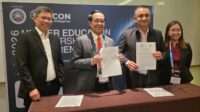
Beyond the scientific sessions, the first day of the meeting, November 13, 2026, also featured a gala dinner accompanied by the signing of a Letter of Intent (LoI). The signing marked the commitment and shared intention of academics and researchers to participate in the continued development of the TRaHC consortium.
During the occasion, participants agreed that The 2nd Annual Meeting of TRaHC 2027 would be held in Japan. Hirosaki University was designated as the host institution, with other consortium members serving as co-hosts.
This agreement represents an important step toward ensuring the continuity of the consortium while expanding research collaboration networks among higher education institutions and research organizations across different countries.
The continued development of TRaHC is also closely aligned with the Sustainable Development Goals (SDGs), particularly Goal 3: Good Health and Well-being.
By strengthening academic networks and international research partnerships, TRaHC is expected to advance scientific knowledge and innovation in health-related fields, particularly in identifying, monitoring, and preventing health risks associated with exposure to toxic substances, radiation, and other environmental factors.
More than simply an academic gathering, the consortium creates opportunities for collaborative research addressing real-world challenges faced by communities.
Strengthening scientific evidence, exchanging expertise, and building international partnerships are essential foundations for universities to contribute meaningfully to human health protection and the development of healthier, more sustainable societies.
___
Editor: Denun