
Why the success of Indonesia’s Red and White Fishing Village Programme will depend less on the buildings it delivers than on the local institutions, economic ecosystems, and political commitment that sustain them.
MARITIMEPOSTS.COM – A fishing village can have a new landing facility, modern infrastructure, electricity, and improved road access, yet its fishermen may remain economically vulnerable.
A well-designed public building can stand for decades without necessarily transforming the livelihoods of the people it was intended to serve. This is one of the enduring paradoxes of infrastructure-led development: delivering physical assets is considerably easier than building the social and economic systems that make those assets productive.
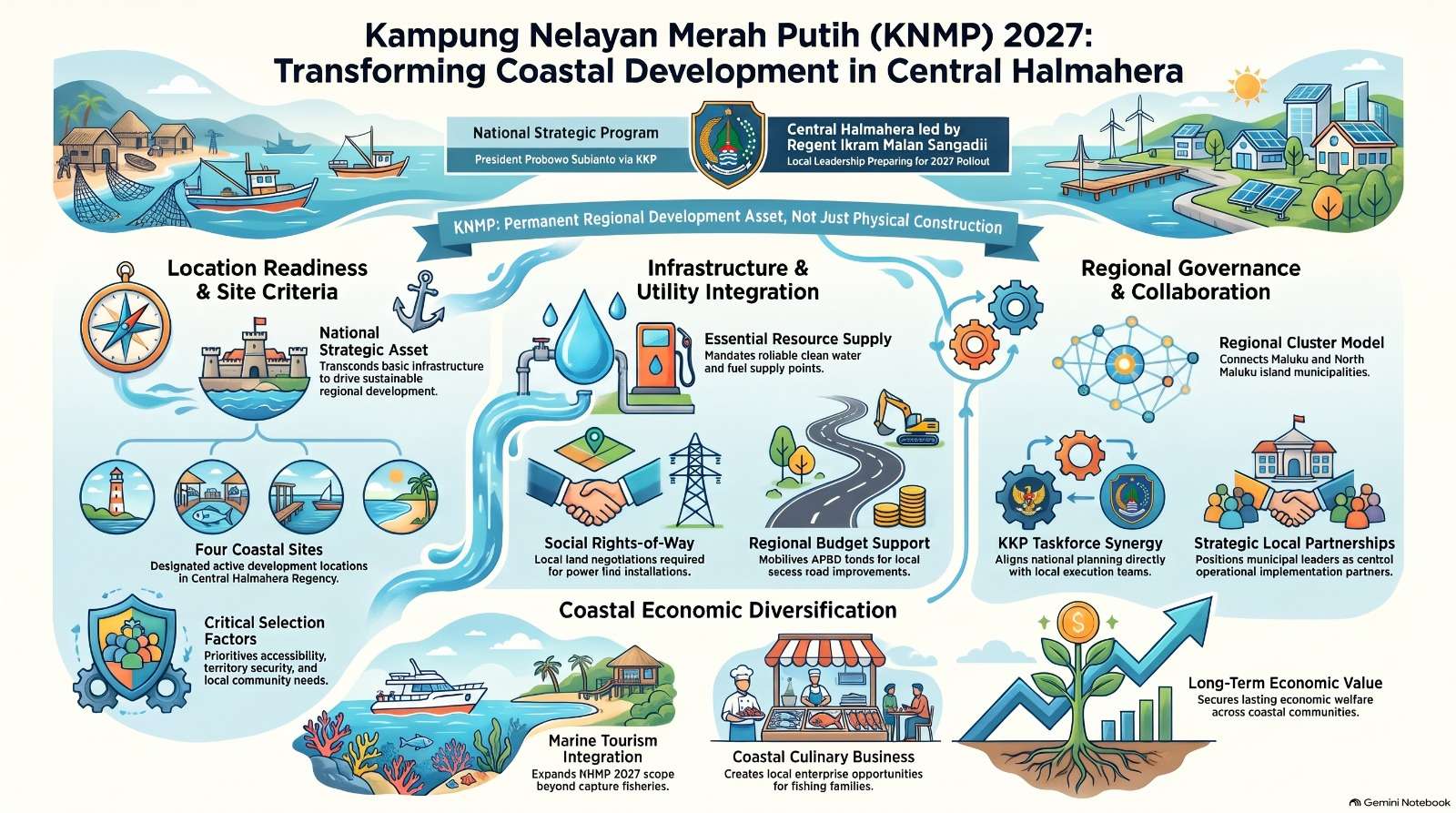
Indonesia’s Red and White Fishing Village Programme (Kampung Nelayan Merah Putih, or KNMP), a strategic national initiative under President Prabowo Subianto and the Ministry of Marine Affairs and Fisheries (KKP), presents an important opportunity to confront this challenge.
As preparations advance towards the 2027 implementation, the programme raises a fundamental question about the relationship between national investment and local development: how can infrastructure become a lasting economic asset rather than another completed government project?
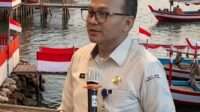
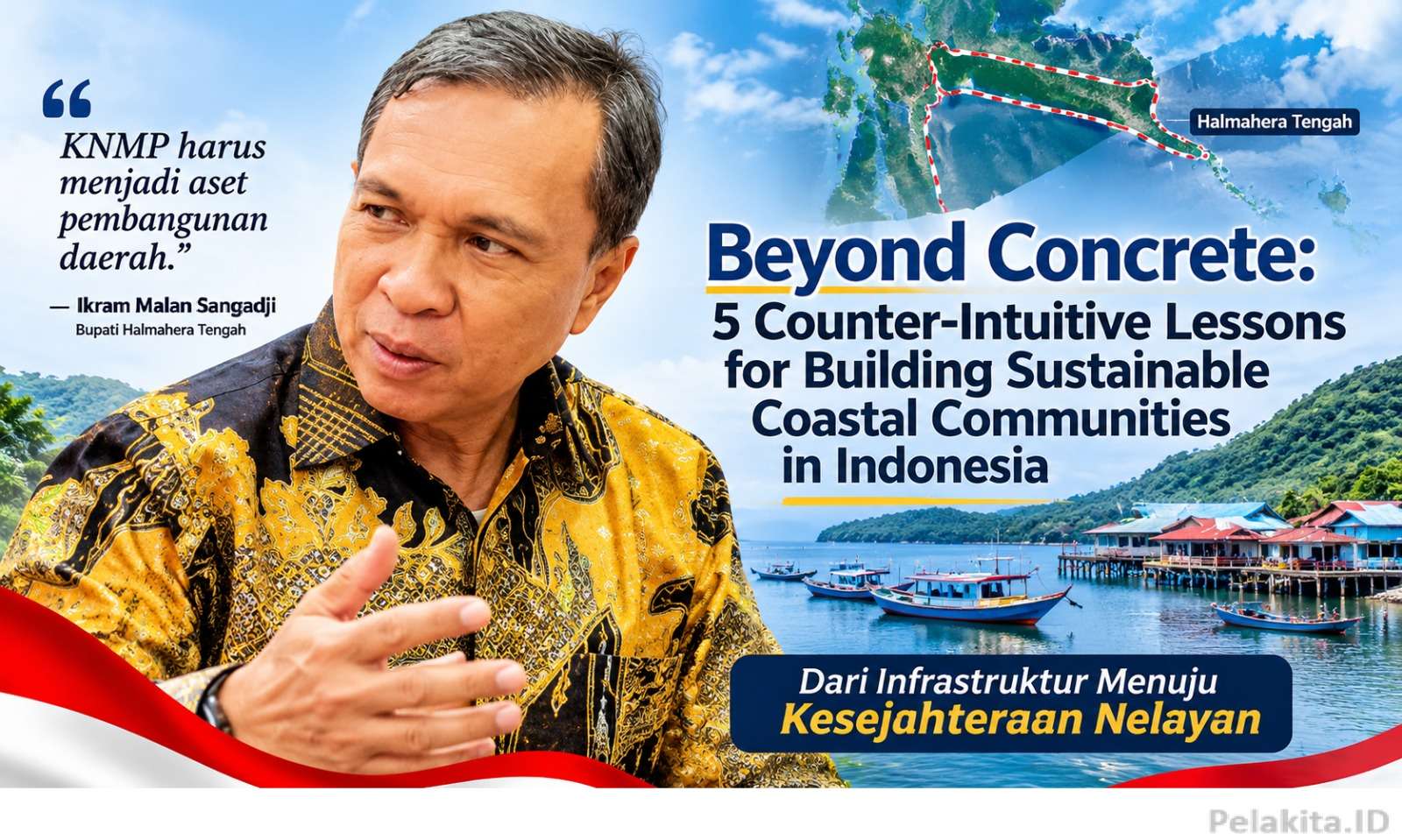
In a conversation in Jakarta on 12 November 2026, Central Halmahera Regent M. Ikram Malan Sangadji discussed this question with Kamaruddin Azis, Communication and Publication Expert to the KNMP 2027 Preparation and Planning Task Force.
Their discussion, drawing on Central Halmahera’s experience with four designated coastal locations, offered several insights into the institutional, geographical, and political conditions necessary for sustainable coastal development.
Five lessons stand out. Some are counter-intuitive because they challenge the conventional assumption that successful development begins and ends with the construction of physical infrastructure.
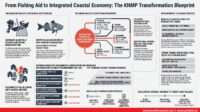
Infrastructure Does Not Build an Economy. Economic Ecosystems Do.
The first lesson is deceptively simple: a fishing village cannot become prosperous simply because it has better buildings.
Infrastructure matters. Landing facilities, ice production, cold storage, electricity, clean water, and road access are essential components of a functional fishing community. Yet these facilities become economically meaningful only when they are connected to productive activities, capable institutions, and functioning markets.
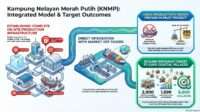
The distinction is between constructing an asset and creating an economic ecosystem.
For KNMP, this means looking beyond the immediate needs of capture fisheries. Coastal culinary enterprises, fish processing, local trading, distribution networks, and marine tourism can potentially complement fishing activities and create additional sources of income.
The broader opportunity is to transform fishing villages into interconnected centres of coastal economic activity. Such an approach requires attention to the entire value chain: from the moment fish are caught and landed to their handling, processing, storage, transportation, and eventual sale.
This perspective also changes how programme success should be measured. The completion of buildings is an important milestone, but it cannot be the final indicator. More meaningful measures include facility utilisation, business activity, market access, employment opportunities, and improvements in fishermen’s incomes.
For local governments, this requires integrating KNMP into their broader regional development priorities rather than treating it as an isolated national project.
The central question, therefore, is not simply whether a fishing village has been built, but whether it has acquired the economic capacity to sustain itself.
The Most Difficult Infrastructure Problems Are Often Social, Not Technical.
The second lesson emerges from the practical realities of preparing KNMP locations in Central Halmahera.
Large infrastructure projects are commonly assessed through technical indicators: engineering designs, construction schedules, land availability, and budget allocations. Yet some of the most consequential obstacles occur outside the boundaries of engineering.
Consider something as ordinary as installing an electricity pole. The technical work may be straightforward, but what happens when the proposed route crosses privately owned land and the landowner refuses access?
A contractor cannot necessarily resolve this problem through construction expertise. The issue requires communication, negotiation, administrative coordination, and an understanding of local relationships.
This illustrates why local government leadership is indispensable.
In the discussion, Ikram and Azis examined how a regent can mobilise village administrations, relevant regional agencies, and community representatives to resolve obstacles that would otherwise delay infrastructure delivery.
The same principle applies to other supporting requirements, including access roads, electricity, clean water, fuel availability, and land utilisation arrangements.
These are not peripheral matters. They determine whether a completed facility can actually operate.
The implication for KNMP implementation in 2027 is significant: project readiness should not be understood exclusively as technical readiness. It must also include social readiness, institutional coordination, and the capacity to resolve local disputes.
The last mile of infrastructure development is often where political leadership and public administration matter most.
Archipelagic Regions Need Regional Clusters, Not Uniform Solutions.
Indonesia’s geography makes the implementation of national programmes particularly complex. A model that works in a relatively accessible coastal district may be considerably less effective in an island region where communities depend on maritime transportation and face higher logistics costs.
Maluku and North Maluku illustrate this challenge.
For coastal communities across these provinces, the availability of infrastructure is only part of the equation. Connectivity between islands, transportation costs, energy supply, access to markets, and the movement of fish products all influence the viability of local fisheries economies.
A national programme must therefore retain common standards while allowing implementation strategies to respond to regional realities.
During the Jakarta discussion, the idea of establishing a regional KNMP cluster for Maluku and North Maluku emerged as an important proposal.
The concept is practical. Rather than allowing each participating regency to address similar challenges independently, regional governments could establish a structured platform for communication, coordination, and collective problem-solving.
Such a cluster could bring together regents, relevant regional agencies, technical officials, and programme stakeholders to discuss implementation progress, identify shared constraints, exchange experiences, and communicate regional priorities to KKP.
It could also strengthen coordination on issues that extend beyond individual administrative boundaries, particularly maritime connectivity and fish distribution.
The proposed cluster need not begin as a complicated new institution. A regular coordination forum with a clear agenda, designated focal points, and practical follow-up mechanisms would already provide meaningful value.
The larger principle is that national development programmes should recognise geographical differences as a starting point for policy design, not as an obstacle to be addressed after implementation has begun.
Local Governments Must Be Strategic Partners, Not Administrative Order-Takers.
A fourth lesson concerns the relationship between central and regional governments.
National programmes are frequently designed and financed at the central level, while their implementation takes place in communities administered by local governments. This arrangement can create a gap between national programme objectives and the practical realities of local development.
KNMP requires a more collaborative approach.
The central government brings programme frameworks, technical standards, financing, and infrastructure investment. Regional governments contribute local knowledge, administrative authority, community relationships, and the capacity to coordinate supporting development.
Neither side can deliver sustainable outcomes independently.
Central Halmahera’s experience illustrates why the involvement of the regent matters. Ikram explained that he had personally participated in selecting the four designated coastal locations. The discussion also highlighted the importance of coordinating supporting infrastructure and resolving land-access issues.
Local governments can also consider supporting complementary infrastructure through their regional budgets (Anggaran Pendapatan dan Belanja Daerah, or APBD), subject to their authority, fiscal capacity, and budget priorities.
Road improvements and access infrastructure are examples of areas where regional support may strengthen the value of central government investment.
This is more than administrative cooperation. It is a form of shared responsibility for public investment.
For KKP and the KNMP 2027 Preparation and Planning Task Force, direct engagement with regional leaders can also improve the quality of site preparation, identify practical constraints earlier, and create stronger ownership of programme outcomes.
A national programme becomes more resilient when local governments are treated as development partners and co-architects of implementation, rather than merely recipients of instructions.
Long-Term Stewardship Matters More Than Project Completion.
Perhaps the most important lesson is that the real test of infrastructure begins after construction ends.
Public investment can be measured through completed facilities, expenditure, and physical progress. Sustainable development, however, requires a longer perspective: who manages the assets, who maintains them, who pays for operational requirements, and how do local communities benefit?
These questions should be addressed before facilities are completed, not after contractors have departed.
KNMP therefore needs a clear framework for long-term stewardship, defining the respective responsibilities of central and regional governments, facility managers, fishermen’s organisations, and local economic institutions.
Operational arrangements should cover maintenance, electricity and water expenses, management capacity, facility utilisation, and access for fishing communities.
Equally important is the development of local institutions capable of managing economic activities around these facilities. Cooperatives, fishermen’s groups, and other community-based organisations can help connect infrastructure with productive enterprises.
The ultimate objective is to prevent public assets from becoming underutilised facilities that depend indefinitely on government intervention.
For Central Halmahera, the four designated KNMP locations represent an opportunity to strengthen the region’s coastal economy. But their long-term value will depend on the willingness of local institutions to take responsibility for their continued operation.
This is where the idea of KNMP as a regional development asset becomes particularly important.
It is not enough for a local government to welcome a national programme. It must also be prepared to safeguard its investment, facilitate its operation, and integrate its benefits into the wider development agenda.
Beyond the Construction Site: A Different Measure of Development
The experience and perspectives discussed by M. Ikram Malan Sangadji in Jakarta point towards a broader understanding of what successful coastal development should look like.
The five lessons are interconnected. Economic ecosystems require functioning infrastructure. Infrastructure depends on social and institutional readiness. Archipelagic regions need coordination models suited to their geography. Central and regional governments must work as strategic partners. And all these efforts ultimately depend on long-term stewardship.
For Indonesia, this is an important consideration as KNMP moves towards its 2027 implementation.
The programme’s ambition should not be confined to the number of fishing villages constructed or the volume of infrastructure delivered. Its more enduring contribution should be reflected in stronger coastal economies, better-organised fishing communities, improved market connectivity, and more resilient local institutions.
Central Halmahera’s preparations offer a useful perspective on this challenge. The involvement of the regent in site selection, attention to supporting infrastructure, and the proposal for a Maluku–North Maluku regional cluster all point to the importance of local leadership in translating national policy into practical development outcomes.
Ultimately, the value of a fishing village cannot be determined by the appearance of its buildings or the completion of its construction contract.
It must be measured by what happens afterwards: whether fishermen can land their catch more efficiently, whether fish products reach better markets, whether local businesses grow, whether public facilities remain functional, and whether coastal households experience tangible improvements in their livelihoods.
The future of Indonesia’s coastal communities will not be built by concrete alone. It will be built through institutions that work, economies that connect, governments that collaborate, and communities that have a genuine stake in their own development.
That is the difference between building a fishing village and building a sustainable coastal community.