
MARITIMEPOSTS.COM – TERNATE, November 21, 2026 – Efforts to strengthen human resource capacity in marine science continue through education and training programs based on certification standards.
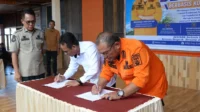
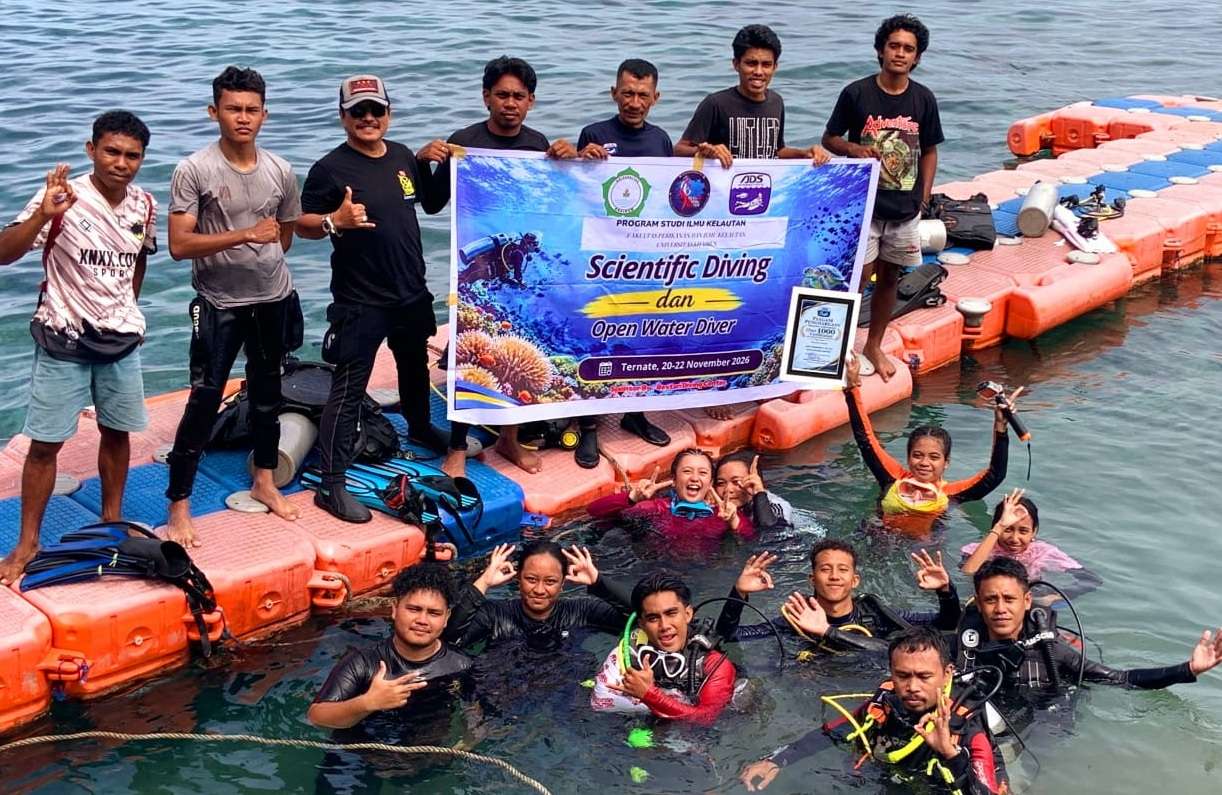
The Faculty of Fisheries and Marine Science (FPIK) at Khairun University in Ternate held a three-day Scientific Diving training and certification program from November 20 to 22, 2026, involving students from its Marine Science Study Program.
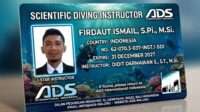
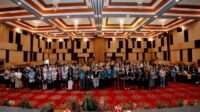
Organized under the auspices of ADS International Indonesia, the program featured Didit Darmawan, an ADS International diving instructor, as both speaker and trainer. The opening ceremony was attended by the Dean of FPIK Khairun University, Dr. Riyadi Subur, S.Pi., M.Si.
A total of 12 students participated in the program, together with one lecturer who had previously qualified as an ADS diving instructor but had not yet obtained the specialized certification required to become a Scientific Diving instructor.
“Over these three days, I have served as both a speaker and instructor for the Scientific Diving Certification program, aimed at strengthening students’ competencies in support of courses offered by the Marine Science Study Program at the Faculty of Fisheries and Marine Science, Khairun University,” Didit told Pelakita.ID on Saturday, November 21, 2026.
The training consisted of one day of classroom instruction and two days of practical sessions at sea. The field sessions took place in the waters surrounding Taman Nukila in Ternate.
Beyond Diving Skills
According to Didit, the Scientific Diving training is not merely intended to equip students with diving skills. More importantly, participants need to understand the standards, procedures, and diving methods required to support scientific research activities underwater.
In marine science education, diving is an important supporting skill, particularly when students conduct observations, collect data, and research marine ecosystems, including coral reefs.
Students are already familiar with various coral reef survey methods, including the Reef Check approach and other research methodologies. However, Didit emphasized that mastery of these methods needs to be complemented by scientific diving competencies supported by clear standards and certification systems.
“Marine Science students should not only be proficient divers but also equipped with international standards for collecting data, particularly when studying ecosystems such as coral reefs,” he explained.
Diving proficiency, therefore, extends beyond technical skills and safety procedures. It becomes part of the academic capacity required to produce scientifically reliable and accountable data.
This approach is particularly important for students who will eventually be involved in marine research, ecosystem monitoring, coral reef conservation, and other scientific activities requiring direct observation beneath the sea surface.
Tiered Certification and Strengthening Local Instructors
One of the key aspects of the training was the introduction of a tiered competency certification system for Scientific Diving.
Didit explained that the certification consists of three levels: Basic Scientific Diving, Intermediate, and Advanced, each representing a progressive level of scientific diving competency.
This tiered system is expected to provide students with a structured pathway for developing their skills according to their needs and levels of proficiency in scientific diving.
Beyond student training, the program at Khairun University also aims to strengthen the capacity of university lecturers as instructors. A lecturer who already holds an ADS diving instructor qualification is undergoing further competency development to become a Scientific Diving Specialty Instructor.
“The objective is to enable the university to become self-sufficient. When students need certification and training, the university will already have instructors with specialized competencies in Scientific Diving,” Didit said.
Strengthening local instructors is essential to ensuring the program’s sustainability, rather than making its continuation dependent on the availability of trainers from outside the region. Universities are expected to develop their internal capacities so that scientific diving education and certification can be delivered more consistently and sustainably.
Expanding Opportunities in Eastern Indonesia
The implementation of the training at Khairun University also carries strategic significance in expanding scientific diving competencies across Eastern Indonesia.
According to Didit, scientific diving instructors and coral reef experts have developed their capacities in several parts of western Indonesia and Papua. The training in Ternate represents an effort to extend this network, ensuring that universities in the eastern region have comparable opportunities to develop competencies and research standards in marine science.
He described the program at Khairun University as having the potential to become a pilot project for similar initiatives at other universities across Eastern Indonesia.
Institutional support is a critical factor in advancing this initiative. In this context, Prof. Jamaluddin Jompa, who serves as Chairman of ADS International Indonesia, is also involved in efforts to develop competency standards for coral reef research through networks of experts.
As Chairman of ADS International Indonesia, Prof. Jompa expressed his appreciation and congratulations on the implementation of the Scientific Diving training program at Khairun University.
He specifically thanked all the instructors and Didit Darmawan for initiating the program as part of broader efforts to strengthen the scientific diving community in Indonesia through ADS International Indonesia.
“North Maluku and its surrounding areas have unique characteristics and considerable appeal, not only from a tourism perspective but also in terms of science and marine research,” he said.
For this reason, Prof. Jompa emphasized that the development of Scientific Diving is essential to complement recreational diving, which has traditionally focused primarily on leisure activities.
“The combination of both is expected to strengthen Indonesia’s diving community, bringing together people who possess not only diving skills but also strong scientific competencies.” He expressed his hope that the program would continue to expand and reach more regions across Indonesia.
Didit also explained the connection between ADS International Indonesia and the Indonesian Coral Reef Experts Association (ATKI), which brings together experts and instructors in the field of coral reefs. This professional network contributes to efforts to advance national competency standards and certification for coral reef research, including through schemes associated with BNSP, Indonesia’s National Professional Certification Agency.
For universities offering marine science programs, the development of these competencies creates opportunities to strengthen the relationship between academic learning, field-based skills, and professional standards.
From the Classroom to an Underwater Laboratory
The Scientific Diving training at FPIK Khairun University demonstrates how marine science education can extend beyond the classroom into direct engagement with the marine environment.
Students not only study theories of marine ecosystems and research methodologies but also gain practical experience using diving skills as instruments for observing and collecting underwater data.
In the context of Ternate and the wider North Maluku region, which possess significant coastal and marine ecosystem potential, these competencies are relevant to supporting marine research, ecosystem monitoring, and sustainable marine resource management.
More than just a three-day training program, the initiative is expected to serve as an entry point for developing a broader scientific diving education ecosystem within universities across Eastern Indonesia. The availability of certified students, lecturers with instructor qualifications, and networks of experts and professional associations can provide a foundation for improving the quality of marine research.
In this way, the sea becomes more than an object of study. It also serves as a scientific laboratory, demanding technical proficiency, methodological discipline, and accountable professional standards.