
A Marine Science Student Explores the Underwater Laboratory of Ternate
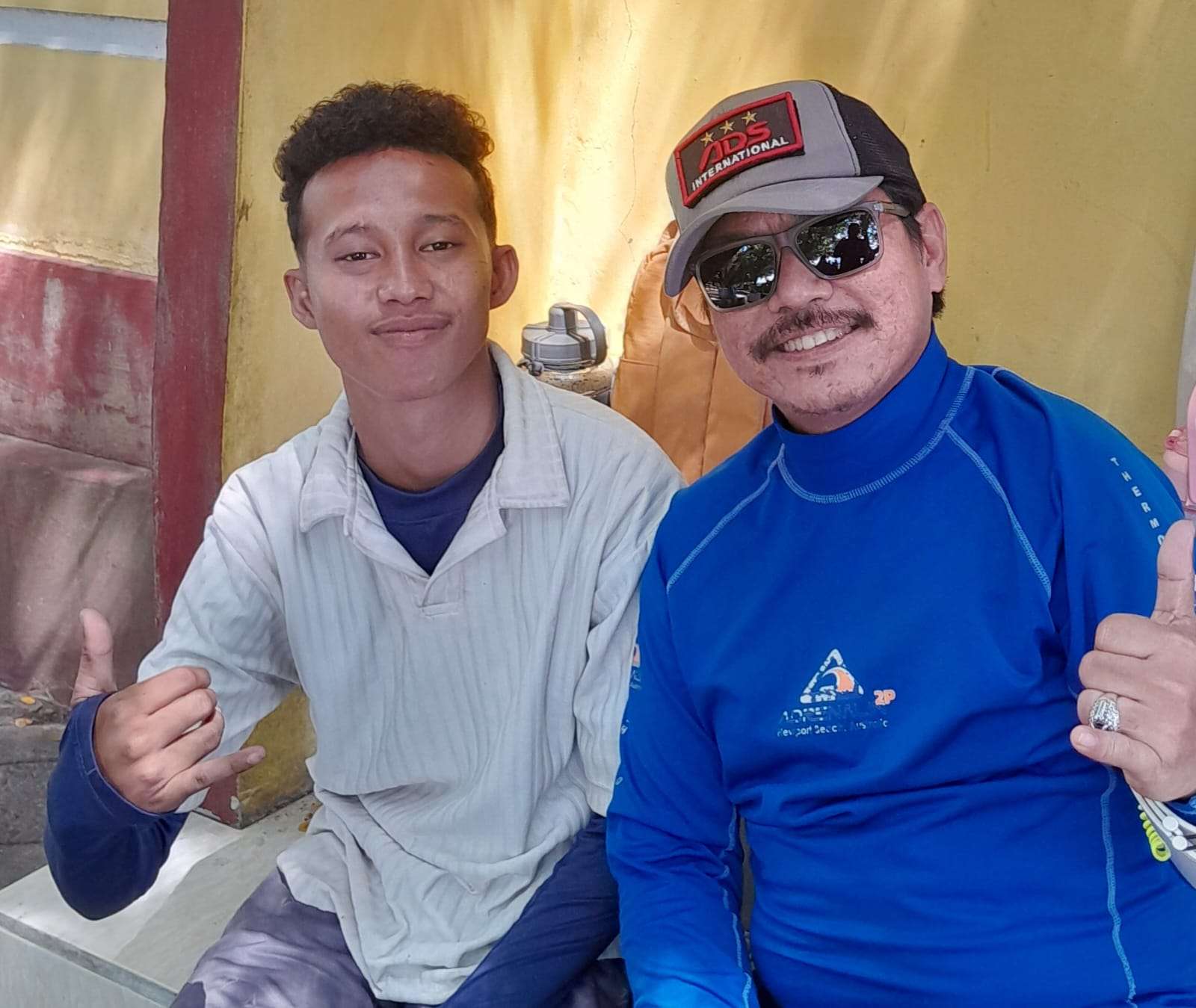
MARITIMEPOSTS.COM – For Najib Agil Bafageh, the sea is more than just a beautiful landscape to admire. As a fifth-semester student in the Marine Science Study Program at the Faculty of Fisheries and Marine Science (FPIK), Khairun University (Unkhair), Ternate, he sees the ocean as a natural laboratory filled with scientific phenomena and mysteries waiting to be explored.
This perspective took on a practical dimension when Najib participated in a three-day Scientific Diving training and certification program held on November 20–22, 2026, in Ternate, North Maluku.
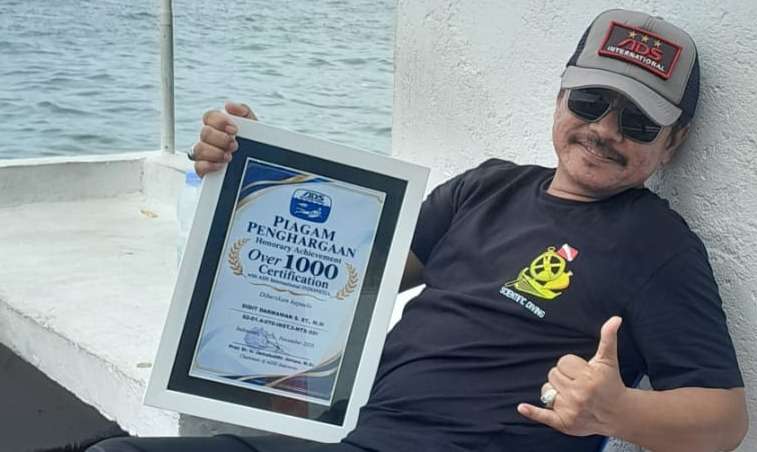
Through the program, Najib successfully earned the qualification of Basic Scientific Diver (in Rapid Reef Assessment) under ADS International Indonesia. Certificate number 62-070.3-BSciD-0006, dated November 20, 2026, marks the beginning of his competency development in observing and assessing coral reef ecosystem conditions through scientific diving.
The training was conducted under the guidance of ADS International instructor Didit Darmawan S., S.T., M.Si., an experienced professional in diving education, training, and competency development.
Learning to Assess Coral Reef Conditions Underwater
The training, officially opened by FPIK Unkhair Dean Dr. Riyadi Subur, S.Pi., M.Si., was attended by 12 students and one lecturer. The lecturer already held an ADS diving instructor qualification but had not yet obtained specific certification as a Scientific Diving instructor.
The program was designed to combine theoretical learning with practical experience. Participants spent one day in classroom sessions, followed by two days of diving practice in the waters surrounding Taman Nukila, Ternate.
For Najib and the other participants, the experience introduced a new dimension to the study of marine science. Diving skills, traditionally associated with recreational activities (recreational diving), were expanded into technical competencies supporting underwater observation, measurement, identification, and data collection.
Marine Science students are generally familiar with various coral reef survey methods, including Reef Check and other ecosystem assessment approaches. Through Scientific Diving, however, this knowledge is strengthened by more systematic diving procedures, established safety standards, and competency development through structured certification levels.
The certification framework introduced in the program includes three levels: Basic Scientific Diving, Intermediate, and Advanced.
For Najib, the experience connected the knowledge gained in university classrooms with the realities of underwater ecosystems that can be observed firsthand.
“We are not just learning how to dive and enjoy the beauty of the underwater world. Here, we learn how to collect data, identify damage, and assess coral reef health according to internationally recognized standards,” Najib explained.
In the training documentation, Najib can be seen diving along the underwater coral reef landscape of Ternate. The experience gave him an opportunity to encounter marine biodiversity firsthand while understanding the vulnerability of marine ecosystems that he had previously studied through lectures and academic materials.
From the Classroom to Indonesia’s Underwater Laboratory
The participation of fifth-semester students like Najib in this training highlights the importance of extending marine science education beyond the classroom and into direct field experience. In this context, diving is no longer merely a technical skill for exploring the underwater world; it becomes an essential instrument for scientific research and data collection.
The ability to directly observe coral reefs, identify changes in habitat conditions, and document underwater findings provides relevant skills for students who may eventually pursue research on coastal and marine ecosystems.
The training at FPIK Unkhair also presents an opportunity to serve as a pilot project for expanding scientific diving capacity across eastern Indonesia. North Maluku and its surrounding waters possess significant marine biodiversity, creating a need for skilled human resources to support research, education, and conservation initiatives.
Efforts to develop these competencies are further strengthened through the professional network of ADS International Indonesia. In his message, ADS International Indonesia Chairman Prof. Jamaluddin Jompa emphasized the uniqueness of North Maluku and its surrounding region, not only in terms of marine tourism potential but also its opportunities for science and marine research.
He highlighted the importance of developing recreational diving and scientific diving side by side, allowing underwater tourism to grow while simultaneously supporting education and scientific research.
For Najib Agil Bafageh, earning the Basic Scientific Diver certification represents the first step in a much longer academic and professional journey. This qualification provides a foundation for pursuing advanced training, participating in coral reef research, and contributing to coastal ecosystem monitoring and conservation initiatives in North Maluku and across eastern Indonesia.
From Ternate, the first steps of a fifth-semester student toward scientific diving demonstrate that the laboratory of marine science does not always lie within university buildings. Some knowledge is waiting to be discovered beneath the ocean’s surface, through the willingness to observe, the ability to collect data, and the responsibility to protect the ecosystems that become the subject of scientific research.
Editor: Denun