
The Coventry Hasanuddin Alliance for Science and Engineering (CHASE) seeks to turn an international academic partnership into a sustained research ecosystem, connecting battery innovation and public health nutrition with the development priorities of Eastern Indonesia.
MARITIMEPOSTS.COM— International research partnerships are increasingly expected to deliver more than institutional agreements and ceremonial commitments. As countries confront the interconnected challenges of energy transition, public health, and sustainable development, universities are being called upon to build collaborations that translate scientific knowledge into tangible societal benefits.
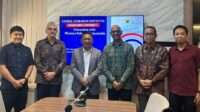
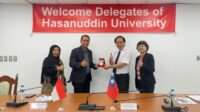
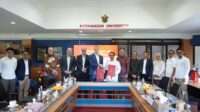
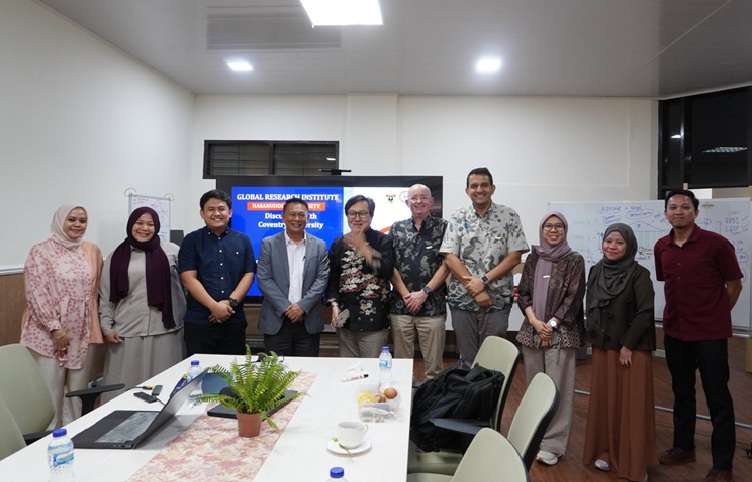
This ambition is taking shape at Universitas Hasanuddin (Unhas) through a new partnership with Coventry University in the United Kingdom. Following the signing of a Memorandum of Understanding between Unhas Rector Prof. Jamaluddin Jompa and Coventry University Deputy Vice-Chancellor for Research Prof. Richard Dashwood, representatives from both institutions met on October 29, 2026, at the Melbourne Room, AIC Lab, Unhas, to advance their shared research agenda.
The meeting marked the operational launch of the Coventry Hasanuddin Alliance for Science and Engineering (CHASE), a collaborative initiative designed to connect research expertise, develop academic capacity, and establish a longer-term framework for international scientific cooperation.
Rather than pursuing a broad partnership across numerous disciplines from the outset, CHASE is concentrating its initial efforts on two strategic areas: battery technology and public health nutrition. The combination reflects an understanding that technological progress and human development must advance together.
Connecting the Energy Transition with Human Well-being
The first research priority focuses on battery development, an increasingly important field as the global economy moves towards cleaner energy systems, electrification, and energy storage technologies.
For South Sulawesi and the wider eastern Indonesian region, this research agenda carries particular significance.
Indonesia’s position in global nickel supply chains creates opportunities to participate in the expanding battery and electric vehicle industries. Yet the transition from mineral extraction to higher-value technological innovation requires stronger research capabilities, engineering expertise, and international scientific networks.
Through CHASE, Coventry University brings expertise in battery technology, including contributions from Prof. Alexander Roberts and Prof. Rohit Bhagat. Their involvement provides opportunities for Unhas researchers to engage with international knowledge and develop collaborative research in this rapidly evolving field.
The second priority, public health nutrition, introduces a complementary dimension to the partnership. Led by dr. Devintha Virani, Sp.GK., Ph.D., a lecturer at the Faculty of Public Health (FKM) Unhas, this research area addresses the relationship between nutrition, population health, and sustainable development.
The two priorities may appear to belong to different scientific worlds. However, their inclusion within one alliance reflects a broader development perspective: industrial transformation must be accompanied by investment in human health, scientific capacity, and community well-being.
In this sense, CHASE is not simply a platform for technological research. It also provides an opportunity to connect scientific innovation with the wider social dimensions of regional development.
From Institutional Agreement to a Sustainable Research Ecosystem
One of the central challenges facing international university partnerships is ensuring that cooperation continues beyond the initial enthusiasm surrounding an MoU.
CHASE addresses this challenge through a gradual, three-stage development strategy.
In the short term, the alliance will prioritise joint research publications, collaborative grant proposals, and co-supervision of postgraduate students. These activities are intended to establish working relationships between researchers while creating measurable academic outputs.
The second stage focuses on strengthening institutional and individual research capacity. This includes opportunities for young Unhas lecturers to pursue advanced academic studies at Coventry University, helping develop a new generation of researchers with international exposure and collaborative experience.
The longer-term ambition is to translate these achievements into formal double-degree programmes between the two universities.
Prof. Dr. Eng. Adi Maulana, Executive Director of the Global Research and Innovation (GloRI) Unhas, views CHASE as an opportunity to strengthen the research identity of both institutions.
He considers the partnership particularly important in developing distinctive research strengths, expanding academic networks, and building the track records required to support more structured international programmes.
The approach places research performance and academic capacity at the centre of institutional internationalisation, rather than treating international cooperation as an end in itself.
An Open Platform for Decentralised Innovation
Another defining feature of CHASE is its proposed open-platform model.
Instead of requiring every research activity to be centrally designed and funded, the alliance provides an institutional framework through which research groups from Unhas and Coventry University can initiate collaboration based on their respective expertise, interests, and available resources.
Under this arrangement, participating teams can mobilise their own researchers and funding sources, while CHASE facilitates institutional coordination and administrative support.
The model is intended to reduce barriers to collaboration and encourage multidisciplinary initiatives. It also allows researchers from different faculties to participate without having to wait for a single central programme to determine every research priority.
This framework is reflected in the involvement of researchers from several academic units at Unhas, including Rizky Utami, S.E., M.Acc.Fin., a Research Fellow at the Faculty of Economics and Business, and Dianti Utamidewi, S.T., M.T., from the Faculty of Engineering.
Their participation illustrates the potential for research cooperation to extend beyond traditional disciplinary boundaries, bringing together scientific, engineering, economic, and institutional perspectives.
For an alliance seeking to produce long-term outcomes, this flexibility may prove important in encouraging research initiatives to emerge from the academic community itself.
Strengthening the UK–Indonesia Academic Corridor
CHASE also forms part of a broader effort to strengthen academic connections between Indonesia and the United Kingdom.
Coventry University has developed international academic partnerships with Indonesian universities, including collaborations involving dual-award doctoral programmes with several Indonesian state universities holding legal-entity status (PTN-BH).
These existing experiences provide an institutional reference for developing further cooperation with Unhas.
Prof. Benny Tjahjono of Coventry University’s Global Engagement unit is among the international engagement leaders supporting this strategic direction.
On the Unhas side, the GloRI leadership team plays an important coordinating role, comprising Executive Director Prof. Adi Maulana, Secretary Andi Imam Arundhana Thahir, and Research and Collaboration Manager Zulung, S.Pi., M.Env.
For Unhas, strengthening this international corridor offers an opportunity to connect researchers in Eastern Indonesia more directly with global scientific networks, research funding opportunities, and international academic communities.
It also reinforces the university’s ambition to expand its contribution to scientific development beyond Indonesia’s established academic centres.
Beyond the MoU: Measuring the Impact
The significance of CHASE will ultimately depend on what the partnership produces.
Joint publications, successful research proposals, postgraduate supervision, researcher mobility, and the development of double-degree programmes will provide important indicators of institutional progress. Equally important will be the extent to which research findings contribute to practical solutions in energy technology, nutrition, and regional development.
For South Sulawesi, the partnership offers an opportunity to connect its strategic position in the energy transition with a stronger research ecosystem, while ensuring that human development remains part of the conversation.
The broader challenge is to ensure that international scientific cooperation does not remain confined to university campuses, but becomes a source of knowledge, innovation, and public value.
By combining targeted research priorities, academic capacity-building, and a decentralised collaboration model, Unhas and Coventry University are laying the foundations for a partnership that seeks to move beyond institutional borders.
The real measure of CHASE will not be the agreement that established it, but the scientific achievements, academic opportunities, and societal benefits that emerge from it in the years ahead.