
Indonesia has always been defined by the sea.
MARITIMEPOSTS.COM – Stretching across more than 17,000 islands and straddling two oceans, the world’s largest archipelagic nation possesses one of the richest marine ecosystems on Earth. Yet its greatest asset is also among its greatest challenges.
Climate change, coastal degradation, overfishing, marine pollution, and accelerating development demand a new generation of scientific leadership capable of translating complex marine systems into practical solutions.
For decades, one institution has quietly helped cultivate that leadership.
The Marine Science and Technology Program at Hasanuddin University (Unhas) has long been recognized as one of Indonesia’s premier centers for marine education.
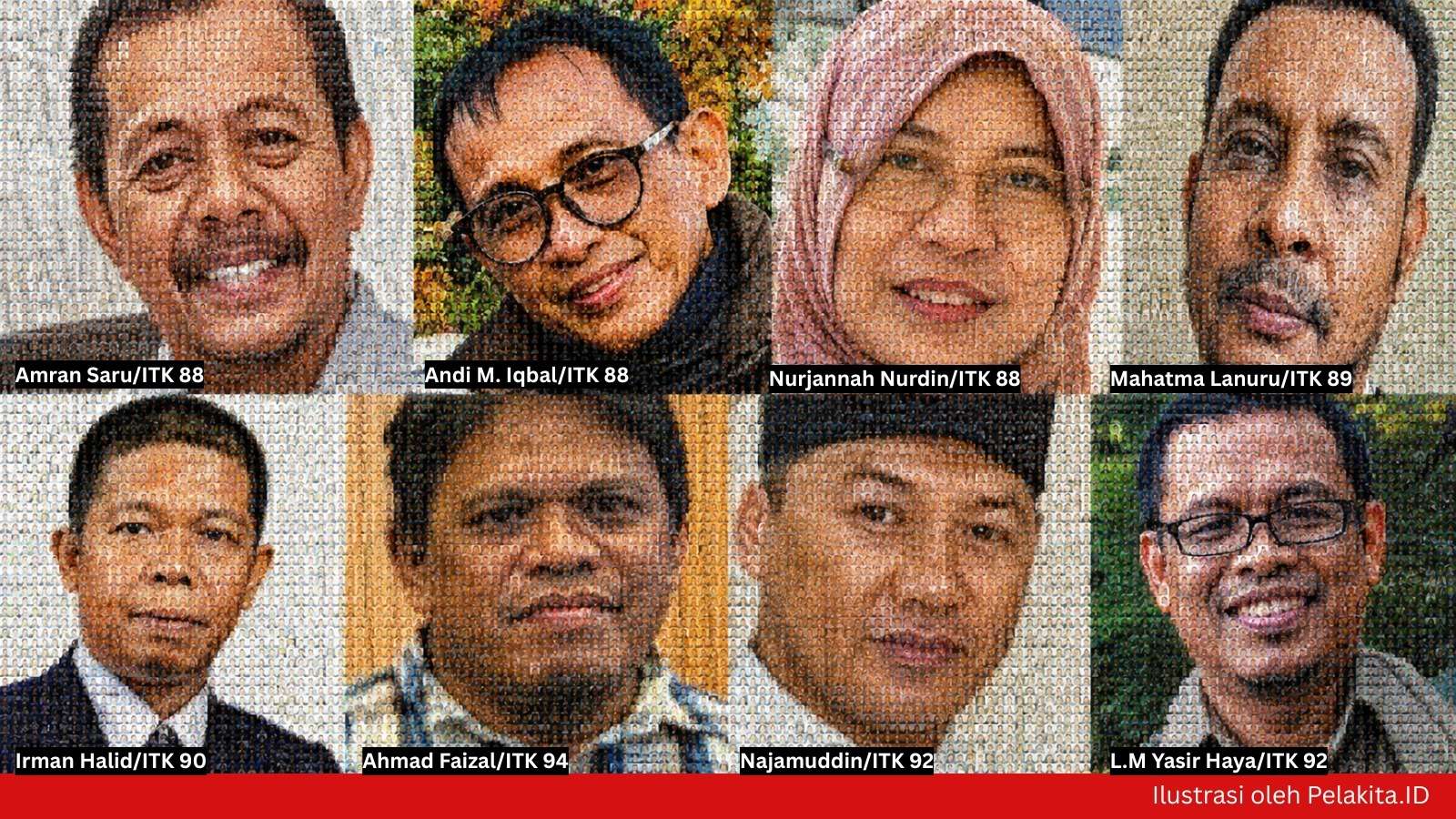
Today, its influence has reached a remarkable milestone. From a single generation of students who entered the program between 1988 and 1994, eight have risen to the highest academic rank of Professor, forming an extraordinary network of marine scientists whose expertise now spans universities across eastern Indonesia.
The story of these eight professors began long before they entered academia as lecturers and researchers. It can be traced back to the Marine Science Education Project, launched at Hasanuddin University in 1988 through an Asian Development Bank (ADB) initiative in partnership with Indonesia’s Ministry of Education.
Conceived as a national capacity-building program, the project established a network of six flagship universities for marine science education: Hasanuddin University (Makassar), the University of Riau (Riau), Bogor Agricultural University (now IPB University), Diponegoro University (Semarang), Sam Ratulangi University (Manado), and Pattimura University (Ambon).
More than three decades later, the project’s long-term impact is evident in the emergence of distinguished scholars—including the eight professors from Unhas’s 1988–1994 cohorts—whose contributions continue to shape Indonesia’s maritime science and policy.
More than an impressive academic achievement, their collective success represents the emergence of a maritime “brain trust”—a distributed network of scholars shaping Indonesia’s blue future through research, education, innovation, and public service.
An Extraordinary Academic Generation
Universities often celebrate individual success stories. What makes this group exceptional is not simply that eight alumni became professors, but that they emerged from a relatively narrow six-year period.
Such academic concentration is rare. It reflects an institutional environment that fostered intellectual rigor, scientific curiosity, and long-term commitment to research. The cohort has become an enduring example of how academic culture can produce not just outstanding graduates but an entire generation of scientific leaders.
Their impact extends well beyond Hasanuddin University itself.
Rather than remaining within their alma mater, these scholars now occupy strategic academic positions across Indonesia—from Makassar and Palopo to Kendari and Ternate. In doing so, they have effectively expanded the intellectual footprint of Unhas throughout eastern Indonesia, strengthening regional research capacity while mentoring the next generation of marine scientists.
Their careers illustrate an important principle: universities do not merely produce graduates; they cultivate knowledge networks that continue to influence society long after students leave campus.
Reading the Ocean Through Digital Eyes
Marine science has undergone a profound transformation over the past two decades.
Traditional field observations remain essential, but modern ocean management increasingly depends on digital technologies capable of capturing environmental change at unprecedented scales. Satellite imagery, Geographic Information Systems (GIS), remote sensing, artificial intelligence (AI), and unmanned aerial vehicles (UAVs) have become indispensable tools for understanding coastal ecosystems.
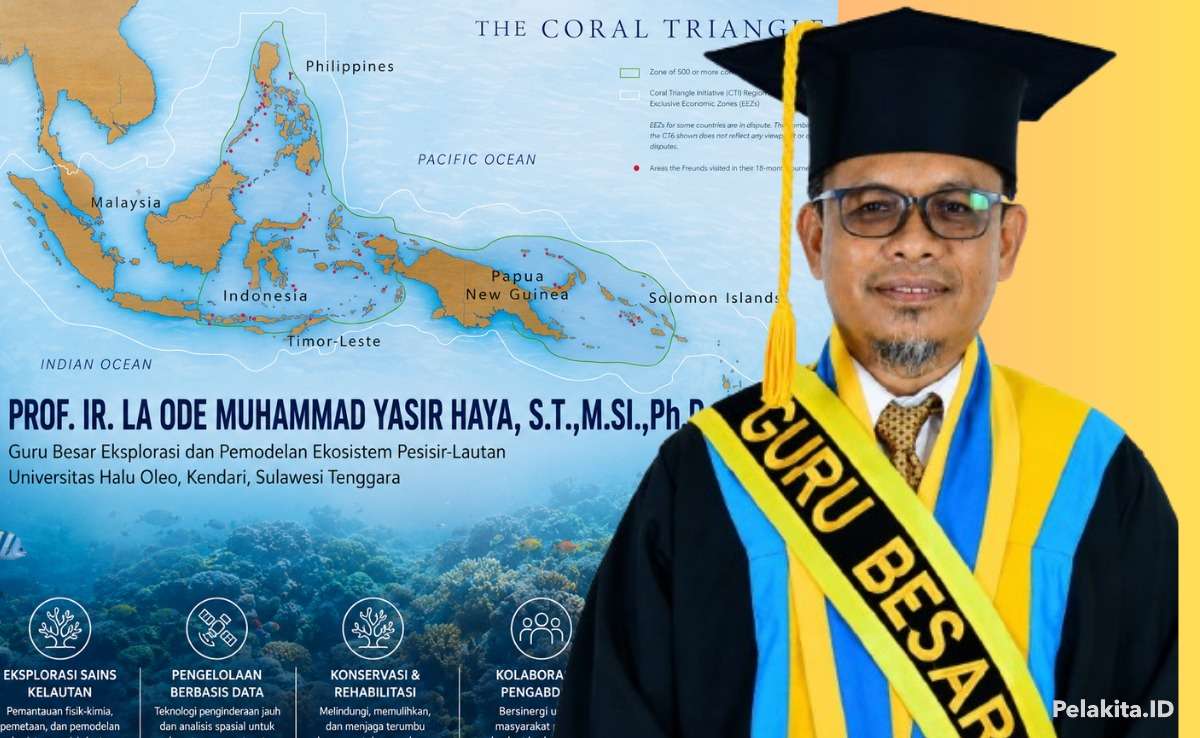
Among the pioneers of this transformation are Prof. Nurjannah Nurdin, Prof. Ahmad Faizal, and Prof. La Ode Muhammad Yasir Haya—the youngest member of the eight-professor cohort.
Together, they represent a new generation of marine scientists whose work bridges environmental science and digital innovation.
Their research combines spatial analysis, ecosystem modeling, machine learning, and drone-based monitoring to generate detailed maps of Indonesia’s coastal environments. These technologies enable scientists and policymakers to monitor shoreline dynamics, assess ecosystem health, manage small islands, and anticipate environmental change with unprecedented accuracy.
As Indonesia advances its Blue Economy agenda, this digital approach is becoming increasingly important. Effective marine governance now depends not only on understanding ecological processes but also on integrating vast amounts of spatial data into evidence-based decision making.
Through their work, these scholars have helped establish Hasanuddin University as one of Indonesia’s leading centers for marine geospatial science, a discipline that is rapidly becoming central to sustainable ocean management.
Guardians of Marine Biodiversity
Technology alone, however, cannot explain the complexity of the ocean.
Behind every satellite image and digital model lies an intricate web of living organisms whose ecology must first be understood. This is where foundational biological research remains indispensable.
Prof. Amran Saru and Prof. Andi Muhammad Iqbal exemplify this scientific foundation.
As a leading authority on mangrove ecology, Prof. Amran Saru has dedicated his career to understanding and restoring one of Indonesia’s most valuable coastal ecosystems. Mangrove forests protect shorelines, store vast amounts of carbon, support fisheries, and provide critical habitat for countless marine species. Their conservation has become increasingly important in the face of climate change and coastal development.
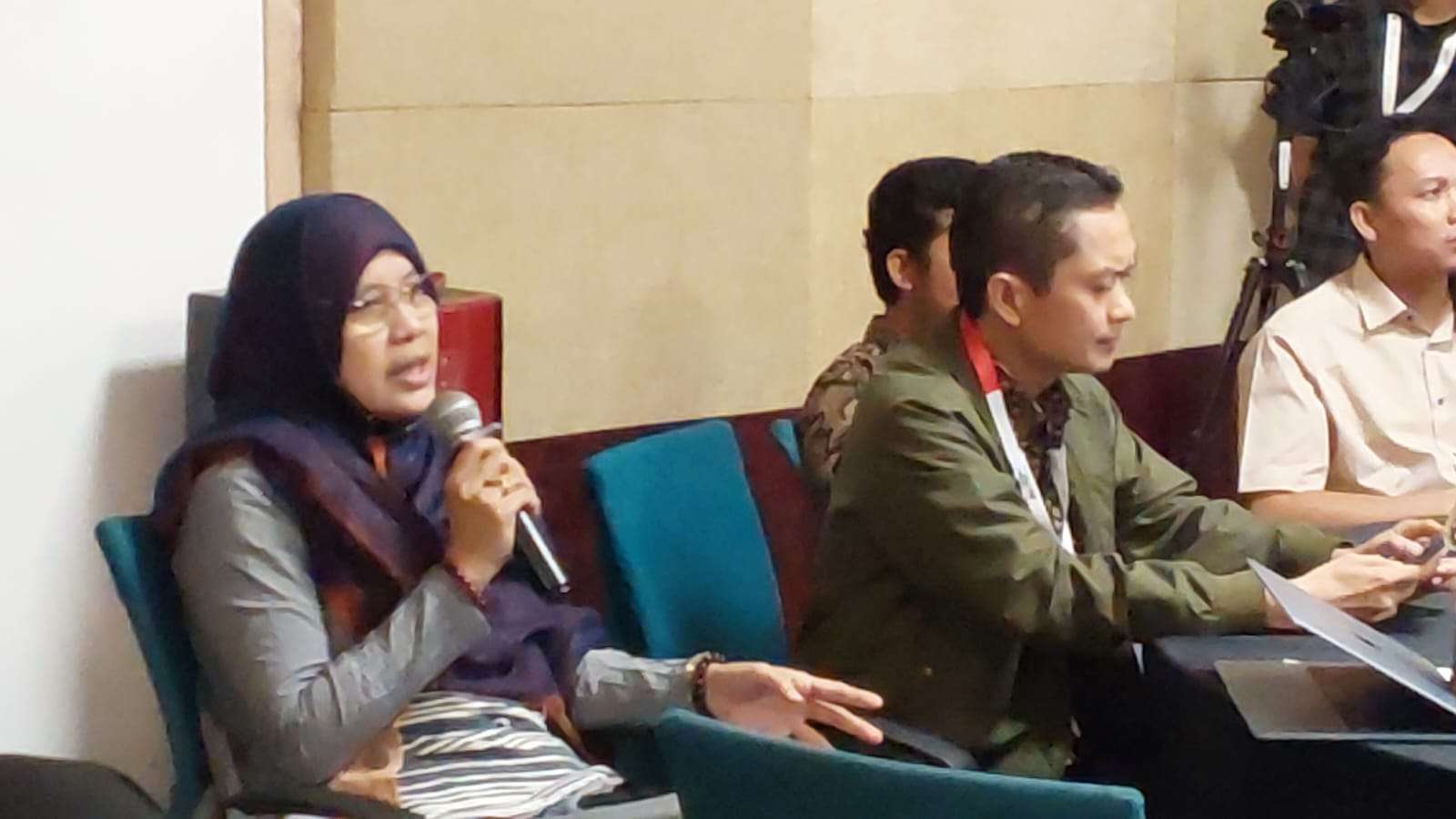
Meanwhile, Prof. Andi Muhammad Iqbal has built his reputation through research on marine vertebrates, particularly sharks and rays. His work in taxonomy, biodiversity, and conservation biology contributes to a deeper understanding of species that play essential ecological roles while facing growing conservation pressures.
Their contributions remind us that sophisticated digital models are only as meaningful as the biological knowledge that informs them. Mapping habitats and understanding the life they sustain are complementary scientific endeavors that together support effective marine conservation.
Building Scientific Capacity Across Eastern Indonesia
Perhaps the most remarkable aspect of this cohort is not simply their individual achievements but the geographic reach of their influence.
Rather than concentrating expertise within a single institution, these scholars have helped strengthen universities throughout eastern Indonesia.
At Khairun University in Ternate, Prof. Najamuddin focuses on inorganic pollutants and heavy metal contamination, research that is increasingly important for protecting the fragile marine environments of North Maluku.
At Andi Djemma University in Palopo, Prof. Irman Halid became the institution’s first professor in fisheries science. His work on Ecosystem Approach to Fisheries Management (EAFM) and rabbitfish ecology connects scientific research directly with sustainable fisheries development.
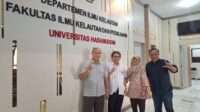
Back at Hasanuddin University, Prof. Mahatma Lanuru serves as Dean of the Faculty of Marine Science and Fisheries while advancing research in physical oceanography and sediment dynamics—fields essential for understanding coastal processes and climate adaptation.
Meanwhile, at Halu Oleo University in Kendari, Prof. La Ode Muhammad Yasir Haya develops sophisticated models of coastal ecosystems using geospatial technologies and environmental simulation.
Collectively, these scholars have contributed to the decentralization of scientific excellence. Their presence ensures that advanced marine research is conducted not only in major academic centers but also within the regions where Indonesia’s marine resources are most abundant.
Beyond Research: Educating Future Leaders
Scientific excellence alone is insufficient without leadership.
This broader vision is perhaps best exemplified by Prof. Nurjannah Nurdin, whose career extends beyond research into educational and community development.
In addition to serving in senior academic leadership—including two terms directing Hasanuddin University’s Center for Marine, Coastal, and Small Island Research and Development—she has dedicated herself to nurturing future generations through the Al Azizi Islamic Education Foundation in Parepare.
By supporting institutions ranging from early childhood education to Qur’anic learning centers, she demonstrates that building a sustainable maritime nation requires more than technological innovation. It also requires character, ethics, and community engagement.
Her work reflects a broader truth shared by many members of this distinguished cohort: scientific leadership is measured not only by publications and citations but also by the ability to inspire people and strengthen institutions.
A Blueprint for Indonesia’s Maritime Future
The emergence of eight professors from the 1988–1994 Marine Science and Technology cohort at Hasanuddin University represents far more than an academic milestone.
Together, they embody an integrated scientific network whose expertise spans physical oceanography, marine ecology, biodiversity conservation, fisheries management, environmental pollution, geospatial technologies, artificial intelligence, and ecosystem modeling.
Their collective achievements illustrate how one academic program can shape national capacity over generations.
As Indonesia pursues sustainable development, strengthens its Blue Economy, and confronts the realities of climate change, the need for interdisciplinary scientific leadership will only grow. The work of these scholars offers more than research outputs—it provides a blueprint for how universities can serve as engines of national transformation.
The ocean that surrounds Indonesia has always connected its islands.
Today, it also connects a generation of scientists whose shared educational roots have evolved into one of the country’s most influential maritime knowledge networks. The foundation has been built. The scientific guardians have taken the helm.
The next challenge belongs to the generations that will follow their course across Indonesia’s blue frontier.