
MARITIMEPOSTS.COM – PEKANBARU, November 16, 2026 – The Institute for Research and Community Service (LPPM) of the University of Riau (UNRI) officially sent off its Aksara Student Program Team (Student-Led Learning and Community Empowerment Initiative), under the Ministry of Higher Education, Science, and Technology (Kemdiktisaintek), through the Student Impact Scheme – Aksara Peduli.
The send-off ceremony took place on Monday, November 16, at the second-floor auditorium of the LPPM Building, Binawidya Campus, University of Riau.
The program is a cross-faculty collaboration between the Islamic Student Spiritual Organization of the Faculty of Economics and Business (BKIM FEB) UNRI and the Student Authority Organization of Marine Science, Faculty of Fisheries and Marine Sciences (BOM IK FPK) UNRI.
Titled “Locally Sourced Bioprotein-Based Independent Feed for Asian Seabass (Lates calcarifer) Farming through Community Collaboration in Sialang Pasung Village, Meranti Islands Regency,” the program is designed to strengthen aquaculture activities while increasing the economic value of fisheries products.
Its activities focus not only on developing locally sourced bioprotein-based feed to reduce the production costs of Asian seabass farming, but also on processing harvested fish into higher-value products.
Through this approach, the community is expected to benefit from lower production costs while gaining opportunities to increase product value and household income.
The entire program is scheduled to run through December 31, 2026.
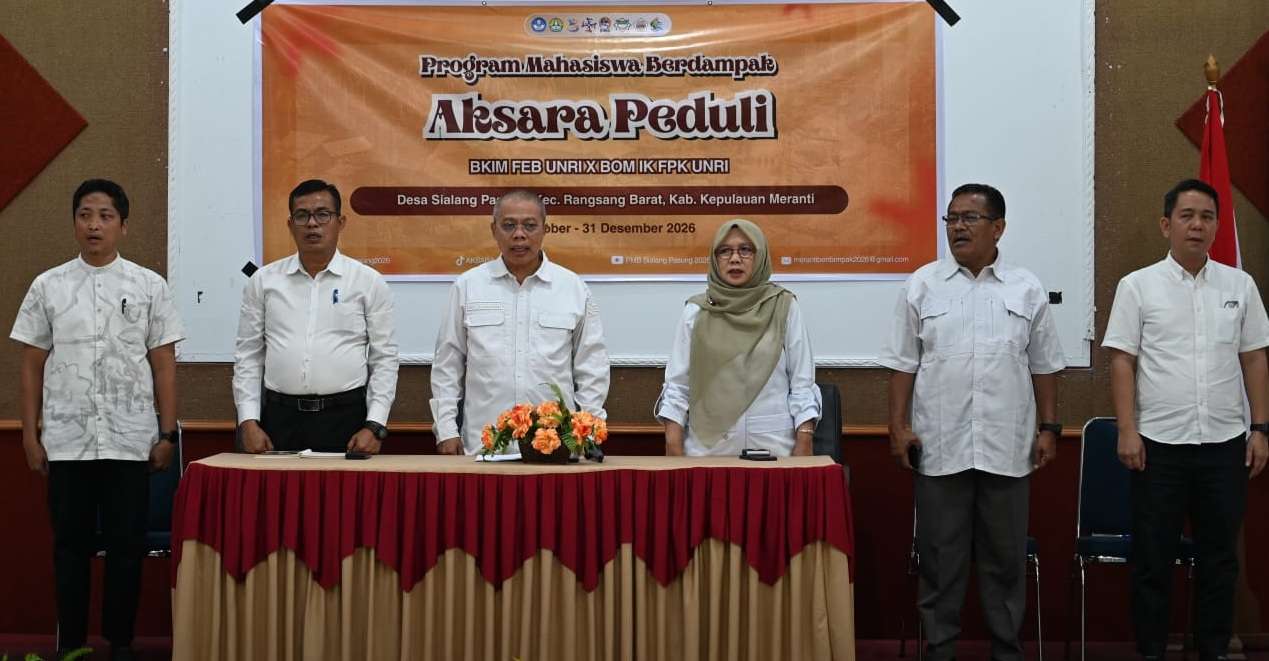
The ceremony began with opening remarks and the singing of Indonesia Raya, Indonesia’s national anthem, followed by speeches from the Deputy Program Coordinator and Program Coordinator, as well as guidance from faculty and university leaders. Those in attendance included the Dean of the Faculty of Economics and Business (FEB) UNRI, Dr. Hj. Alvi Furwanti Alwie, S.E., M.M.; Vice Dean III of FEB UNRI, Rendra Wasnury, S.E., M.I.B.; Vice Dean I of the Faculty of Fisheries and Marine Sciences (FPK) UNRI, Prof. Dr. Nofrizal, S.Pi., M.Si.; and Vice Dean III of FPK UNRI, Ir. Jonny Zain, M.Si.
In his remarks, Deputy Program Coordinator Muhammar Aditya outlined the program and the team’s preparations for carrying out community service activities in Sialang Pasung Village.
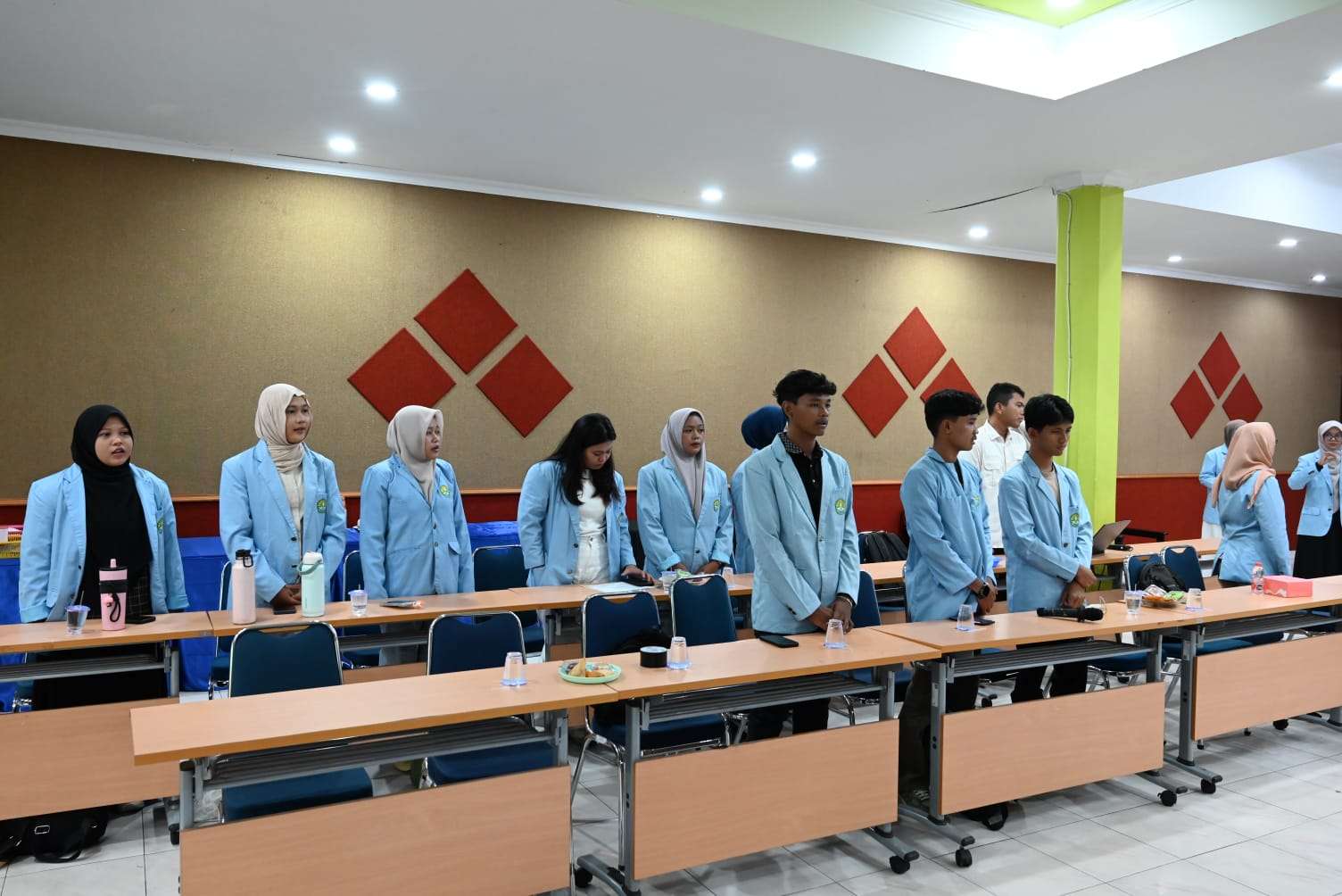
He emphasized the importance of teamwork and active community participation to ensure that every stage of the program proceeds as planned and delivers the intended benefits.
Program Coordinator Dr. Eka Armas Pailis, S.E., M.M., explained that the initiative brings together expertise in economics and marine sciences to address challenges faced by Asian seabass farmers.
The development of locally sourced bioprotein-based feed is expected to help reduce production costs, while processing farmed fish is intended to create additional economic value.
In this way, the program aims to deliver benefits beyond improved production efficiency by creating opportunities for product development and higher community incomes.
Support for the initiative was also expressed by FEB Dean Dr. Hj. Alvi Furwanti Alwie, S.E., M.M. She praised LPPM UNRI for providing students with an opportunity to contribute directly through community service activities. She said the program offers students valuable experience in applying their academic knowledge while helping promote economic self-reliance among local communities.
She also highlighted the importance of generating added value through fisheries product processing. In her view, local potential should be developed beyond aquaculture activities to include processed products with greater economic value.
Meanwhile, FPK Vice Dean I Prof. Dr. Nofrizal, S.Pi., M.Si., who attended on behalf of the FPK leadership, welcomed the collaboration between students from the two faculties.
He urged all team members to uphold ethical conduct, respect local customs, and understand the community’s local wisdom throughout their service activities.
He also stressed the importance of maintaining good communication with residents so that the innovations introduced could be accepted and developed sustainably.
His message reflected a well-known Malay proverb: “Where the earth is stepped upon, there the sky must be upheld”—a reminder to respect the customs and values of the community one serves.
In his address, UNRI LPPM Head Prof. Dr. Mubarak, M.Si., expressed his pride in the Aksara Peduli Team for being the only team from the University of Riau whose proposal was selected for the program. The achievement followed a competitive selection process involving universities from across Indonesia.
He emphasized that this achievement represented both a mandate and a major responsibility, which must be fulfilled through program implementation that delivers tangible and sustainable benefits to the people of Sialang Pasung Village.
The team, he added, was expected to carry out all planned activities effectively while placing collaboration with the local community at the center of its work.
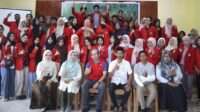
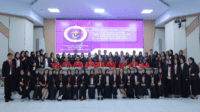
The ceremony concluded with a symbolic send-off led by UNRI LPPM Head Prof. Dr. Mubarak, M.Si., together with FEB Dean Dr. Hj. Alvi Furwanti Alwie, S.E., M.M.; FEB Vice Dean III Rendra Wasnury, S.E., M.I.B.; FPK Vice Dean I Prof. Dr. Nofrizal, S.Pi., M.Si.; FPK Vice Dean III Ir. Jonny Zain, M.Si.; Program Coordinator Dr. Eka Armas Pailis, S.E., M.M.; and the team’s faculty supervisor, Rizki Oktavian, S.Pi., M.Si.
The send-off marks the beginning of the Aksara Peduli Team’s community service activities in Sialang Pasung Village, Rangsang Barat District, Meranti Islands Regency.
Through interdisciplinary collaboration and active community participation, the program is expected to strengthen local fisheries potential through independent feed production, improved aquaculture practices, and the processing of Asian seabass into value-added products.
More than simply introducing technological innovations, the initiative is intended to serve as a shared learning process between students and the community.
Its success will ultimately depend on how effectively the knowledge and technologies introduced can be adopted, applied, and sustained by local residents, contributing to higher incomes and greater economic self-reliance in coastal communities.
___
Editor K. Azis