
Mamuju is attracting attention as several studies have identified rare earth element (REE) enrichment in volcanic rocks and their weathering products. During his presentation, Prof. Adi shared maps and research findings, including studies conducted with his team, to explain the relationship between rock types, weathering processes, and the occurrence of these elements.
MARITIMEPOSTS.COM – Mamuju holds resources that are important to the technologies shaping the modern world. Yet, for the communities living on this land, the questions closest to their everyday lives are much simpler: Will this wealth eventually improve their livelihoods, and how can the environment they depend on remain protected?
These questions formed an important part of a visit by the Institute for Critical Mineral, Hasanuddin University (ICM-UNHAS), to Mamuju, West Sulawesi, on Sunday, November 15, 2026.
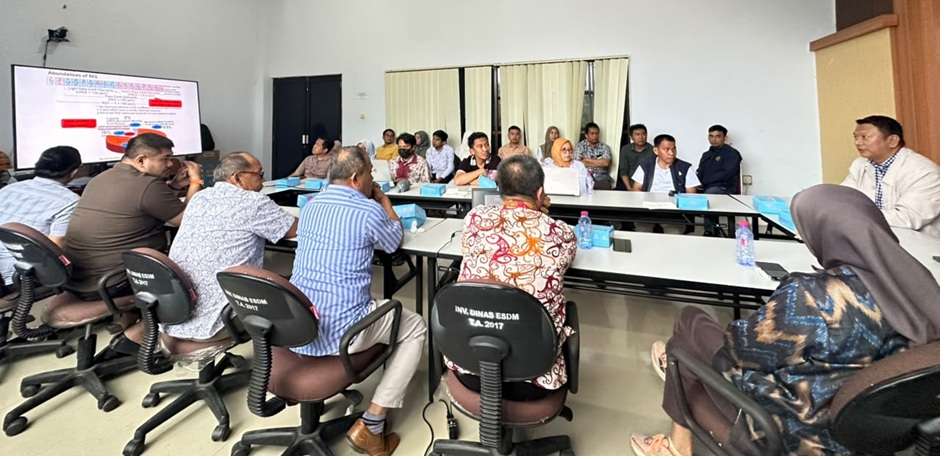
Responding to an invitation from the West Sulawesi Provincial Office of Energy and Mineral Resources, the ICM-UNHAS team, led by Prof. Dr. Eng. Adi Maulana, discussed the potential of rare earth elements (REEs), the stages of their development, and the expectations and concerns surrounding the emergence of this industry.
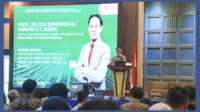
During the meeting, Prof. Adi Maulana, who also serves as Executive Director of the Global Research Institute (GloRI) UNHAS, the institutional unit overseeing ICM-UNHAS, presented the geological processes underlying Mamuju’s REE potential. The Professor of Geological Engineering at Hasanuddin University, who currently chairs the Association of Geologists of South and West Sulawesi, also explained the lengthy process that must be undertaken before a mineral discovery can be developed into an industrial operation.
The ICM-UNHAS delegation included several geology and mining experts, as well as master’s students conducting their final research projects on REEs in Mamuju.
Dialogue provided the starting point. Government institutions need a sound scientific basis for decision-making, industry requires certainty regarding resources and technology, while communities have the right to understand proposed activities and their potential consequences.
Mamuju’s Mineral Wealth and the World’s Technological Needs
The term rare earth elements may still be unfamiliar to many people. Yet these elements are already present in a wide range of everyday technologies, from smartphones and electronic displays to vehicle components and medical equipment.
Neodymium and praseodymium, for example, are used to manufacture high-performance permanent magnets for various electric vehicle motors and some wind turbines. Other REEs are utilized in glass polishing materials, catalysts, lighting, as well as aviation and defense technologies.
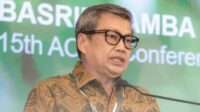
Mamuju is attracting attention as several studies have identified REE enrichment in volcanic rocks and their weathering products. During his presentation, Prof. Adi shared maps and research findings, including studies conducted with his team, to explain the relationship between rock types, weathering processes, and the occurrence of these elements.
Nevertheless, identifying high concentrations in a particular sample is not sufficient to establish that an area is suitable for mining. Further investigations are needed to determine the distribution, thickness, resource quantities, REE-bearing minerals, and the feasibility of separating these elements safely and economically.
This is where research becomes decisive. Each deposit has its own characteristics and requires an appropriate processing approach. Technology that works successfully in one location may not necessarily produce the same results in Mamuju.
GloRI and ICM-UNHAS: Connecting Knowledge with Regional Needs
REE development requires collaboration that goes beyond any single field of expertise. Geologists investigate the origins and distribution of minerals. Processing researchers examine methods of separation and purification. Environmental experts assess potential impacts, while social and economic studies help ensure that the benefits can reach local communities.
ICM-UNHAS, operating under GloRI, was established to bring these areas of expertise together. It serves as a collaborative platform connecting researchers, government institutions, industry, and communities in the development of critical minerals, from exploration to downstream processing.
One of Hasanuddin University’s strengths lies in its geographical proximity and academic experience in studying Sulawesi’s geology. Knowledge of local rocks, tectonics, mineralization, and regional conditions provides an important foundation for understanding Mamuju’s potential more comprehensively. The university’s existing research also offers a basis for further investigations.
Through GloRI, this expertise can be connected with networks of universities, research institutions, and industry partners both in Indonesia and internationally. Such networks create opportunities for joint research, knowledge exchange, access to analytical facilities, and the development of technologies suited to the characteristics of local raw materials.
With this support, ICM-UNHAS can help address questions that will determine the industry’s future: Which elements have the greatest value? How are these elements hosted in minerals? Which technologies should be tested? And how should the resulting waste be managed?
The university’s role also includes developing skilled human resources. Students and young researchers need opportunities to learn through real-world challenges, ensuring that REE development also strengthens regional human resource capacity.
Economic Opportunities Must Be Planned from the Beginning
The government has established the Mineral Industry Agency (Badan Industri Mineral/BIM) to support the acceleration of research and development aimed at increasing the added value of strategic minerals. Meanwhile, PT Perusahaan Mineral Nasional (Perminas) has secured an Exploration Mining Business License (IUP Eksplorasi) for REEs in Mamuju and has commenced exploration activities.
This stage is important for improving resource certainty. Any subsequent decision to proceed toward production will require feasibility study results, compliance with environmental requirements, and adequate technical and social preparedness.
For West Sulawesi, the economic opportunities could extend across multiple sectors. Industrial activities have the potential to create jobs, increase demand for local services and supplies, and stimulate the growth of supporting businesses.
However, these benefits must be planned from the outset. Local workforce training, the participation of regional businesses, and the allocation of public revenues to support basic services should all be part of discussions on industrial development.
During the field visit, the ICM-UNHAS team also observed the lives of communities surrounding the prospective mining areas. Meetings with residents served as a reminder that the true measure of downstream industrial development must be reflected in everyday needs: better education, accessible healthcare, clean water, and opportunities for employment and entrepreneurship.
Mineral wealth creates opportunities to improve people’s well-being. The extent of those benefits, however, will depend on the quality of governance and the policy choices that accompany development.
Listening to Communities and Assessing Risks
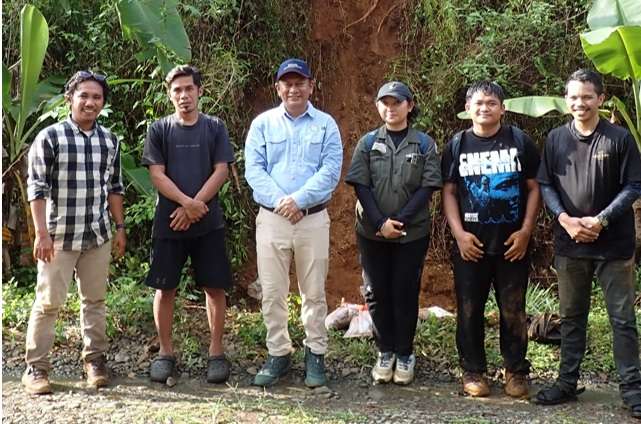
In addition to holding a sharing session with several stakeholders at the West Sulawesi Provincial Office of Energy and Mineral Resources, the ICM-UNHAS team visited locations within the mining license area in three locations: Botteng, Takandeang, and Ampalas. The visits involved field observations and sample collection to strengthen existing geological analyses.
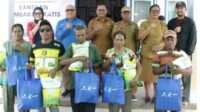
The team also met with several residents living in these areas. Community members raised concerns regarding potential environmental and social impacts. These concerns must be addressed through transparent information, accountable scientific assessments, and continuous opportunities for dialogue.
Several locations where REEs have been identified are also situated in areas that serve as water sources for communities in Mamuju City.
This situation calls for careful assessments of environmentally responsible mining and processing practices to prevent disruption to these water resources. The use of chemicals, land protection, and potential impacts on local livelihoods must also be taken into consideration.
ICM-UNHAS has been called upon to serve as a bridge in safeguarding the future of the REE industry in Mamuju. It can contribute through scientific studies, technology testing, and initiatives to strengthen public understanding. The credibility of this role depends on a willingness to communicate research findings transparently, including when the evidence reveals limitations or indicates that development plans need to be reconsidered.
The visit to Mamuju marks the beginning of efforts to strengthen these relationships. Dialogue must continue throughout the exploration process, feasibility assessments, and every subsequent development decision.
The future of Mamuju’s rare earth potential will be shaped by the quality of knowledge and public trust built today. Through GloRI and ICM-UNHAS, Hasanuddin University has an important opportunity to ensure that the geological wealth of West Sulawesi is properly understood, carefully managed, and directed toward improving the lives of local communities.
Editor: Denun