

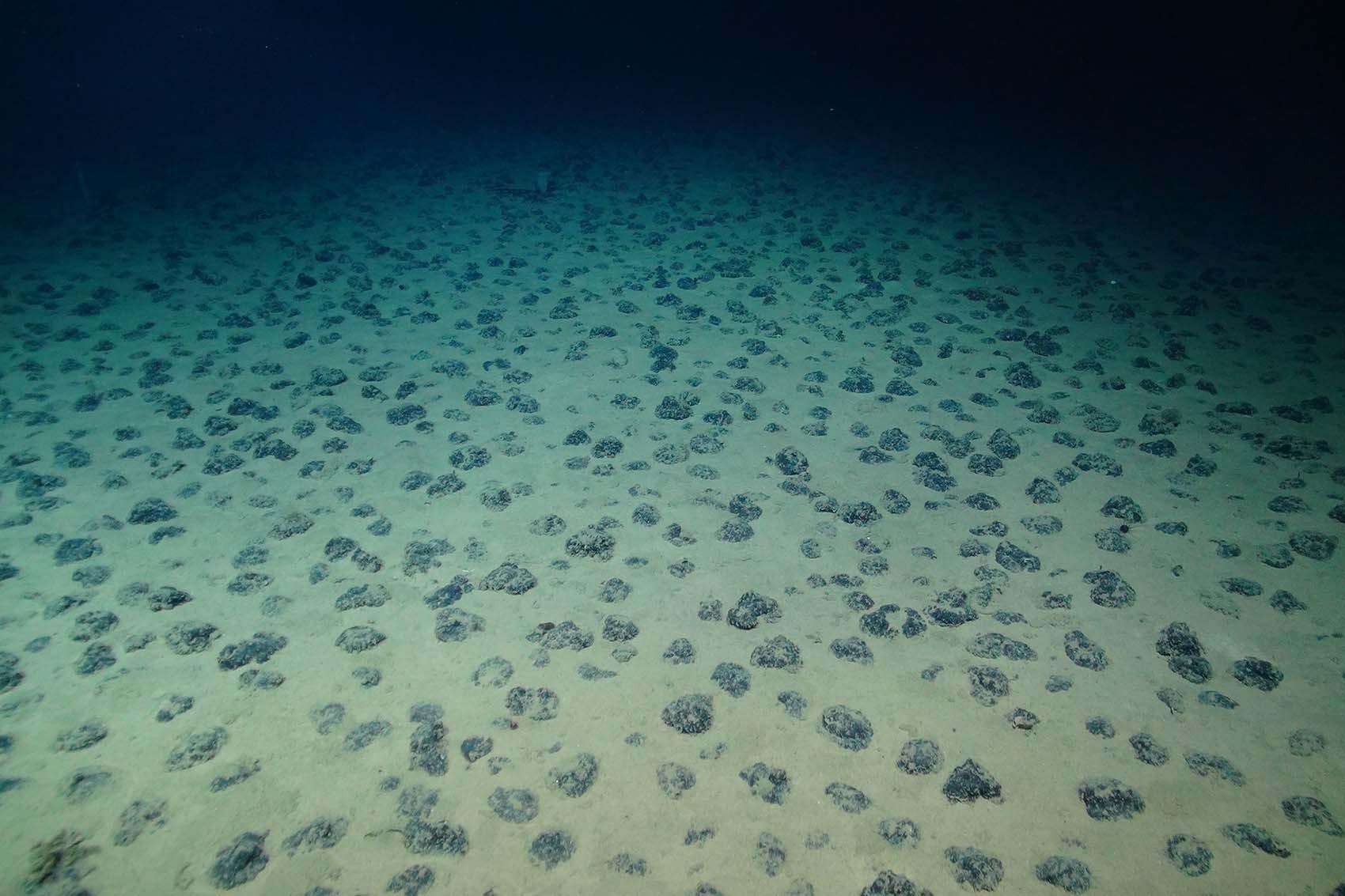
The world’s attention has increasingly turned toward the deep ocean, particularly regions such as the Clarion–Clipperton Zone in the Pacific Ocean, where billions of polymetallic nodules blanket the seafloor. These potato-sized mineral deposits contain significant quantities of nickel, cobalt, copper, and manganese—key ingredients in batteries that power electric vehicles and renewable energy storage systems.
MARITIMEPOSTS.COM – As humanity races toward a low-carbon future, a new frontier of resource extraction is emerging thousands of meters beneath the ocean’s surface.
Hidden in the darkness of the deep sea lie vast deposits of nickel, cobalt, copper, manganese, and rare earth elements—minerals considered essential for electric vehicles, renewable energy systems, and modern electronics.
To some, these resources represent a crucial pathway toward achieving global climate goals. To others, they are the latest chapter in humanity’s long history of exploiting nature before fully understanding the consequences.
The debate over deep-sea mining has rapidly become one of the most contentious environmental issues of the 21st century.
A Treasure Trove at the Bottom of the Ocean
The world’s attention has increasingly turned toward the deep ocean, particularly regions such as the Clarion–Clipperton Zone in the Pacific Ocean, where billions of polymetallic nodules blanket the seafloor. These potato-sized mineral deposits contain significant quantities of nickel, cobalt, copper, and manganese—key ingredients in batteries that power electric vehicles and renewable energy storage systems.
Beyond these nodules, mining companies are also targeting mineral-rich hydrothermal vent deposits and cobalt-rich crusts found on underwater mountains known as seamounts.
For governments and industry leaders, the appeal is obvious. The global energy transition is expected to require unprecedented quantities of critical minerals. Demand for battery materials is projected to increase dramatically over the coming decades as nations seek to reduce their dependence on fossil fuels.
In this context, the deep ocean is increasingly viewed as an untapped mineral reserve capable of supporting the world’s clean-energy ambitions.
The Argument for Deep-Sea Mining
Supporters of deep-sea mining argue that extracting minerals from the ocean floor could reduce some of the environmental and social impacts associated with conventional terrestrial mining.
Land-based mining has often been linked to deforestation, habitat destruction, water pollution, and conflicts with local communities. Massive open-pit mines can transform landscapes and displace populations, while the extraction of cobalt and other critical minerals has raised concerns about labor practices in certain regions.
Advocates contend that collecting mineral nodules from the seabed may involve a smaller physical footprint than many terrestrial mining operations. They also argue that diversifying mineral supplies could enhance global resource security and reduce dependence on a handful of producing countries.
For nations seeking to accelerate renewable energy deployment, deep-sea mining offers the prospect of securing the raw materials necessary to manufacture batteries, wind turbines, solar panels, and electric vehicles at scale.
From this perspective, the ocean floor could play an important role in combating climate change.
The Environmental Concerns
Yet beneath the promise of green technology lies a profound scientific uncertainty.
The deep ocean remains one of the least explored environments on Earth. Scientists estimate that a significant proportion of deep-sea species have yet to be discovered, and many ecosystems remain poorly understood.
Critics warn that mining operations could irreversibly damage habitats that have evolved over millions of years.
Unlike forests or coral reefs in shallow waters, deep-sea ecosystems often recover extremely slowly. Some organisms grow only a few millimeters per year, while certain deep-sea corals and sponges may live for centuries or even millennia. If these habitats are disturbed or destroyed, recovery could take hundreds—or thousands—of years.
Another major concern involves sediment plumes generated by mining machinery. As collectors scrape or vacuum mineral deposits from the seafloor, clouds of fine sediment could spread over large areas, potentially smothering marine organisms and disrupting ecological processes far beyond the mining site itself.
Scientists are still uncertain about how extensive these impacts might be.
Noise pollution presents another challenge. The deep ocean is naturally one of the quietest places on Earth. Continuous industrial operations, vessel traffic, and heavy machinery could introduce persistent noise and light into ecosystems that evolved in near-total darkness and silence.
Researchers are also investigating whether disturbing deep-sea sediments could affect long-term carbon storage processes in the ocean, potentially creating unintended consequences for the global climate system.
A Conflict Between Two Environmental Goals
Perhaps the most striking aspect of the deep-sea mining debate is that it pits two environmental priorities against each other.
On one side is the urgent need to decarbonize the global economy and expand renewable energy technologies. On the other is the equally pressing need to protect biodiversity and preserve one of Earth’s last relatively untouched ecosystems.
This creates a difficult policy dilemma.
Can humanity justify disturbing deep-ocean ecosystems to obtain the minerals needed for a cleaner energy future? Or should society prioritize protecting the seabed until science can better understand the risks involved?
A growing number of scientists, environmental organizations, Indigenous groups, and governments have called for a precautionary approach, including temporary moratoriums on commercial deep-sea mining. They argue that decisions should be guided by robust scientific evidence rather than market pressures.
Meanwhile, industry advocates warn that delaying access to deep-sea minerals could slow the energy transition and increase reliance on environmentally problematic terrestrial mining.
The Future of the Deep Ocean
At the center of these discussions is the International Seabed Authority (ISA), the body responsible for regulating mineral-related activities in international waters. The ISA continues to develop rules and standards that could determine whether commercial deep-sea mining proceeds in the coming years.
Whatever decision is ultimately made, the stakes are enormous.
The deep ocean represents one of the planet’s final frontiers—a realm largely hidden from human view yet increasingly connected to global economic ambitions. Whether deep-sea mining becomes a cornerstone of the green economy or a cautionary tale of ecological overreach will depend on choices being made today.
The question facing humanity is no longer whether the minerals exist beneath the ocean floor. They do.
The real question is whether extracting them is worth the environmental risks.
As the world searches for solutions to climate change, the answer may determine not only the future of energy but also the future of the largest ecosystem on Earth.
Suggested sources for citation and further reading:
- International Seabed Authority — regulatory framework and seabed governance.
- International Union for Conservation of Nature — policy statements and scientific assessments on deep-sea mining.
- World Resources Institute — analyses of critical minerals and energy transition challenges.
- National Oceanic and Atmospheric Administration — scientific information on deep-ocean ecosystems.
- The scientific journal Nature (multiple peer-reviewed studies on deep-sea biodiversity and mining impacts).
- The scientific journal Science (research on environmental risks and governance of deep-sea mining).
- Reports from the United Nations Environment Programme on ocean governance and biodiversity conservation.