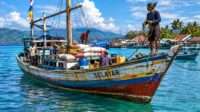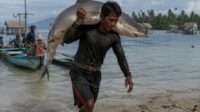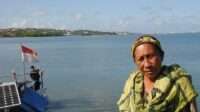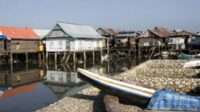

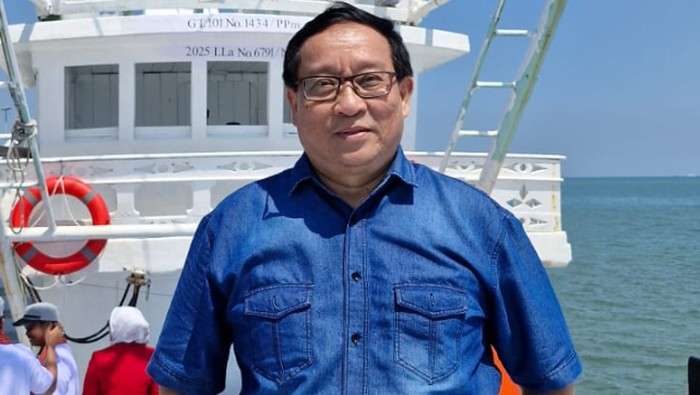
At Hasanuddin University, marine scientist Dr. M. Rijal Idrus has built a body of research around a question that reaches far beyond the laboratory: how can coastal communities sustain their livelihoods without undermining the ecosystems on which their futures depend?
MARITIMEPOSTS.COM — For millions of Indonesians, the sea represents far more than a physical landscape; it is a lifeline that sustains livelihoods, provides food, preserves cultural traditions, and supports local economies. However, these vital coastal ecosystems face growing threats from overexploitation, environmental degradation, and the escalating impacts of climate change.
Understanding these challenges requires more than knowledge of marine ecosystems. It requires an understanding of people, institutions, economic relationships, and the decisions that shape how natural resources are used.
This intersection of science and society is central to the academic work of Dr. Ir. M. Rijal Idrus, M.Sc., a marine scientist and lecturer associated with Hasanuddin University (Unhas) in Makassar, South Sulawesi.
Through research on fisheries governance, small-island vulnerability, marine habitats, and seaweed cultivation, Idrus has contributed to a broader discussion about the future of Indonesia’s coastal regions. His work points to a fundamental proposition: protecting the sea cannot be separated from understanding the lives of the people who depend on it.
From Marine Science to the Human Dimensions of the Sea
Idrus’s academic trajectory reflects an engagement with marine environments that extends beyond the study of biological systems.
His doctoral thesis, Hard Habits to Break: Investigating Coastal Resource Utilisations and Management Systems in Sulawesi, Indonesia, completed in 2011, provides an important entry point into his intellectual interests.
The title raises a question that is particularly relevant to coastal Indonesia: why are established patterns of natural-resource use so difficult to change, even when the long-term sustainability of those resources is at stake?
The question is not simply ecological. Fisheries may be under pressure, coastal habitats may be deteriorating, and management regulations may exist. Yet changing resource-use practices can be difficult when people’s incomes, social relationships, access to markets, and everyday survival depend on existing arrangements.
This is where marine science meets the social sciences.
For coastal communities, sustainable resource management cannot be reduced to a set of environmental rules. It must also account for the economic realities and social structures that influence whether those rules are understood, accepted, and implemented.
Idrus’s research offers a way to examine these relationships. Rather than treating the sea as an isolated natural system, his work considers the interaction between ecosystems and the institutions through which people govern them.
Fisheries Governance: Sustainability Requires More Than Regulation
One of the recurring challenges in Indonesian fisheries is the gap between the formal design of resource management and the realities of how fishing activities operate.
Small-scale fisheries involve more than fishers and the fish they catch. They are connected to traders, buyers, local authorities, community organizations, and wider market networks. Decisions made by these actors can influence fishing practices, access to resources, and the distribution of economic benefits.
In the 2019 article The Role of Social Structure for Governing Natural Resources in Decentralized Political Systems: Insights from Governing a Fishery in Indonesia, co-authored with Philipp Gorris, Marion Glaser, and Andi Yusuf, Idrus contributed to research examining the role of social relationships in natural-resource governance.
Published in the journal Public Administration, the study explores how interactions among actors influence fisheries management within a decentralized political system.
Its implications extend beyond administrative arrangements. A management system may appear sound on paper but still struggle if coordination is weak, community participation is limited, or influential intermediaries shape resource use in ways that undermine sustainability.
Conversely, regular communication and meaningful participation by local actors can help strengthen collective management.
The broader lesson is that governance is not only about who possesses formal authority. It is also about how people interact, how decisions are negotiated, and whose interests influence the outcome.
For Indonesia, where coastal resource management involves multiple levels of government and diverse local communities, this perspective is especially important.
Effective fisheries policy must recognize the networks through which fishing actually takes place. It must also create opportunities for fishers and other local stakeholders to participate in decisions affecting their livelihoods.
The Spermonde Islands: Understanding Vulnerability Beyond the Environment
The relationship between environmental change and human well-being becomes particularly visible in Indonesia’s small islands.
The Spermonde Islands, off the coast of South Sulawesi, are part of a marine landscape where coral reefs, fishing activities, settlement patterns, and local economies are closely interconnected.
Research associated with Idrus on community vulnerability mapping in the Spermonde Islands examines the relationship between environmental conditions and the socioeconomic circumstances of island communities.
Such an approach matters because vulnerability is rarely determined by a single factor.
An island’s exposure to environmental pressures may depend on its physical characteristics, the condition of its marine resources, and its exposure to climate-related hazards. But the consequences for residents also depend on livelihoods, access to economic opportunities, and the resources available to respond to change.
Two communities facing similar environmental pressures may experience very different outcomes if their economic circumstances and adaptive capacities differ.
This makes vulnerability assessment more than a technical exercise. It can help identify where environmental risks intersect with social and economic disadvantages, providing a basis for more targeted development planning.
For policymakers, the implication is clear: protecting coastal communities requires attention to both the condition of their surrounding ecosystems and their capacity to respond to environmental change.
For researchers, it reinforces the importance of interdisciplinary approaches that bring together marine ecology, geography, climate science, and social analysis.
Seaweed Cultivation and the Meaning of Sustainable Development
Seaweed cultivation provides another perspective on the relationship between coastal livelihoods and environmental management.
Across Indonesia, seaweed farming offers economic opportunities for coastal households and contributes to a wider supply chain connecting producers with processors and markets.
However, production alone does not determine whether an aquaculture system is sustainable.
Research associated with Idrus on the sustainability of Kappaphycus alvarezii cultivation in Baubau examines the issue through ecological, economic, and social dimensions.
The approach is important because the long-term viability of seaweed farming depends on several interconnected conditions. Cultivators need reliable planting material, access to markets, appropriate production practices, and environmental conditions that support cultivation.
A production system may generate income in the short term but remain vulnerable if farmers lack reliable market access or if environmental conditions deteriorate.
Sustainability therefore requires attention to the entire system, from the condition of coastal waters to the economic relationships that determine the value received by producers.
For coastal development policy, this perspective challenges the assumption that expanding production automatically improves welfare.
The more important question is whether production can support resilient livelihoods while maintaining the ecological conditions on which future harvests depend.
This is particularly relevant to Indonesia’s blue economy ambitions. Economic growth in marine sectors must be assessed not only through output and investment but also through the durability of ecosystems and the well-being of coastal communities.
Reading the Seabed to Understand the Future of Small Islands
Idrus’s research also addresses the ecological foundations of coastal sustainability.
Studies examining benthic habitats—the organisms and communities living on or near the seabed—investigate the relationships among coral reefs, seagrass beds, and macroalgae.
These habitats are not merely components of marine biodiversity. They form part of the ecological infrastructure supporting fisheries and coastal ecosystems.
Understanding their distribution and condition can provide valuable information for environmental monitoring and resource management.
Research on benthic spatial relationships and small-island deformation, including work published in the IOP Conference Series in 2021, illustrates how marine ecological observations can contribute to questions about island environments.
The significance of this research lies in its interdisciplinary potential. Changes in coastal and marine systems cannot always be understood through a single measurement. They may require observations of habitats, physical geography, and the broader environmental processes affecting an island.
Such work contributes to the evidence base needed to understand how small-island environments change and how their ecological conditions can be monitored.
For a country composed of thousands of islands, the capacity to connect marine observations with coastal planning is an important part of long-term environmental stewardship.
Science Must Travel Beyond the University
The importance of Idrus’s work also lies in its relevance to institutions responsible for managing natural resources.
As a lecturer and researcher at Hasanuddin University, he operates within an academic environment that connects teaching, scientific inquiry, and engagement with Indonesia’s marine and coastal challenges.
His documented involvement in the university’s climate-change research activities further connects his academic interests with questions of environmental adaptation and sustainable development.
Universities have a particular responsibility in this context. They can generate evidence, train future researchers and practitioners, and create opportunities for collaboration among scientists, governments, communities, and other stakeholders.
But scientific knowledge does not automatically become effective policy.
Research findings must be communicated in ways that decision-makers can use. Local knowledge must be considered alongside scientific evidence. And recommendations must account for the practical constraints faced by the communities expected to implement them.
The challenge is therefore not simply to produce more research. It is to strengthen the relationship between research and the decisions that shape people’s lives.
This is an important way to understand the broader relevance of Idrus’s academic work: the study of marine environments becomes more consequential when it informs how societies manage them.
The Inspiration Behind the Work: Seeing Communities as Part of the Ecosystem
The available evidence does not establish a personal account of the experiences or motivations that inspired Idrus to pursue marine science. Nevertheless, a consistent intellectual theme emerges from his research.
That theme is the recognition that people cannot be separated from the ecosystems on which they depend.
A coral reef is an ecological habitat, but it may also support local fisheries. A seaweed farm is a production system, but it is also part of a household’s livelihood. A coastal island is a geographical formation, but it is also a place where people build relationships, maintain traditions, and negotiate economic uncertainty.
These dimensions are connected.
Environmental policies that ignore local economic realities may struggle to achieve lasting results. Development initiatives that focus only on immediate income may overlook the ecological foundations of future prosperity. And scientific assessments that exclude local experience may fail to capture the complexity of coastal life.
The inspiration that readers can reasonably draw from Idrus’s body of work is therefore not a claim about his private beliefs, but a principle reflected in the questions his research addresses: lasting environmental solutions require attention to both natural systems and human systems.
This principle offers an important lesson for young scientists.
Scientific excellence is not measured only by the complexity of a method or the number of publications produced. It also depends on whether research helps people understand consequential problems, improves the quality of decisions, and expands the possibilities for sustainable action.
A Legacy Still Taking Shape
Assessing an academic’s legacy requires care. It involves more than identifying a list of publications or institutional appointments. A lasting legacy may also be reflected in the students trained, the research practices strengthened, the policies informed, and the collaborations sustained over time.
The full long-term impact of Idrus’s work would require further evidence, including documented student mentorship, independent assessments of policy influence, and a comprehensive publication and citation record.
What can already be identified is a coherent field of inquiry linking marine ecosystems, coastal livelihoods, environmental vulnerability, and natural-resource governance.
That body of work is relevant to a country confronting the challenge of reconciling economic development with the protection of its marine environments.
Indonesia’s future as a maritime nation will depend not only on the resources it possesses but also on the institutions, knowledge, and public choices through which those resources are managed.
Marine scientists such as Idrus contribute to this task by investigating the ecological conditions of coastal environments and the social relationships that shape their use.
Their work helps make visible a central reality of sustainable development: environmental protection and human welfare are not competing objectives by definition. Under appropriate management arrangements, they can reinforce one another.
Beyond the Reef
The significance of studying the sea lies ultimately in what such knowledge makes possible.
Research on fisheries can inform more inclusive governance. Vulnerability mapping can help identify communities facing overlapping environmental and socioeconomic pressures. Studies of seaweed cultivation can reveal the conditions necessary for resilient coastal livelihoods. Marine habitat assessments can strengthen the evidence available for environmental monitoring and planning.
None of these contributions alone resolves the challenges confronting Indonesia’s coastal regions. Each, however, can help improve the knowledge on which better decisions depend.
For Dr. M. Rijal Idrus, the documented record points to an academic contribution that crosses the boundaries between marine ecology, environmental management, and social governance.
His work invites a wider view of the sea—not simply as a resource to be exploited or a landscape to be protected, but as a living system embedded in human relationships, economic choices, and collective responsibilities.
And that may be the most important lesson to carry forward: the future of Indonesia’s islands will be shaped not only by what science discovers beneath the waves, but also by how society chooses to act on that knowledge.
References
1. Hasanuddin University — Researcher Profile Hasanuddin University. (n.d.). Dr. Ir. M. Rijal Idrus, M.Sc. — Lecturer & Researcher.
Official research profile, including research output and citation metrics.
https://discover.unhas.ac.id/researchers/m-rijal-idrus
Program Studi S1 Ilmu Kelautan, Fakultas Ilmu Kelautan dan Perikanan, Universitas Hasanuddin. (n.d.). Profil Dosen: Dr. Ir. M. Rijal Idrus, M.Sc.
Provides his academic affiliation, education, area of expertise, and doctoral thesis title.
https://ikl.fikp.unhas.ac.id/dosen-profile/
3. Idrus, M. R. (2009). Doctoral thesis
Idrus, M. R. (2009). Hard Habits to Break: Investigating Coastal Resource Utilisations and Management Systems in Sulawesi, Indonesia. PhD thesis, Department of Geography, University of Canterbury, New Zealand.
This is a key primary source for discussing his research interests in coastal resource use, environmental sustainability, and management systems.
University of Canterbury thesis repository · Full thesis PDF
4. Gorris, P., Glaser, M., Idrus, R., & Yusuf, A. (2019). Peer-reviewed journal article
Gorris, P., Glaser, M., Idrus, R., & Yusuf, A. (2019). The role of social structure for governing natural resources in decentralized political systems: Insights from governing a fishery in Indonesia. Public Administration, 97(3), 654–670.
https://doi.org/10.1111/padm.12586
This article supports the article’s discussion of fisheries governance, social networks, local participation, and institutional relationships.
5. Idrus, Rijal — Public academic profile
Idrus, R. (n.d.). Rijal Idrus — Hasanuddin University. Academia.edu.
A supplementary source for locating his research papers and abstracts. Individual publications should be cited separately when their bibliographic details are available.
https://unhas.academia.edu/RijalIdrus