
MARITIMEPOSTS.COM – After nearly a year anchored to the mainland by the invisible chains of the Coronces, a specific restlessness began to stir within me. It is a quiet, persistent ache that those of us who have lived by the tides know all too well.
Today, I find myself lost in a renungan cantik—a beautiful reflection born of isolation—wondering which horizons I will chase once the world opens its gates again.
The “call of the sea” is not merely a tourist’s whim; for the coastal ethnographer, it is a pull toward the centers of human resilience and memory.
After a long hiatus, three islands stand out in my mind, not as travel destinations, but as essential pieces of a life’s map.
Rajuni: The Island That Became a Hometown
Rajuni Taka Bonerate is more than a point in the Selayar sea; it is an anchor.
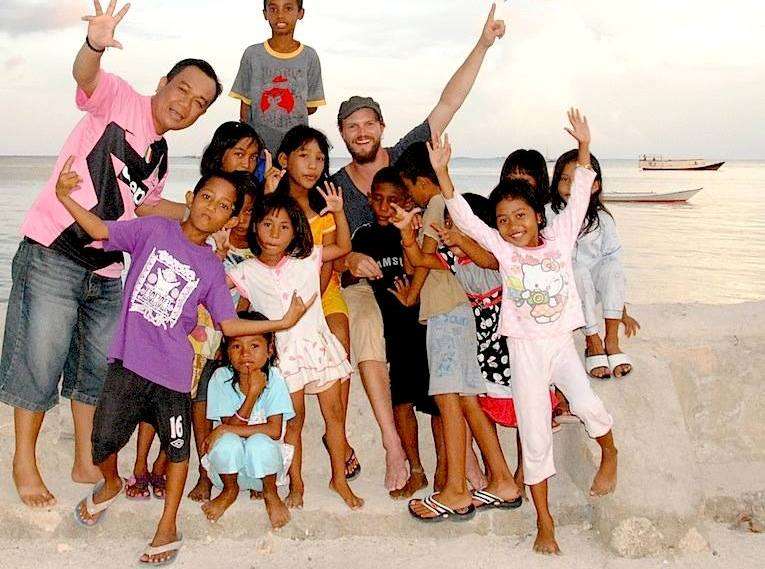
Between 1995 and 2003, I spent years woven into the fabric of this place until it transformed into a kampung halaman—a hometown as real to me as Galesong where I was born.
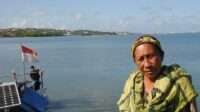
To think of Rajuni is to think of people. I find myself yearning for the house of Haji Darwis, who offered me shelter, and the “basecamp” at Ibu Zaenab’s house, standing stoically beside the village mosque.
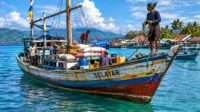
I remember the neat order of the Bugis village and the rhythmic bustle of the cargo boats that ply the waters between Makassar and the islands of East Nusa Tenggara.
The passage of time here is measured in faces.
I think of the children who were toddlers during my residency; today, they are adults, perhaps nursing their own infants under the coconut palms.
I am reminded of a wedding I attended for young Ulfa Mawaddah—a girl who was just a toddler when I first arrived, at a time when my own daughter, Intan, was still in her mother’s womb.
The connection is visceral and physical. Even now, years later, the siren song of the sea remains strong:
“If there is an opportunity to board a wooden boat carrying rice or cement to this island from Makassar—as I often did before—I feel I am still strong enough to do it.”
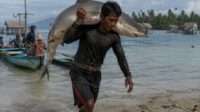
In the golden light of the afternoon, I can still see the mothers of the Bajo community cleaning their catch along the shore, while the fathers, tasbih in hand, move toward the mosque for prayer.
It is a social harmony that development rarely replicates.
Tanakeke: Meaningful Silence and 1980s Nostalgia
If Rajuni is home, Tanakeke is a time machine. There is a specific atmospheric pull here, a chance to “sip the meaning of silence” (menyesap makna sepi) that is impossible to find in the cacophony of the city.
My colleagues often speak of Tanakeke as possessing the best sunrise south of Makassar, a claim I find hard to dispute.
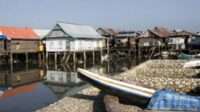
Yet, for me, the true beauty lies in its preservation of the past. Walking through the rows of traditional stilt houses, I am transported back to the Galesong of the 1980s.
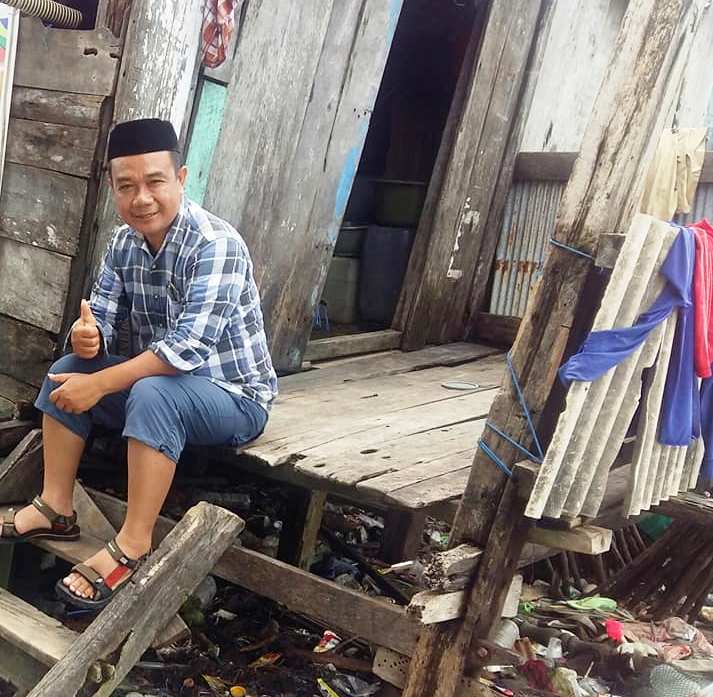
In Tanakeke, the social ties remain warm and tight-knit, unweathered by the cold individualism of modern urbanity. It is a sanctuary of communal living, where the architecture of the houses and the architecture of the heart remain unchanged by the decades.
Kaledupa: The Living Laboratory of the Bajo
The third point of my longing is Kaledupa in the Wakatobi archipelago, specifically the village of Bajo Mantigola. This is a landscape that is both “epic and elegant,” especially when one traverses the island’s ring road or stands upon its scenic peaks looking down at the turquoise sprawl.
Kaledupa serves as an “original” site for ethnography, a place where the maritime soul of the Bajo remains remarkably intact.
To walk the path toward the port of Mantigola is to see the true nature of coastal inter-dependency. I recall the sight of mothers and their children leaving the shore after a day of selling garden produce to the Bajo community—a perfect snapshot of the trade and movement that has sustained these waters for centuries.
The sensory details of Kaledupa are unforgettable:
The Shoreline: Mangroves that appear to “carry mud crabs in their roots” as the tide recedes.
The Architecture: Intricate houses built over the water, shimmering in the light of an aduhai (extraordinary) sunset.
The Struggle: The sight of a generation surviving at the edge of the world, even as the “tentacles of development” and the pressures of modernity begin to reach for their traditions.
“This island is like a memory that always calls across space and time.”
The desire to return to Rajuni, Tanakeke, and Kaledupa is a testament to the fact that some places never truly leave us. They are living laboratories of culture and survival that provide a mirror to our own changing world.
As we wait for the Coronces to pass and for the wooden cargo boats to become our carriages once more, we must ask ourselves: which “lost” places are calling to us?
In a world being flattened by development, what does it truly mean to stay “original”. For me, the answer lies on the wooden decks of a boat, somewhere between the rice sacks and the open sea.
___
Written by K. Azis