

MARITIMEPOSTS.COM – BANDUNG — Technology is advancing at an increasingly rapid pace. Artificial intelligence (AI) is no longer merely an emerging technology; it has become part of academic life, the workplace, and public services.
At the same time, cybersecurity, network resilience, and disparities in digital access are presenting increasingly complex challenges.
Against this backdrop, universities are facing new demands. Higher education institutions are no longer expected simply to generate knowledge, but also to ensure that knowledge and technology can be applied to address the evolving challenges faced by society.
Hasanuddin University (Unhas) views these developments as part of its long-standing involvement in the School on Internet (SOI) Asia. Since 2001, Unhas has been part of a network connecting educational and research institutions across the Asia-Pacific region through the use of internet technology for education, research, and human resource capacity development.
More than two decades later, the technological landscape has changed dramatically. While Unhas’s early involvement in SOI Asia focused largely on network development and expanding access to digital education, the challenges have now evolved to include artificial intelligence, cybersecurity, network resilience, and the digital divide.
Unhas Rector, Prof. Dr. Ir. Jamaluddin Jompa, M.Sc., said these changes require society to continuously learn, adapt, and build collaboration.
“Community resilience does not arise from the ability to avoid change, but from the ability to learn, adapt, and work together in facing change. This is where universities have an important responsibility to ensure that knowledge and technology deliver tangible benefits to society.”
His statement places people at the center of the technological transformation process. Digital progress is not determined solely by devices and infrastructure, but also by the readiness of individuals and institutions to understand, develop, and use technology appropriately.
For this reason, capacity building has become an important part of the higher education agenda. Knowledge exchange needs to go hand in hand with strengthening competencies, advancing research, and utilizing technology to address the needs of education and society.
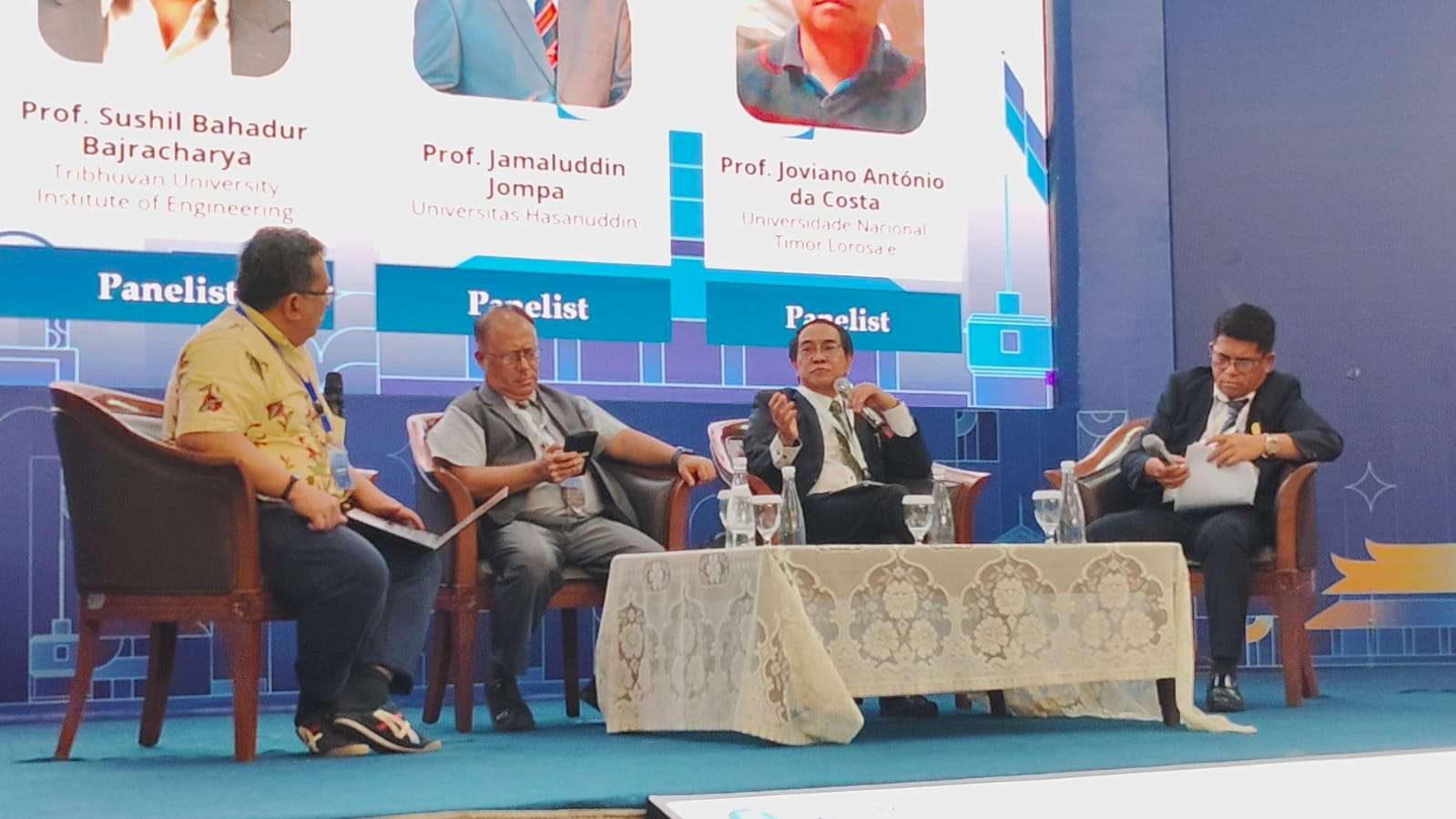
At the SOI Asia forum, Prof. Jamaluddin Jompa participated as a panelist alongside representatives from other member institutions. Discussions covered the role of universities in responding to technological change, the development of AI, digital education, and the need to build increasingly resilient and adaptive networks.
Chairman of the Unhas Institute for Digital Transformation and Artificial Intelligence (LTDKA), Prof. Dr. Eng. Ir. Muhammad Niswar, S.T., M.InfoTech., explained that Unhas’s journey with SOI Asia demonstrates how an academic network can continue to evolve alongside changing times.
“Unhas has been part of the SOI Asia community since 2001. The Bandung Declaration 2026 reaffirms that this network remains relevant in addressing technological developments and the need for academic collaboration today,” Prof. Niswar said.
The relevance of the network is reflected in the issues discussed at the forum, ranging from AI and cybersecurity to resilient networks, digital education, and joint research. These issues are becoming increasingly important for universities directly confronting technological change and society’s evolving needs.
For Unhas, participation in SOI Asia also creates opportunities for its academic community to expand access to knowledge, technology, and research partners across the Asia-Pacific region. The experience gained through the network provides a foundation for developing innovations that are more closely aligned with the needs of education and society.
One of the key moments of the meeting was the signing of the SOI-Asia Bandung Declaration 2026 by Unhas Rector Prof. Jamaluddin Jompa together with leaders of other SOI Asia member institutions.
The declaration reaffirmed the commitment of the academic and research community to building resilient global societies by strengthening relationships among institutions across the Asia-Pacific region and beyond.
For Unhas, the declaration also marks a long journey spanning more than two decades. Technology will continue to evolve, but the need to build people and institutions capable of understanding, adapting to, and harnessing change remains an ongoing endeavor.
From developing internet networks during its early involvement to navigating the current era of AI, Unhas continues to position technology as part of its efforts to strengthen education, research, and community engagement.
The SOI Asia 61st Meeting and 30th Anniversary Conference brought together members of the School on Internet (SOI) Asia to discuss developments in technology, education, research, and the future direction of academic networks across the Asia-Pacific region. The event was held at the Bandung Institute of Technology (ITB) in Bandung from August 31 to September 2, 2026. (* /mir)