

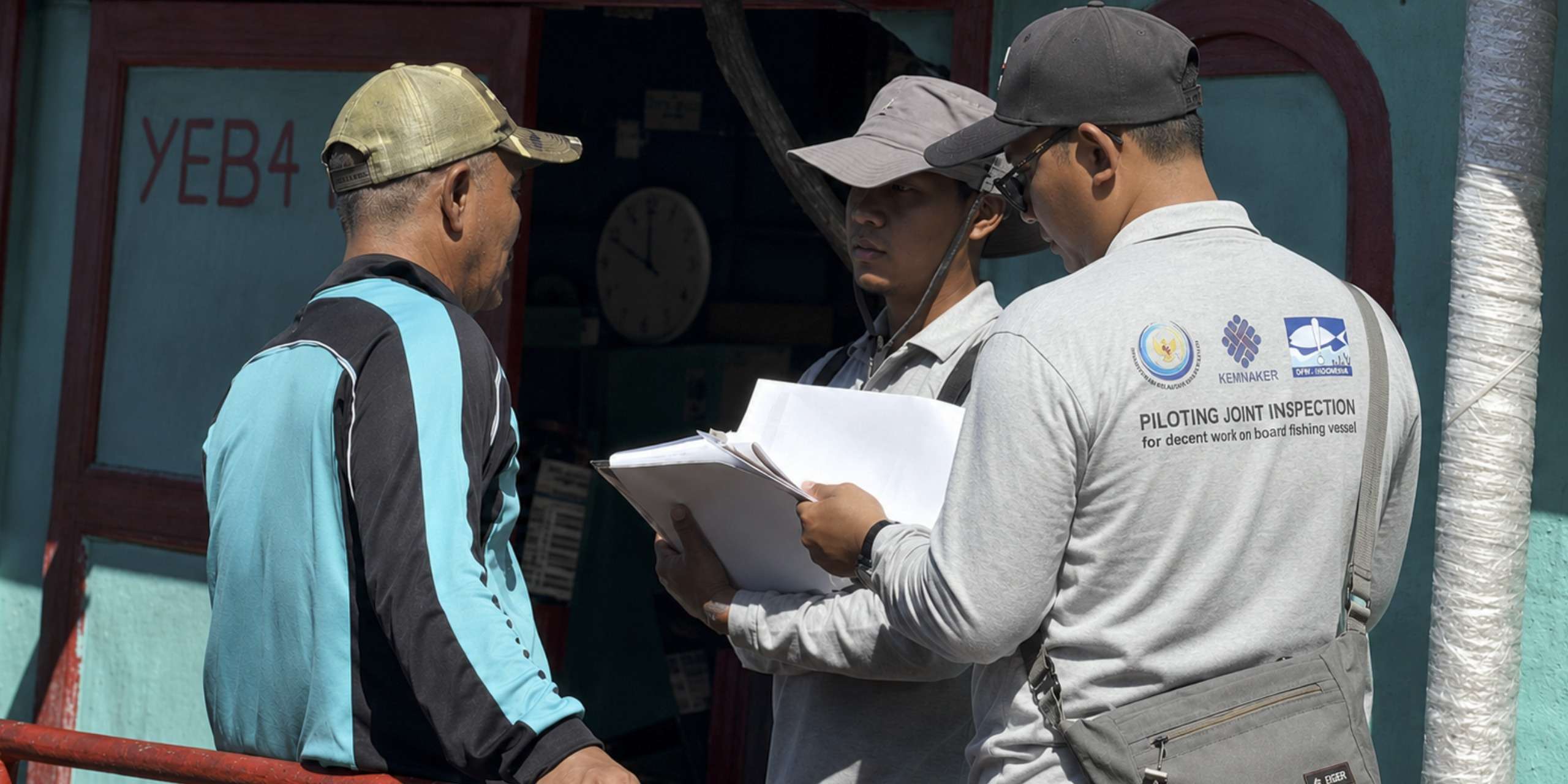
MARITIMEPOSTS.COM – The Ministry of Marine Affairs and Fisheries (KKP) has conducted a pilot joint inspection focusing on labor conditions aboard fishing vessels at Benoa Port, Bali, as part of efforts to ensure better protection for fishing vessel crew members.
The initiative is part of the implementation of the Convention Concerning Work in the Fishing Sector, or ILO Convention No. 188 on Work in Fishing, which was ratified by President Prabowo on May 1, Labor Day, through Presidential Regulation No. 25 of 2026.
“When a fishing vessel puts to sea, our attention should not be limited to the vessel’s readiness, the completeness of its documents, or its catch. We must also ensure that the people working aboard the vessel are in safe and decent conditions and that their rights are protected in accordance with applicable regulations,” said Mochamad Idnillah, Director of Fishing Vessels and Fishing Gear, in an official statement issued in Jakarta on Friday (September 4).
The KKP collaborated with the Ministry of Manpower, the Bali Provincial Marine and Fisheries Agency, the Bali Provincial Manpower Agency, and Destructive Fishing Watch Indonesia to conduct the pilot joint labor inspection of fishing vessels at Benoa Port on August 27–28.
The inspection targeted fishing vessels preparing to depart for fishing operations as well as vessels that had returned from fishing activities.
The activities included preparations and reviews of administrative documents, pilot inspections conducted directly aboard fishing vessels, as well as discussions and evaluations of the inspection results. The pilot program enabled the participating institutions to observe how the inspection mechanism worked in practice while identifying areas that need to be strengthened as the inspection system is further developed.
Several findings emerged from the joint inspection, including wage systems that still rely on profit-sharing arrangements, crew members who were not fully aware of the contents of their maritime employment agreements, recruitment processes conducted through agents without legal entity status, and occupational health and safety conditions aboard fishing vessels.
The findings were subsequently communicated to vessel owners for corrective action.
According to Idnillah, the findings and lessons from the pilot program are expected to serve as a basis for improving inspection instruments, implementation procedures, coordination mechanisms, and the distribution of authority and responsibilities among relevant institutions.
“This initiative is part of an effort to establish a more integrated, effective, and sustainable joint labor inspection mechanism for fishing vessels,” he said.
KKP recorded 21 cases involving fishing vessel crew members through August 2026. Most of the cases involved wage-related disputes, compensation for deaths and workplace accidents, as well as illegal and irresponsible recruitment practices.
Director General of Capture Fisheries Lotharia Latif said the success of fisheries development should not be measured solely by productivity and catch volumes, but also by the quality of protection provided to the people working in the sector.
“Fishing vessel crew members are a crucial part of the fisheries sector. Therefore, their protection must become an integral part of fishing vessel governance,” he said.