

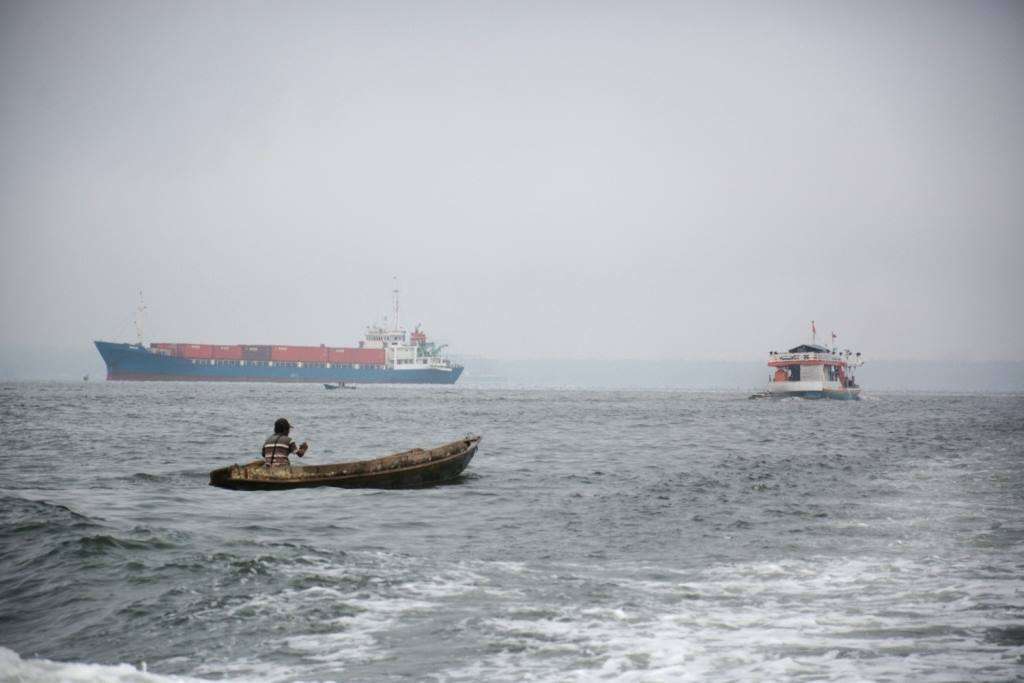
- The Karimunjawa experience suggests that compliance depends on more than information. People are more likely to respect regulations when they perceive rules as legitimate, fair, understandable, enforceable, compatible with livelihoods, and supported by institutions that they recognize as credible and trustworthy.
- This distinction is crucial because conservation policy sometimes assumes that stronger penalties automatically produce stronger compliance.
- However, research involving Indonesian marine protected areas found that systems relying primarily on penalties could be less effective than governance arrangements allowing Indigenous peoples and local communities to participate meaningfully in management.
Why Legal Protection Alone Does Not Guarantee Conservation Success in Asia
MARITIMEPOSTS.COM — Putting a marine area inside a protected-area boundary does not automatically make its reefs healthier, its fish more abundant, or its communities more willing to obey conservation rules.
Across Asia, governments are expanding protected areas at an unprecedented scale, but a difficult question remains largely unanswered: are we protecting nature, or simply protecting boundaries on maps?
The answer is not necessarily yes. Research increasingly shows that protected-area effectiveness depends not simply on whether an area has been legally designated, but also on management capacity, enforcement, financing, community participation, institutional legitimacy, ecological monitoring, and the distribution of decision-making rights among different stakeholders.
This distinction has become particularly important as governments pursue ambitious global conservation targets.
The international commitment to conserve at least 30 percent of terrestrial, inland-water, coastal, and marine areas by 2030 creates an enormous opportunity for biodiversity protection, but it also creates a risk that governments may focus more heavily on the quantity of protected areas than their actual quality and effectiveness.
The central question should therefore no longer be simply how many hectares have been designated, but rather what has changed because those hectares were designated.
Have fish populations increased, coral reefs recovered, illegal activities declined, local livelihoods become more sustainable, and communities developed stronger ownership of conservation objectives?
The “Paper Park” Problem
The expression “paper park” has long been used in conservation discussions to describe protected areas that formally exist through legislation or government designation but lack sufficient resources, institutions, enforcement, management capacity, or political commitment to achieve their intended conservation objectives.
A protected area can therefore have an official decree, clearly defined boundaries, zoning regulations, management plans, and responsible government institutions while continuing to experience illegal fishing, habitat destruction, encroachment, overexploitation, or other forms of environmental degradation.
The problem is not necessarily the absence of law. Instead, the deeper problem is the gap between formal rules and actual governance, because regulations must be translated into institutions, incentives, relationships, enforcement systems, monitoring practices, and everyday behavior before they can generate meaningful ecological outcomes.
Research on marine protected areas in Southeast Asia has emphasized that biological, socioeconomic, and governance indicators must be examined together when assessing whether MPAs are actually effective.
A review of 32 studies covering more than 35 MPAs found that conservation outcomes vary considerably and that an MPA strategy suitable for one location may be inappropriate for another.
This finding is particularly important for Asia because the region contains extremely diverse political systems, cultures, coastal economies, customary institutions, ecological conditions, and patterns of resource dependence.
A conservation model that works in one island community may therefore produce very different results when imposed on another community without sufficient adaptation.
A Law Does Not Automatically Create Compliance
One of the most important lessons from conservation research is that knowledge of conservation regulations does not automatically produce compliance.
People may understand the rules perfectly well while continuing behavior that violates those rules when economic incentives, social norms, institutional legitimacy, or enforcement conditions encourage different choices.
Indonesia provides an important illustration through research conducted in Karimunjawa National Park.
Researchers found that awareness of fishing regulations among local fishers was relatively high, yet compliance with spatial restrictions remained weak, demonstrating that simply communicating conservation rules was insufficient to guarantee behavioral change.
The Karimunjawa experience suggests that compliance depends on more than information. People are more likely to respect regulations when they perceive rules as legitimate, fair, understandable, enforceable, compatible with livelihoods, and supported by institutions that they recognize as credible and trustworthy.
This distinction is crucial because conservation policy sometimes assumes that stronger penalties automatically produce stronger compliance.
However, research involving Indonesian marine protected areas found that systems relying primarily on penalties could be less effective than governance arrangements allowing Indigenous peoples and local communities to participate meaningfully in management.
When Communities Become Subjects Rather Than Partners
Another recurring problem concerns the quality of community participation.
Governments frequently describe protected-area processes as participatory because communities have been invited to meetings, consultations, workshops, or public hearings, yet participation can mean very different things depending on whether local people possess genuine influence over decisions.
A systematic review published in the Journal of Environmental Management examined 52 empirical protected-area cases and found evidence connecting positive social and ecological outcomes with four characteristics: genuine devolution of power, involvement of diverse actors, long-term external support, and devolution of rights. Importantly, sixteen of the reviewed cases came from Asia.
There is therefore a fundamental difference between “consulting communities” and “sharing authority with communities.”
Consultation may provide information and collect opinions, whereas meaningful governance participation gives communities opportunities to influence zoning, management priorities, benefit distribution, monitoring arrangements, enforcement approaches, and decisions affecting their livelihoods.
This distinction becomes especially important in coastal areas where local communities may have depended upon fishing grounds, reefs, mangroves, seagrass meadows, and other ecosystems for generations.
Conservation rules that suddenly redefine access to those resources can generate resistance when communities perceive that decisions have been made without adequate recognition of their rights or interests.
Centralization Can Create Its Own Problems
Government authority remains essential for conservation, particularly where protected areas cover large territories, cross administrative boundaries, involve significant public resources, or require strong enforcement against powerful commercial interests. However, centralized management can also become problematic when local knowledge, community institutions, and customary governance systems are excluded from meaningful decision-making processes.
A major review of conservation governance found a tendency for community-based and co-managed arrangements to generate beneficial outcomes for people and nature, although the authors emphasize that results remain highly context-specific and that broad claims about one universally superior governance model should be avoided.
More recent global research provides additional evidence supporting shared governance.
A study examining 217 marine protected areas found that MPAs using shared governance arrangements, where authority was distributed among governmental and nongovernmental actors, were 98 percent more likely to have higher fish biomass than MPAs governed primarily by state agencies alone.
The implication is not that governments should withdraw from protected-area management.
Instead, it suggests that government authority can become more effective when combined with local knowledge, community participation, scientific expertise, civil-society involvement, and institutional arrangements that distribute appropriate responsibilities among different actors.
Indonesia’s Management Capacity Problem
Indonesia provides a particularly important case because the country has rapidly expanded its marine protected-area network while managing one of the world’s most extensive and biologically diverse marine environments.
However, expanding the geographical network creates an equally important requirement: sufficient institutional and human capacity to manage those areas effectively.
A major study published in Marine Policy in 2026 assessed staffing capacity across 36 priority Indonesian marine protected areas.
The research found substantial deficiencies and uneven distribution of personnel, with 70 percent of the studied MPAs failing to meet the minimum Level I staffing threshold used in the study.
The same study found that 236 staff members were responsible for managing more than 16 million hectares across the 36 MPAs examined.
Only three MPAs reached the recommended staffing level of twenty personnel, while many areas had fewer than eight staff members, creating serious challenges for enforcement, ecological monitoring, community engagement, administration, and other essential management functions.
This finding illustrates a fundamental contradiction in conservation policy: governments can legally establish very large protected areas relatively quickly, but building the human institutions required to manage those areas effectively can take years or even decades.
A conservation area without adequate personnel is therefore not necessarily an effective conservation area.
Staff need appropriate competencies, clear responsibilities, operational authority, transportation, equipment, reliable financing, scientific information, community relationships, and institutional support if they are expected to convert regulations into actual conservation outcomes.
Conservation Cannot Be Separated from Livelihoods
Many protected areas across Asia overlap with landscapes and seascapes where people depend directly upon natural resources. Fishers depend on fishing grounds, farmers depend on land and forests, coastal households depend on marine ecosystems, and tourism operators depend upon the environmental quality that conservation is intended to maintain.
This creates an unavoidable political and economic challenge because conservation restrictions can impose immediate costs on people whose livelihoods depend upon resources that governments now seek to regulate.
If communities receive restrictions without meaningful participation, compensation, alternative livelihood opportunities, or equitable access to conservation benefits, protected areas may become associated with economic loss rather than collective opportunity.
A 2025 systematic review of 98 empirical studies examining community perceptions of marine protected areas found that research has focused heavily on participation, enforcement, and ecological outcomes, while alternative livelihoods and socioeconomic outcomes have received considerably less attention.
This imbalance matters because conservation success cannot be judged solely by ecological indicators.
If fish biomass improves while local communities experience severe economic hardship, food insecurity, exclusion, or loss of rights, the governance system may remain socially fragile and vulnerable to future conflict.
Social Capital and Conservation
This is where the concept of social capital becomes particularly relevant. Conservation is ultimately a relationship between people, institutions, ecosystems, and rules, meaning that trust, networks, reciprocity, shared norms, and institutional relationships can influence whether conservation regulations become accepted social practices.
Bonding social capital connects members within communities, bridging social capital connects different social groups, while linking social capital connects communities with institutions possessing formal authority, knowledge, resources, and political power.
These different forms of social capital can potentially determine whether conservation becomes a shared undertaking or remains an externally imposed regulatory program.
A community may possess strong internal solidarity but have weak relationships with government institutions. Conversely, a government agency may possess substantial formal authority but have weak trust among local communities, creating an institutional gap that makes enforcement difficult and cooperation expensive.
This perspective suggests that effective protected-area governance requires more than regulations and budgets.
It requires relationships capable of connecting communities, government institutions, scientific organizations, development partners, and other stakeholders around mutually understood conservation objectives.
The Overlooked Role of Local and Customary Institutions
Across Asia, conservation policies frequently encounter existing customary institutions that have regulated natural-resource use long before modern protected-area legislation emerged.
Traditional leaders, village institutions, fishing communities, religious organizations, and customary authorities may possess knowledge about ecological seasons, resource-use rules, territorial boundaries, and socially accepted sanctions.
These systems should not automatically be romanticized, because customary institutions can contain inequalities and may not always produce conservation outcomes.
Nevertheless, excluding legitimate local institutions can eliminate potentially valuable sources of ecological knowledge, social legitimacy, monitoring capacity, and community enforcement.
The broader conservation-governance literature increasingly recognizes that protected-area effectiveness depends upon the institutional context in which conservation takes place.
Research also cautions that comparisons between state-managed, Indigenous-managed, and locally managed conservation areas are complicated because governance arrangements frequently overlap and outcomes differ substantially between contexts.
The more constructive question for policymakers may therefore be not “How can the state make communities obey conservation regulations?”, but rather “How can formal conservation law work with legitimate local institutions to achieve shared ecological and social objectives?”
The Danger of Chasing 30 Percent
The global 30×30 target represents an important opportunity for biodiversity conservation, but it could also create a policy incentive to prioritize the quantity of designated area over the quality of governance and ecological outcomes. Increasing the percentage of protected territory is politically visible, while improving institutions, changing behavior, and rebuilding ecosystems are slower and harder to measure.
A government can announce another 100,000 hectares of conservation area, update a map, issue a regulation, and report the achievement internationally.
Yet none of these administrative actions automatically tells us whether fish populations have recovered, illegal fishing has declined, coral reefs have improved, or communities have developed stronger incentives to protect natural resources.
Research from Taiwan demonstrates why effectiveness assessment must be systematic.
A 2024 study evaluated thirty fishery conservation zones using 28 indicators and found that only two were rated highly effective, while most experienced deficiencies involving ecological monitoring, enforcement, and stakeholder participation.
The Taiwanese study also demonstrated that combining quantitative management-effectiveness assessment with participatory action research could help identify practical problems, including inappropriate boundaries, insufficient ecological information, and enforcement difficulties. Stakeholder collaboration subsequently contributed to proposed management improvements.
The lesson is clear: protected-area coverage is an important indicator, but it cannot substitute for evidence that conservation is actually working.
From “How Many Hectares?” to “What Changed?”
Perhaps the most important transformation required in conservation policy is a shift in the basic question. Instead of asking only “How many hectares have we protected?”, governments should increasingly ask “What has changed because we protected them?”
The answer should include several dimensions, beginning with legal effectiveness, because protected areas need clear boundaries, legitimate regulations, enforceable rules, and institutional authority.
Without these foundations, conservation objectives can become ambiguous, contested, or impossible to implement consistently.
The second dimension is institutional effectiveness, which requires sufficient personnel, financing, infrastructure, technical competence, monitoring systems, coordination mechanisms, and clear responsibilities.
Indonesia’s recent staffing evidence demonstrates that expanding protected-area networks without corresponding management capacity can create serious operational vulnerabilities.
The third dimension is social effectiveness, which includes community legitimacy, meaningful participation, recognition of rights, fair benefit distribution, trust, and opportunities for local people to influence decisions.
Research consistently indicates that participation becomes more valuable when it involves genuine power and rights rather than simply communication or consultation.
The fourth dimension is ecological effectiveness, measured through changes in biodiversity, habitat condition, fish abundance, ecosystem functions, and the reduction of destructive activities.
These indicators provide the strongest evidence that conservation has produced the environmental outcomes for which protected areas were originally established.
The fifth dimension is economic effectiveness, because conservation policies must consider whether local people can maintain sustainable livelihoods and whether benefits associated with tourism, fisheries, ecosystem services, or conservation financing are distributed fairly among communities and other stakeholders.
Finally, there must be political accountability. Someone must be responsible for monitoring performance, explaining failures, publishing results, responding to community concerns, and changing management strategies when evidence demonstrates that existing approaches are not producing the desired outcomes.
What Asia Should Do Differently
The evidence does not justify claiming that protected areas in Asia are inherently ineffective. On the contrary, research demonstrates that protected areas can produce positive ecological and socioeconomic outcomes, particularly when governance systems are appropriately designed and implemented.
The stronger conclusion is that legal designation alone is insufficient. Protected areas work best when laws are connected to capable institutions, credible enforcement, sustainable financing, meaningful community participation, scientific monitoring, legitimate rights, and governance arrangements appropriate to local ecological and social conditions.
For Indonesia and other Asian countries, this means that the next generation of conservation policy should focus less exclusively on establishing new boundaries and more heavily on improving the performance of existing conservation areas.
Every protected area should ideally have measurable ecological objectives, clearly defined governance responsibilities, adequate staffing, sustainable financing, community participation mechanisms, transparent monitoring systems, and periodic independent evaluations of management effectiveness.
Most importantly, governments should distinguish between output indicators and outcome indicators.
The number of patrols conducted, meetings held, training sessions organized, hectares designated, and regulations issued are useful outputs, but they do not necessarily demonstrate that biodiversity or community welfare has improved.
The real outcomes should include healthier ecosystems, stronger fish populations, reduced destructive activities, improved livelihoods, greater community trust, stronger institutional cooperation, and measurable improvements in conservation status.
Conservation Is More Than a Legal Boundary
Ultimately, conservation is not created simply by drawing a line on a map. A ministerial decree can establish a boundary, a zoning plan can divide a marine area into management categories, and regulations can prohibit destructive activities, but none of these instruments alone can restore coral reefs, rebuild fish populations, or create community trust.
Conservation becomes real when institutions and people transform those legal arrangements into everyday practices. That transformation requires knowledge, resources, enforcement, legitimacy, incentives, social relationships, scientific monitoring, and meaningful participation from the people whose lives are directly connected to the protected ecosystem.
This is why the future of conservation in Asia should not be judged only by the number of protected areas established or the percentage of national territory placed under some form of legal protection. It should be judged by whether those areas become better governed, better monitored, socially legitimate, adequately financed, and ecologically effective.
Indonesia’s challenge is particularly significant because its marine protected areas encompass enormous and complex seascapes containing thousands of islands, highly productive ecosystems, diverse coastal communities, customary institutions, and globally important biodiversity.
The country therefore does not simply need more conservation areas.
Indonesia needs conservation areas that work.
The same principle applies across Asia. The objective should not be to create protected areas that look impressive on maps but remain weak institutions on the ground.
Conservation should instead produce measurable improvements that communities can see, scientists can document, governments can defend, and future generations can inherit.
The real question is therefore no longer simply: “How much have we protected?” The more important question is: “What, exactly, has become better because we protected it?”
If the answer is healthier ecosystems, stronger communities, sustainable livelihoods, legitimate institutions, and better relationships between governments and citizens, then conservation has achieved something meaningful.
If the answer is only another decree, another boundary, another management plan, and another percentage added to a global target, then society may have expanded the geography of conservation without necessarily expanding conservation itself.
The future of Asian conservation will depend not only on protecting more places, but on building the institutions, relationships, capacity, and social legitimacy required to make protection real.
References
- Ahmad Kamil, K., Hailu, A., Rogers, A., & Pandit, R. (2017). An assessment of marine protected areas as a marine management strategy in Southeast Asia: A literature review. Ocean & Coastal Management, 145, 72–81.
- Newig, J., et al. (2023). Participation in protected area governance: A systematic case survey of the evidence on ecological and social outcomes. Journal of Environmental Management, 336, 117593.
- Gurney, G. G., et al. (2023). Governance and Conservation Effectiveness in Protected Areas and Indigenous and Locally Managed Areas. Annual Review of Environment and Resources.
- Gill, D. A., et al. (2022). Participation, not penalties: Community involvement and equitable governance contribute to more effective multiuse protected areas. Research using long-term monitoring data from four Indonesian marine protected areas.
- Huang, S.-C., Chang, Y., & Chang, S.-K. (2024). From regional effectiveness evaluation and community engagement toward effective marine protected areas. Ocean & Coastal Management, 251, 107075.
- Enthoven, L. (2025). How do local communities perceive marine protected area governance, management, surrounding development, and outcomes? A systematic review. Journal of Environmental Management, 391, 126570.
- Beyond Numbers: Assessing Staff Capacity and Competence in the Management of Indonesian Marine Protected Areas. (2026). Marine Policy, 183, 106885. The study assessed staffing capacity across 36 Indonesian MPAs and identified substantial staffing and competency gaps.
- Shared governance increases marine protected area effectiveness. A comparative analysis of 217 global MPAs found stronger ecological outcomes associated with shared governance arrangements involving multiple governmental and nongovernmental actors.
- Protected Planet Report 2024. UNEP-WCMC and IUCN. The report assesses global progress in protected and conserved areas and emphasizes the importance of management effectiveness, governance, ecological representation, and connectivity alongside area coverage.