
A Smart Trash Bin Introduces IoT to Students in Rural Pinrang
MARITIMEPOSTS.COM – PINRANG, Indonesia — For students at SMKN 7 Pinrang, the concept of the Internet of Things (IoT) became easier to understand when it was demonstrated through something familiar: a trash bin.
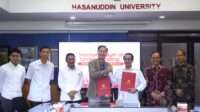
On July 31, 2026, students of the Universitas Hasanuddin (Unhas) Thematic Community Service Program, or KKNT 116 Inovasi Desa Wiringtasi, introduced basic IoT concepts through a hands-on workshop on building a smart trash bin.
The activity was initiated by Nabila Samsabila, a student of the Geophysics Study Program at Unhas, as part of the students’ community service program in Desa Wiringtasi.
Rather than presenting IoT solely as a theoretical subject, the workshop introduced students to a simple example of how sensors, programming, and electronic components can work together to create an automated device.
From IoT Theory to a Physical Device
IoT refers broadly to systems in which physical devices can collect information, process it, and respond through programmed functions. For students who are encountering the concept for the first time, however, the term can seem highly technical.
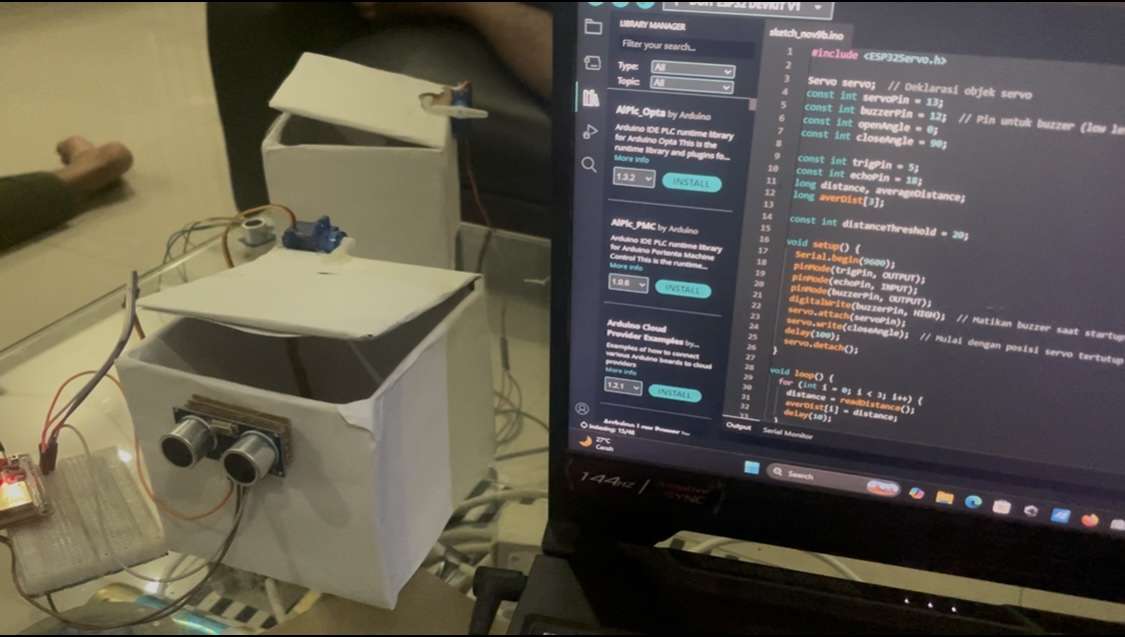
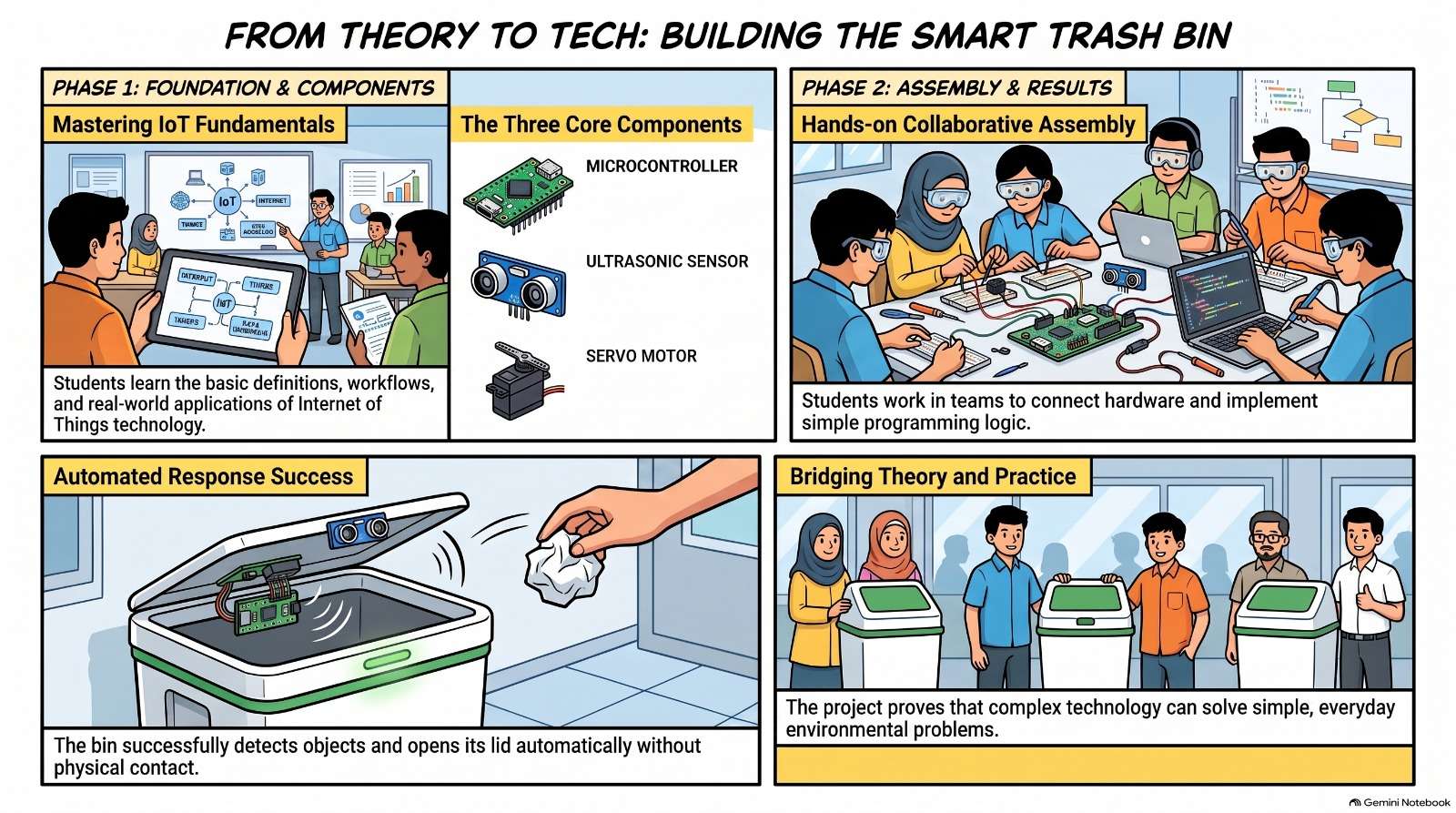
The smart trash bin provided a practical way to demonstrate the basic principle. In the prototype developed during the workshop, an ultrasonic sensor detects the presence of an object. The information is processed by a microcontroller, which then sends instructions to a servo motor to open the lid.
The process gives students a straightforward example of how a digital command can produce a physical response.
Instead of simply learning that sensors can detect objects, students could observe the process directly: an object approaches, the sensor detects it, the programmed system processes the input, and the motor moves the lid.
The workshop introduced students to several basic components used in the prototype. The ultrasonic sensor functions as a detection device. It uses ultrasonic waves to identify the presence or distance of an object.
The microcontroller functions as the control unit. It receives information from the sensor and executes the programmed instructions that determine what the system should do. The servo motor converts the electronic instruction into mechanical movement, allowing the lid of the trash bin to open automatically.
Understanding the relationship among these components gives students an introduction to a fundamental concept in automation: input, processing, and output. The sensor provides the input. The microcontroller processes the information. The servo motor produces the physical output.
Learning Through Assembly and Testing
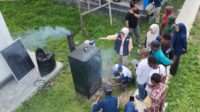
Following the introductory session, students worked in groups to assemble the components and carry out simple programming.
The activity was designed to be participatory. Students were involved in several stages, including connecting components, understanding their respective functions, programming the system, and testing the prototype.
This practical approach also introduced students to an important part of technology development: troubleshooting.
A device does not always work perfectly on its first attempt. A sensor may fail to detect an object as expected, a connection may need to be checked, or the program may require adjustment.
Such situations provide students with an opportunity to understand technology as a process of testing, identifying problems, making adjustments, and testing again.
Applying Knowledge Beyond the Classroom
The program also demonstrates one of the purposes of university community service: connecting academic knowledge with practical needs and learning environments in local communities.
For Unhas students, the activity became an opportunity to share knowledge beyond the university campus. For school students, it provided direct exposure to technologies that they may otherwise encounter only through textbooks or digital content.
The involvement of Nabila Samsabila, a Geophysics student, also illustrates that knowledge of technology can intersect with different academic disciplines.
IoT applications are not limited to computer science. Sensors, data collection, automation, and programming can potentially be applied in areas ranging from environmental monitoring and agriculture to energy management and public services.
Technology Can Begin with Simple Problems
The choice of a trash bin as the project model carries another practical lesson. Technology does not always have to begin with a sophisticated machine or an expensive laboratory. A simple object can become a learning platform when students are encouraged to ask questions about how it works and how it could work better.
Why should a trash bin be opened manually? Can a sensor detect when someone approaches it? Can a programmed system respond automatically? Questions like these turn an ordinary object into an opportunity for technological learning.
The process encourages students to move from simply using technology toward understanding how technology is designed and built.
Building Interest in Technology
Nabila Samsabila said the activity was intended to provide students with practical experience in addition to theoretical knowledge.
“Through this activity, we hope students can understand how IoT technology works and be able to develop creative technology-based ideas in the future,” she said.
The workshop therefore served not only as an introduction to IoT but also as an effort to encourage students to explore technology through experimentation.
For vocational school students in particular, hands-on learning can provide an opportunity to connect concepts with physical applications.
The experience of assembling, programming, testing, and troubleshooting a device can help demonstrate how different forms of knowledge come together to produce a functioning system.
A Small Project with a Practical Lesson
The smart trash bin developed through the KKNT 116 activity is a relatively simple technological application. Its significance, however, lies in the learning process behind it. Students were introduced to sensors, microcontrollers, motors, programming, automation, and problem-solving through one familiar object.
That approach offers a straightforward lesson in technological literacy: complex systems can be understood by breaking them into smaller, understandable parts. For the Unhas students, the activity was part of their community service in Desa Wiringtasi. For the students of SMKN 7 Pinrang, it provided an opportunity to see how an everyday object could become a practical introduction to IoT.
Ultimately, the activity shows how university students can bring academic knowledge into schools and communities through simple, hands-on projects—turning concepts from the classroom into experiences that students can see, touch, test, and understand.
Saya sengaja mempertahankan bahasa Inggris tetapi membuatnya lebih cocok untuk international feature/news article: informatif, tidak terlalu retoris, dan lebih berhati-hati terhadap klaim seperti “decentralized R&D wing”, “scalable model”, atau “future built on sensors” yang tidak secara langsung dibuktikan oleh materi kegiatan.