

MARITIMEPOSTS.COM – Human health is increasingly intertwined with changing environmental conditions. Exposure to microplastics, air pollution, and rising extreme temperatures are among the challenges that require interdisciplinary research approaches and international collaboration.
In response to these challenges, the Faculty of Public Health (FKM) at Hasanuddin University (Unhas) is strengthening its research partnership with Stanford University, United States, through a visit by Dr. Mark Lieber, who served as a visiting researcher.
During his two-week stay in Makassar, Dr. Mark collaborated with FKM Unhas researchers, particularly in the field of Planetary Health. Dean of FKM Unhas, Ansariadi, Ph.D., welcomed the visit, describing the partnership between the two institutions as increasingly strategic in generating scientific evidence relevant to environmental health challenges.
“Environmental health issues cannot be addressed by any institution working alone. Through this joint research, we aim to generate scientific evidence from Makassar that can benefit communities in Indonesia and across the Asia-Pacific region,” Ansariadi said.
The collaboration between FKM Unhas and Stanford University has been underway for more than a decade. The partnership is now being further strengthened through the Stanford University–Hasanuddin University Alliance for Planetary Health in the Asia Pacific, under Stanford’s Center for Human and Planetary Health (HPH).
One of the key areas of joint research focuses on microplastic exposure among young children. This research forms part of the Mother and Child Cohort Study, which investigates potential sources of microplastic exposure and their possible effects on children’s gut microbiomes.
Beyond this, the university alliance is advancing several other research initiatives, including dengue fever mapping using drones and vector surveillance; adaptation to extreme heat through the testing of reflective roofing systems (cool roofs) and personal cooling technologies for workers; and research into the relationship between air pollution and respiratory diseases in children.
Dr. Mark expressed his enthusiasm for having the opportunity to observe firsthand the research activities and fieldwork conducted by the FKM Unhas team.
He also highlighted opportunities to expand academic cooperation, including the willingness of Stanford’s research team to host doctoral students from FKM Unhas’s PMDSU (Master’s-to-Doctoral Fast-Track Program for Outstanding Undergraduate Graduates) through a sandwich program at Stanford University.
Vice Dean for Partnerships, Research, Innovation, and Alumni Affairs at FKM Unhas, Prof. Yahya Thamrin, MOH, Ph.D., expressed hope that the visit would further strengthen FKM Unhas’s position as a global research partner, particularly in environmental health and Planetary Health.
“FKM Unhas’s main priorities in environmental health and Planetary Health include mitigating the impacts of climate change on infectious diseases, addressing microplastic pollution in coastal areas, improving sanitation, and controlling antimicrobial resistance. These efforts are aimed at supporting evidence-based public policy,” Prof. Yahya said.
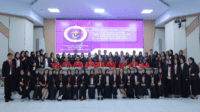
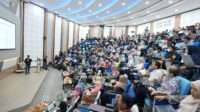
During his visit and research activities, Dr. Mark also attended the FKM Unhas anniversary celebration, where he presented the outcomes of the research collaboration to the university’s academic community on Saturday, November 14, 2026, at the Unhas campus in Tamalanrea, Makassar. (* / FKM)