
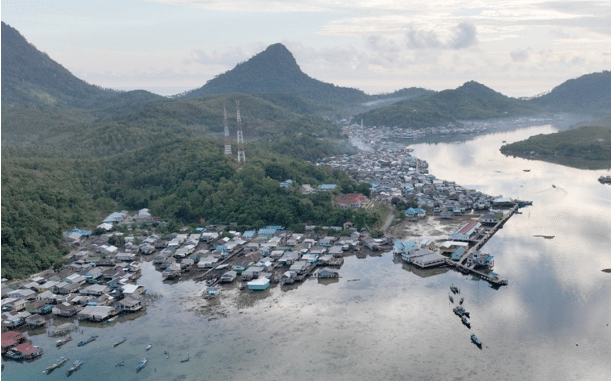
MARITIMEPOSTS.COM – Tanjungpinang, 18 November 2026 – The Provincial Government of the Riau Islands, together with the Nusantara Nature Conservation Foundation (YKAN), the Regional Public Service Agency (BLUD) of the Regional Technical Implementation Unit (UPTD) for Marine Conservation Area Management in the Riau Islands, and the Riau Islands Ecology Foundation, through the Koralestari Program supported by the Global Fund for Coral Reefs (GFCR), is conducting a Willingness to Pay (WTP) study among tourists.
The study aims to measure the willingness of domestic and international tourists to contribute financially to support the management of marine conservation areas.
Managing marine conservation areas requires adequate funding to support surveillance and enforcement, activities in accordance with designated zoning, public awareness, environmental education, and sustainable tourism development.
Therefore, alternative funding sources are needed to ensure that conservation management does not rely solely on government budgets.
The WTP study is one of the initiatives designed to identify potential funding contributions from users of marine tourism services within conservation areas. Its findings will serve as a basis for determining service fees charged by the BLUD UPTD for Marine Conservation Area Management in the Riau Islands.
The proposed fees are expected to take into account tourists’ willingness and ability to pay, as well as the financial requirements for effective area management.
Head of the Riau Islands Provincial Marine Affairs and Fisheries Office, Said Sudrajad, said that managing conservation areas requires sustainable funding mechanisms. The implementation of the BLUD framework provides managers with greater flexibility to develop revenue sources and allocate funds according to management priorities.
“Managing conservation areas requires sustainable financing. Through the BLUD framework, managers have the flexibility to develop revenue sources and allocate them to meet the needs of conservation area management. This study of tourists’ willingness to pay is important in establishing a measurable basis for determining service fees, while taking into account the financial capacity and acceptance of service users,” Said explained.
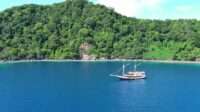
The Provincial Government of the Riau Islands currently manages marine conservation areas covering 1,716,538.25 hectares.
Two areas have been formally designated: the East Bintan Island Marine Tourism Park and the Bintan II–Tambelan Marine Conservation Area. Meanwhile, efforts are underway to upgrade the status of proposed conservation areas in the waters of Lingga, Batam, and Natuna from reserved status to formal designation.
The establishment of the BLUD is part of an institutional strengthening process for conservation area management that has been underway since 2024. This process culminated in the designation of the UPTD for Marine Conservation Area Management as a BLUD through Riau Islands Governor’s Decree No. 1158 of 2025, dated 30 October 2025.
Measuring Tourists’ Willingness to Pay
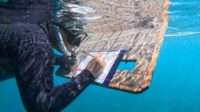
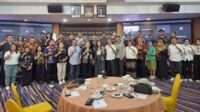
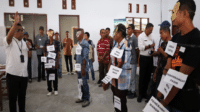
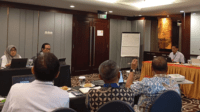
The WTP study is being conducted through several stages. The process began with enumerator training held on 22–24 October 2026 in Tanjungpinang. The training covered the fundamentals of WTP, data processing and analysis, questionnaire administration, and interview techniques for engaging with tourists.
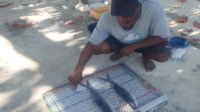
Following the training, field surveys were conducted in three locations: Bintan from 30 October to 1 November 2026, Batam from 6–8 November 2026, and Tambelan from 13–16 November 2026. The surveys targeted both domestic and international tourists, as well as tourism operators involved in marine tourism activities in these areas.
The surveys gathered information on tourists’ profiles and visitation patterns, their perceptions of conservation area management, and their willingness to make financial contributions. Socioeconomic factors and visitor characteristics were also analyzed to identify the factors influencing their willingness to pay.
Head of the BLUD UPTD for Marine Conservation Area Management in the Riau Islands, Andi Irawan, said the study is essential to ensure that future service fee policies are supported by a clear and reliable evidence base.
“We want to ensure that future service fees are determined based on research and field data, rather than mere estimates. In addition to considering tourists’ willingness and ability to pay, the contribution mechanism must also be transparent, so that the public understands that the funds collected will be used to support conservation area management,” he said.
The study is expected to generate estimates of tourists’ willingness to pay, recommendations on appropriate conservation contribution rates, and effective and transparent mechanisms for collecting and managing the funds.
“YKAN supports the Provincial Government of the Riau Islands in strengthening the institutional framework and financing mechanisms for conservation area management. The WTP study is one way to connect tourists’ use of environmental services with the financing needs of conservation efforts. With adequate data, local governments can develop fair, proportionate, and accountable fee policies,” said Muhammad Ilman, YKAN’s Marine Program Director.
Through this approach, marine tourism can become more than just a source of income for businesses and local communities. It can also play an active role in supporting efforts to protect marine ecosystems.
Tourists’ contributions are expected to become one of the funding sources that strengthen conservation area management, ensuring that its benefits continue to be enjoyed by local communities and future generations.