
In the 2026 Times Higher Education (THE) Impact Rankings, Hasanuddin University (Unhas) rose from the 401–600 global band in 2024 and 2025 to the 201–300 band in 2026. Its regionally driven research impact is also reflected in its SDG achievements, ranking 58th globally for SDG 1, 87th for SDG 15, within the 101–200 band for SDG 3, and within the 201–300 band for SDG 17.
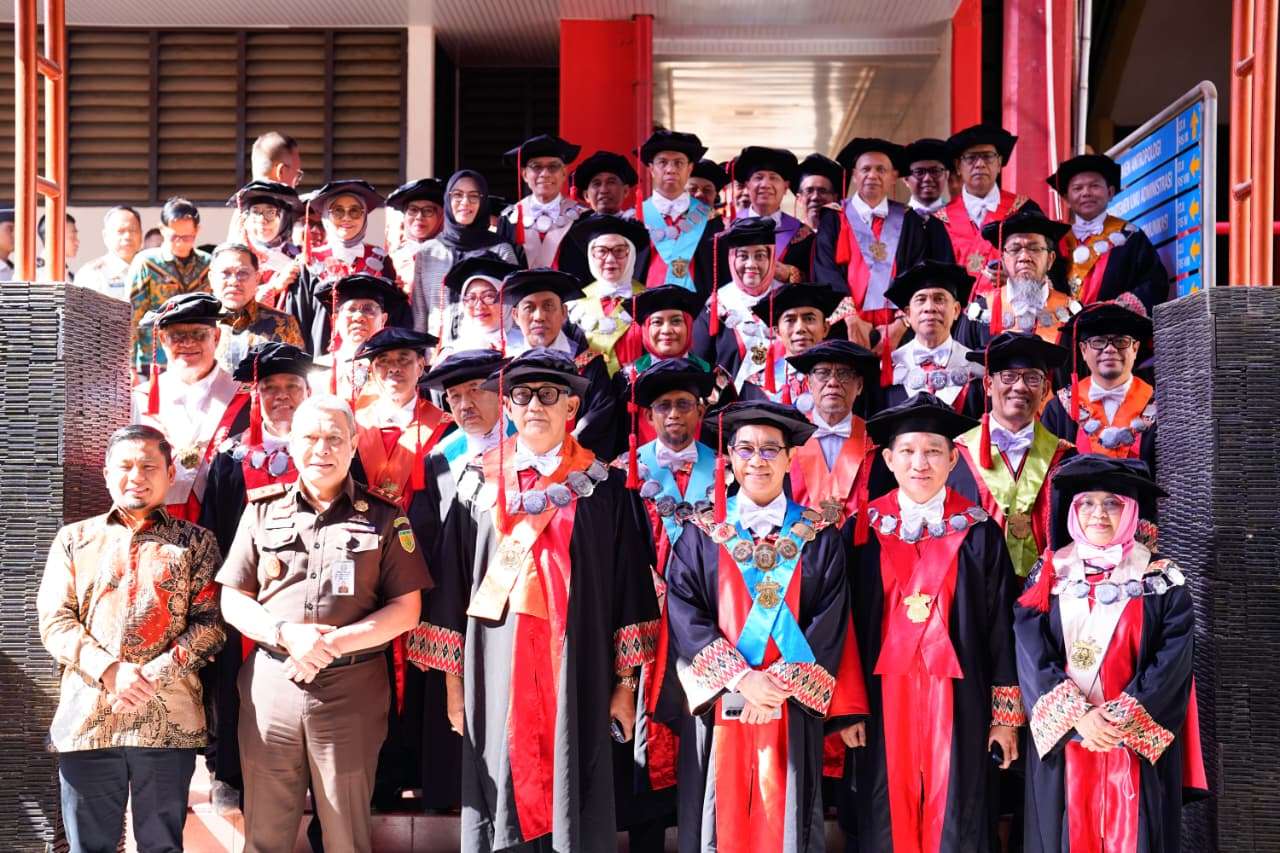
MARITIMEPOSTS.COM — Hasanuddin University (Unhas) has reaffirmed its transformation toward becoming The Impactful University during its 70th Dies Natalis celebration, themed “Seven Decades of Unhas: Creating Impact, Going Global.” The transformation marks a shift in the university’s performance orientation—from administrative achievements toward measuring tangible outcomes generated through education, research, and innovation.
The 70th Dies Natalis ceremony was held at Baruga A.P. Pettarani, Unhas Tamalanrea Campus, Makassar, on Thursday (September 10). The ceremony was opened by Unhas Rector Prof. Dr. Ir. Jamaluddin Jompa, M.Sc.
In his address, Prof. JJ emphasized that universities must move beyond their traditional role of producing expertise and evolve into institutions capable of delivering tangible solutions for communities while strengthening national resilience.
The transformation is reflected in the way Unhas evaluates institutional performance, shifting from administrative achievements toward measuring tangible outcomes.
A university’s success is increasingly assessed by the extent to which research findings can be applied as economic solutions, patents can be commercialized, and graduates can enter the formal workforce.
This approach positions the academic process as extending beyond knowledge production toward the practical utilization of knowledge.
“From the perspective of global academic reputation, this direction is aligned with Unhas’ improved position in the QS World University Rankings 2027. Unhas has entered the 851–900 global band. At the Asian level, Unhas has also risen to 201st in the QS Asia University Rankings 2026. This position places Unhas 57th in Southeast Asia and among the top 10 universities in Indonesia,” Prof. JJ explained.
Prof. JJ further noted that the concept of Unhas Berdampak-Mendunia—creating impact and going global—is being realized through the integration of the university’s Tridharma Perguruan Tinggi with the Sustainable Development Goals (SDGs).
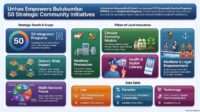
In the 2026 Times Higher Education (THE) Impact Rankings, Unhas rose from the 401–600 global band in 2024 and 2025 to the 201–300 band in 2026. Its regionally driven research impact is also reflected in its SDG achievements, ranking 58th globally for SDG 1, 87th for SDG 15, within the 101–200 band for SDG 3, and within the 201–300 band for SDG 17.
The impact has become more tangible through the application of Unhas research in communities. A total of 139 research outputs have been directly utilized, including Alope Chicken as a superior local chicken breed, Jago Corn as an adaptive maize variety supporting food security, and the Unhas Drone as a precision technology for regional mapping and disaster mitigation.
“These achievements demonstrate that the impact of research is measured by its ability to address real needs, while strengthening Unhas’ role in generating knowledge and innovation that are relevant to society,” Prof. JJ added.
South Sulawesi Governor Andi Sudirman Sulaiman reaffirmed his commitment to supporting Unhas innovations capable of addressing real-world problems in society. He called for research outputs with problem-solving functions and direct public benefits to be submitted to the government for further development.
According to him, universities occupy a strategic position in generating knowledge that can be translated into solutions for various regional development challenges.
He argued that investment in innovation and human resources offers stronger long-term value than investment in infrastructure.
“Investment in innovation is far more powerful than the infrastructure I build. A smart and capable child is far more meaningful than what I build. Therefore, amid budget efficiency measures, support must be provided selectively by considering the targets, objectives, and benefits to be achieved,” Andi Sudirman said.
The Governor of South Sulawesi also emphasized the importance of pilot projects as a foundation for scaling up innovation.
Innovations that have undergone pilot testing and demonstrated tangible benefits are considered to have a stronger basis for receiving further development support. The Governor encouraged Unhas to produce more innovative products capable of addressing community needs.
On the occasion, the South Sulawesi Provincial Government provided Rp1.6 billion in assistance to Unhas, which will be used to develop a mini soccer field and five 1 GT electric vessels.
At the same event, Unhas launched five flagship programs: UNHAS PRIME, UNHAS Excellent Performance Indicator (EPI), Campus Immigration Point, Satu Data, and the Critical Mineral Institute.
The launch of these programs, together with the provincial government’s support, strengthens Unhas’ efforts as it enters its seventh decade by advancing innovation, strengthening governance, and developing resources that generate tangible benefits for society and regional development. (*/mir)