
The danger of “intellectual atrophy” is real. If the machine performs the reasoning, the human loses the analytical muscles required for leadership. Prof. Ucu emphasizes that reading a text is fundamentally different from explaining the “flow” or “process” of an event. This ability to articulate the sequence of cause and effect remains the ultimate human edge.
MARITIMEPOSTS.COM – For decades, the “straight-A” student was the undisputed gold standard of the recruitment world. High GPAs served as a reliable proxy for future performance, operating under the assumption that if a student could master a syllabus, they could master a career.
But as we navigate the mid-2020s, a troubling disconnect has emerged. Many technically brilliant graduates are faltering the moment they step into the messy, unpredictable reality of the modern office.
The gap isn’t a lack of intelligence; it is a lack of daya tahan—resilience.
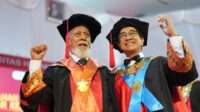
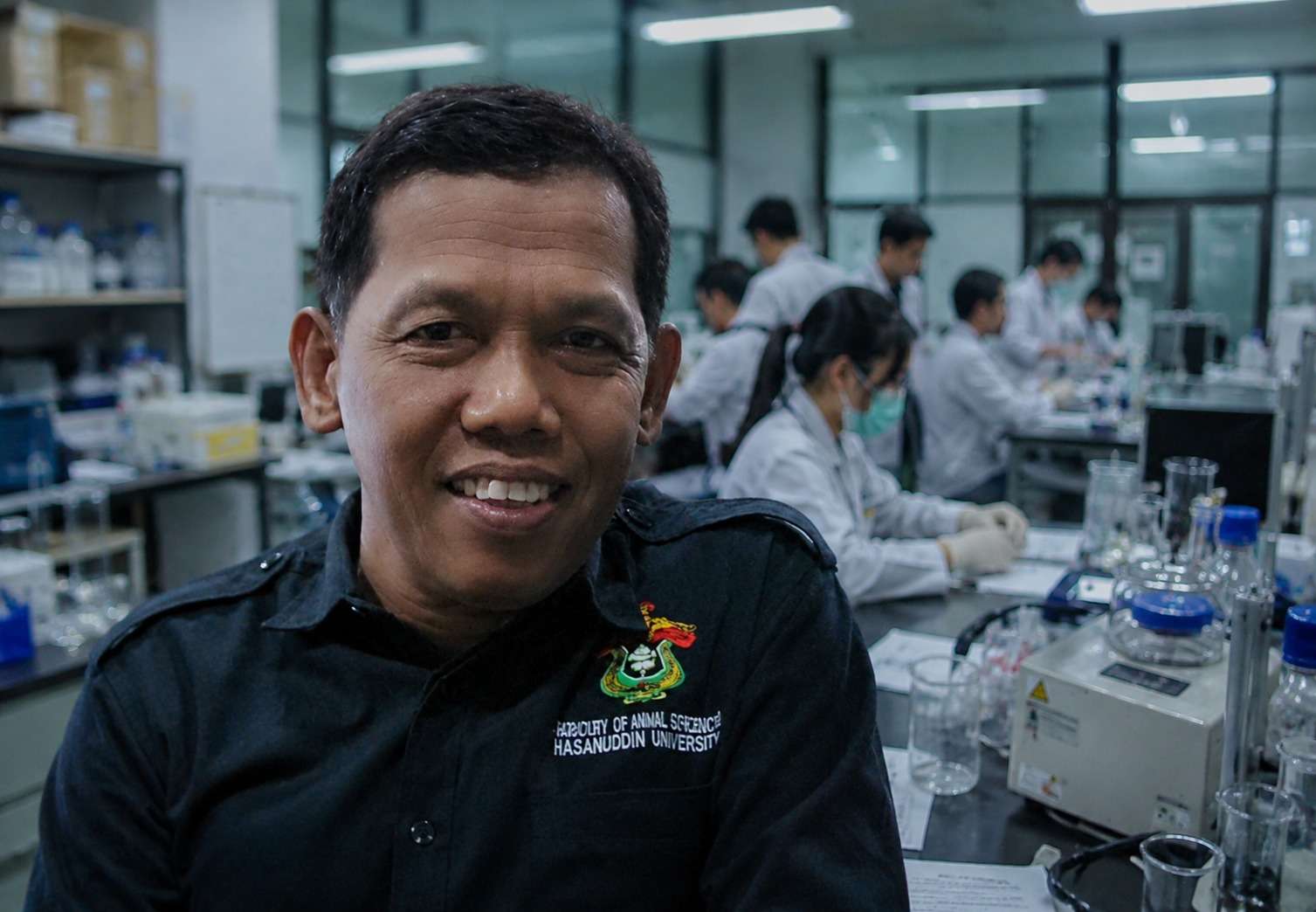
Prof. Muhammad Yusuf, PhD—affectionately known as Prof. Ucu—serves as the Director of Alumni at Universitas Hasanuddin (Unhas).
A scientist with a doctorate from Yamaguchi University, Japan, and a background in Animal Husbandry, Prof. Ucu views the talent landscape through a lens of rigorous international standards. In a recent dialogue following a stakeholder forum in June 2026, he highlighted a critical shift: academic brilliance is no longer the sole predictor of professional success.
The “Extreme” Workplace: Navigating the Volatility Tax
In today’s economy, technical skill is merely the entry price. The real differentiator is how a graduate handles what stakeholders now describe as “extreme” work environments.
The modern professional rhythm has accelerated to a point where the “volatility tax” is high. Graduates are no longer entering stable roles; they are entering ecosystems defined by shifting targets, rapid policy pivots, and the demand for high-output late-night surges.
When the environment becomes dynamic, a high IQ becomes secondary to cognitive endurance.
“There is a general impression that these parties [stakeholders] state that alumni are needed who have endurance or resilience when in a work environment that tends to be dynamic and extreme,” observes Prof. Ucu.
This is not merely about “working hard.” It is about structural agility—the ability to maintain performance when the script changes and the pressure mounts.
The AI Confidence Trap: Templates vs. Intellectual Agency
The proliferation of generative AI has created a new hazard: the diminishing marginal utility of AI-generated competence. While AI can produce a polished “template” of knowledge, it often masks a lack of foundational understanding. This creates what I call the “AI Confidence Trap.”
Prof. Ucu notes a stark divide between students who build knowledge through deep processing and those who rely on automated shortcuts.
When a student “owns” the information—having wrestled with the reading and synthesis themselves—they possess a level of intellectual agency that a template-user cannot replicate.
In high-stakes environments, such as a heated debate or a surprise presentation, the logic-based user thrives. They can pivot. They can answer the “why” behind the “what.”
Those relying on AI-styled explanations often collapse the moment the conversation moves beyond the provided prompt.
The strategic objective for higher education is not a Luddite rejection of automation, but a strategic recalibration of human-AI synergy. AI must be viewed as an alat bantu (a tool)—a co-pilot for efficiency, not a replacement for the thinking process.
The danger of “intellectual atrophy” is real. If the machine performs the reasoning, the human loses the analytical muscles required for leadership.
Prof. Ucu emphasizes that reading a text is fundamentally different from explaining the “flow” or “process” of an event. This ability to articulate the sequence of cause and effect remains the ultimate human edge.
“We need AI as a tool, but the campus is responsible for preparing alumni who have the capital of knowledge, skills, and a tough attitude in any situation,” Prof. Ucu asserts.
The Curriculum Shift: A Feedback-Loop for Growth
For institutions like Universitas Hasanuddin, the feedback from industry stakeholders is a signal for urgent pedagogical adaptation. A fixed curriculum is a relic of a slower era.
The future of higher education lies in “capacity addition”—a model where industry needs for responsiveness and resilience directly inform curriculum updates.
This feedback-loop ensures that graduates are not just subject-matter experts, but individuals possessing the “tough attitude” required to survive the volatility of the 2026 workforce. It is an evolution from delivering content to building character and adaptive capacity.
In an age where AI can generate a report in seconds, the ultimate differentiators are the traits that remain stubbornly human: deep reasoning and psychological resilience.
The ability to remain steady when targets move and to think logically when the digital template fails is the new “career gold.”
As you audit your own professional development, ask yourself: Is your skillset built on a foundation of deep, owned knowledge, or are you operating on borrowed digital templates?
The future belongs to those who use technology to enhance their work, but who rely on their own resilience to survive the unknown. How are you building your resilience today?
___
Written by Kamaruddin Azis