
Political analyst Adi Suryadi Culla believes the government needs to confront that question more seriously. Political commitment, he argues, should not prevent policymakers from responding to factual conditions on the ground.
MARITIMEPOSTS.COM — Indonesia’s Free Nutritious Meal Program, widely known as Makan Bergizi Gratis (MBG), was launched with an ambitious promise: improve children’s nutrition, strengthen learning capacity, and ultimately build better human capital.
Few would question the importance of that goal. Yet as the program has expanded rapidly across the country, a series of food-poisoning incidents and other health disturbances in 2026 has raised a more uncomfortable question: can a program designed to protect children’s wellbeing remain politically and administratively sustainable if basic safety and targeting problems persist?
The Problem Looks Bigger Than a Technical Glitch
During the first several months of 2026, reports of suspected food poisoning and health disturbances following MBG consumption emerged in several parts of Indonesia.
Cases were reported in East Jakarta in April, followed by Surabaya and Jember in May, Bangkalan in June, and Solo during July and August. In Solo, 108 students were reported affected, while laboratory testing identified E. coli in watermelon samples. However, because the samples involved food from both the MBG program and the school canteen, the precise source required further investigation.
The pattern continued in other regions. In Jayapura’s Depapre District, around 80 students reportedly experienced health problems after consuming MBG food.
Semarang recorded an even larger incident involving 707 students and teachers, while in early September, 431 students at a boarding school in Sidoarjo were reportedly affected after consuming MBG meals.
The numbers alone do not prove that every incident was caused by MBG. Some cases remained under investigation, while others involved multiple possible sources of contamination.
Nevertheless, the geographical spread and recurrence of such incidents raise a legitimate governance question: are these merely isolated operational failures, or do they reveal weaknesses within a system that is being expanded at extraordinary speed?
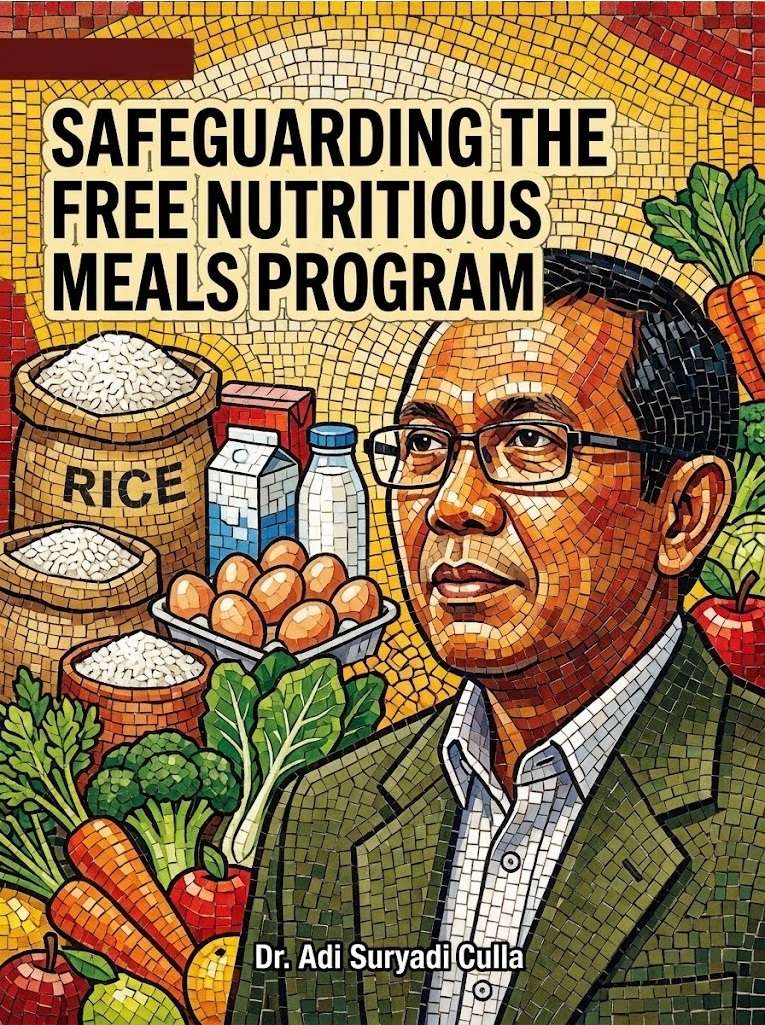
Political analyst Adi Suryadi Culla believes the government needs to confront that question more seriously. Political commitment, he argues, should not prevent policymakers from responding to factual conditions on the ground.
“In my view, the Prabowo administration is too ambitious with this program, implementing it without regard for the real conditions on the ground. That is precisely what is happening, and this is what the public is feeling now.”
For Adi, repeated problems should not be answered through a cycle of finding a local mistake, fixing it temporarily, and then moving on.
What is required is a systemic evaluation of how the entire program is designed and implemented. Here are the things.
Political Ambition Meets Factual Reality
MBG is not an ordinary government program. It emerged directly from one of President Prabowo Subianto’s major political promises and has consequently acquired enormous political significance. That status makes any decision to slow down, redesign, or suspend the program considerably more difficult.
The difficulty is not simply political. Once thousands of facilities, workers, suppliers, distribution networks, and local administrative arrangements become dependent on MBG, the program develops its own institutional momentum. Every additional stage of expansion creates more interests that must subsequently be considered.
This is where political ambition can collide with local reality.
Indonesia is an archipelago with dramatically different levels of infrastructure, transportation access, food-processing capacity, human resources, and public-service readiness.
A model that works in an urban center cannot automatically be expected to operate with the same reliability in remote villages or isolated regions.
Adi therefore argues that the government should stop treating MBG as a policy that must be implemented uniformly everywhere simply because it has been established as a national commitment.
When a Nutrition Program Becomes a Mega-Project
The scale of MBG has transformed it from a straightforward nutrition intervention into a major administrative and economic project. That transformation brings benefits, including employment and new economic opportunities, but it also creates a powerful form of institutional inertia.
Facilities have been built. Workers have been recruited. Suppliers have entered contracts. Local governments have created supporting arrangements. Communities have begun to depend economically on the program.
The larger the structure becomes, the harder it is to question its underlying design.
This is the classic problem of a large public project: once substantial resources have been committed, policymakers can become more reluctant to reconsider the original assumptions. The money already spent becomes a reason to continue spending, while the political investment becomes another reason to defend the program.
That does not mean MBG should automatically be abandoned. It means that the government must be willing to distinguish between protecting the program’s objective and protecting its current institutional format.
Those are not necessarily the same thing.
Feeding Children Must Not Come at the Expense of Education
Adi also raises another issue that deserves greater public attention: the opportunity cost of MBG.
Indonesia continues to face major challenges in education. Many schools still require infrastructure improvements. Teacher quality and welfare remain important concerns. Digital access and educational technology remain uneven, particularly outside major urban areas.
Against that background, the government must carefully consider whether the enormous fiscal requirements of MBG could eventually reduce the room available for other educational priorities.
Adi argues that the education budget must remain focused on improving the quality of education itself.
“All of that should be consistently realized. It should not be disrupted by other programs that are unrelated, and the concentration of the 20 percent education allocation should not be disturbed.”
The central issue is not whether children need nutritious food. They clearly do.
The question is how nutrition policy should be financed and structured without weakening the schools, teachers, learning environments, and technological infrastructure that determine whether those children can turn improved nutrition into improved educational outcomes.
A healthy student still needs a functioning classroom, a capable teacher, adequate learning materials, and meaningful access to technology.
Selectivity May Be Better Than Uniformity
Perhaps the most consequential alternative proposed by Adi is a shift away from uniform national implementation toward a more selective model.
Indonesia’s social and geographical conditions are too diverse for every community to necessarily require the same intervention in the same form.
A child from a poor and remote village may face very different nutritional and educational challenges from a child living in a relatively prosperous urban neighborhood.
The question, therefore, should not simply be how many meals can be distributed, but who needs them most, where they are needed, and what delivery mechanism is safest and most efficient.
Adi suggests that the government could consider directing greater assistance toward poor families and communities in marginal, rural, border, and remote areas based on reliable socioeconomic data. School-based management could also become an alternative, allowing food provision to be more closely connected to the actual needs and capacities of individual schools.
Such a model would not necessarily mean abandoning MBG. Instead, it would redefine the program around its original purpose: improving nutrition among children who need government intervention most.
“Evaluation does not mean MBG must be completely eliminated, but that it should be changed into a format that is more efficient, effective, and properly targeted. It should not be wasteful as it is under the current conditions.”
The Choice Before the Government
The debate surrounding MBG has now moved beyond the simple question of whether children should receive nutritious meals. Almost everyone agrees that they should. The harder question concerns how the state can deliver that promise safely, efficiently, equitably, and sustainably.
Adi sees two broad choices. The government can stop the program and conduct a comprehensive evaluation, or it can continue MBG while substantially changing its design and making implementation more selective and responsive to local conditions.
“There are only two choices, in my view. Stop it immediately, or continue it but take real conditions into account.”
Either way, the government needs the political courage to reassess a flagship policy without treating criticism as an attack on its underlying objective. A program can have a noble purpose and still require fundamental correction.
The next step, Adi argues, should involve a serious discussion between the government and the DPR to determine a more sustainable direction for MBG. The longer unresolved problems are treated as isolated technical incidents, the harder it will become to distinguish between temporary operational failures and deeper weaknesses in the policy itself.
Indonesia does need a generation of healthier children. But the measure of MBG should ultimately be more than the number of meals distributed or facilities established. It should be judged by whether children are genuinely healthier, whether the most vulnerable are reached, whether public money is used responsibly, and whether the system can guarantee food safety at the scale it promises.
Correcting a major government program is not necessarily a political defeat. Sometimes, the greater political courage lies in recognizing that a good idea requires a better design.