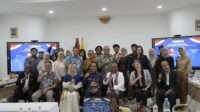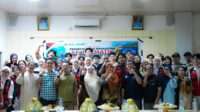

MARITIMEPOSTS.COM – When 60 dental professors from 18 universities gathered at Universitas Hasanuddin for the inaugural National Congress of the Indonesian Council of Dental Professors (MGBKGI), the atmosphere was far from purely celebratory. Underneath the ceremonial regalia was a sobering consensus: Indonesian dental medicine stands at an existential crossroads.
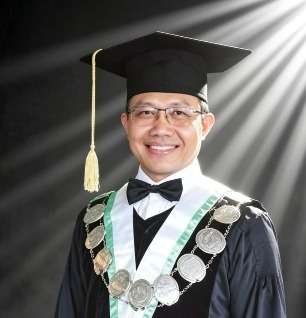
At the center of this dialogue is Prof. drg. Muhammad Ruslin, M.Kes., Ph.D., Sp.B.M.M., Subsp.Ortognat-D (K)—Chairman of MGBKGI, Vice Rector 1 for Academic and Student Affairs at Universitas Hasanuddin, and a prominent oral and maxillofacial surgeon.
In a field being radically reshaped by artificial intelligence, 3D printing, and automated diagnostics, Prof. Ruslin’s message to the nation’s academic leadership is clear: festive graduation ceremonies are merely cosmetic victories if university laboratories fall silent.
The Paradox of the Digital Age
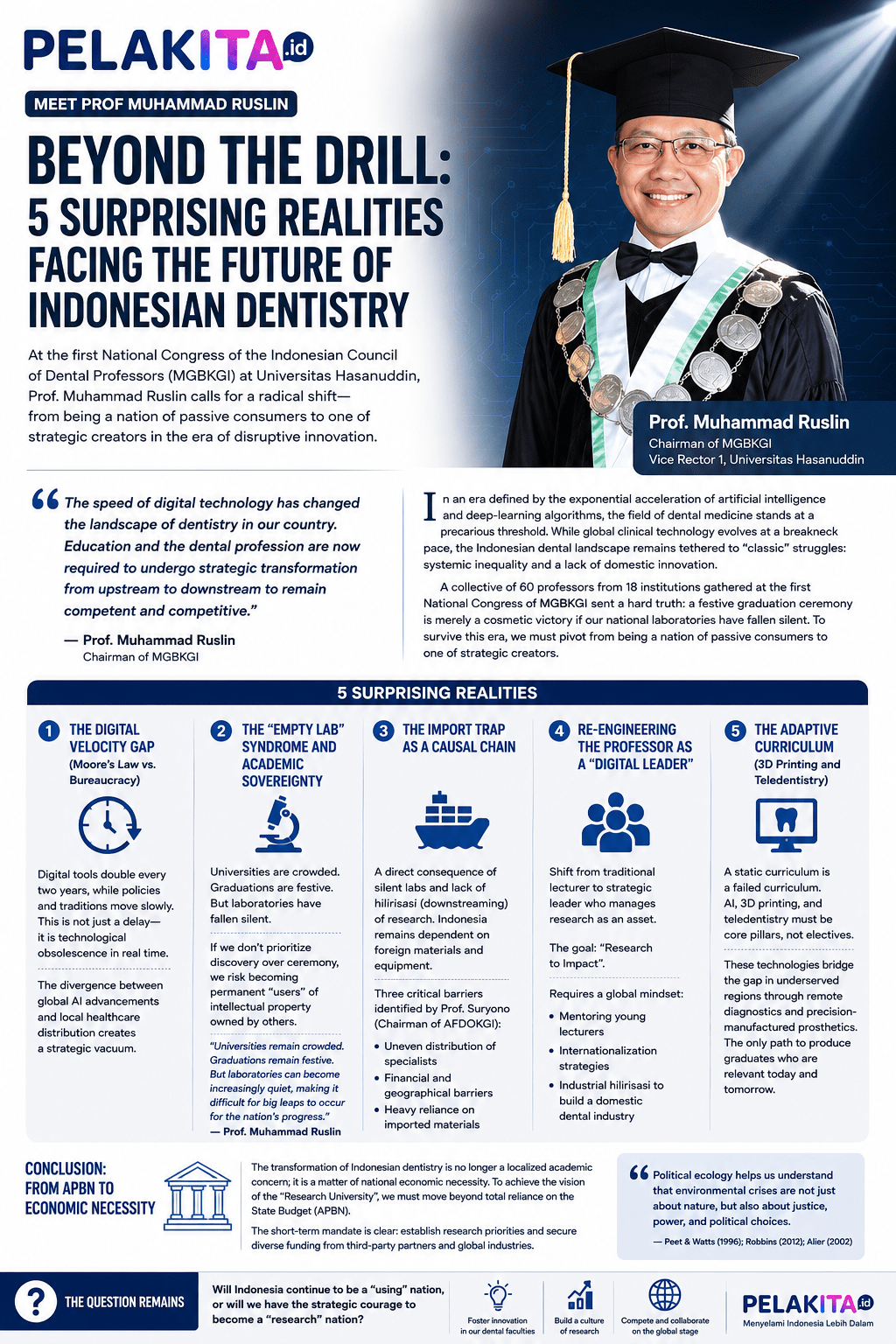
“The speed of digital technology has changed the landscape of dentistry in our country,” Prof. Ruslin emphasizes. “Education and the dental profession are now required to undergo a strategic transformation from upstream to downstream to remain competent and competitive.”
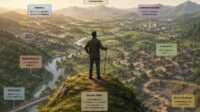
The core challenge facing Indonesia is what he terms the velocity gap—a divergence where global clinical technology advances exponentially while local healthcare policies, educational curricula, and administrative structures adapt at a bureaucratic pace.
While top-tier global clinics deploy real-time AI image analysis and rapid intraoral fabrication, Indonesian dental practice remains tied to basic structural hurdles: severe geographical inequality in care distribution and an almost total dependence on imported dental supplies.
       [ Global Tech Acceleration ] (Moore's Law Speed)
                   │
                   ▼  <--- Widening Velocity Gap
                   ▲
                   │
    [ Institutional Transformation ] (Bureaucratic Pace)
The “Empty Lab” Syndrome and Academic Sovereignty
Perhaps Prof. Ruslin’s most urgent warning centers on what he calls the “Empty Lab” syndrome—a systemic breakdown in the academic ecosystem where universities grow increasingly populous and graduations remain grand, yet actual laboratory invention stalls.
“Universities remain crowded. Graduations remain festive. But laboratories can become increasingly quiet, making it difficult for big leaps to occur for the nation’s progress.”— Prof. Muhammad Ruslin
This silence is not merely an academic problem; it is a threat to national intellectual sovereignty. Without domestic discovery and active research downstreaming (hilirisasi), Indonesia risks becoming a permanent “consumer nation”—leasing its technology, materials, and digital diagnostic protocols from foreign intellectual property holders.
        THE CYCLE OF IMPORT DEPENDENCY

   +---------------------------------------+
   |   Silent University Laboratories      |
   +---------------------------------------+
                       │
                       ▼
   +---------------------------------------+
   |  Lack of Domestic Downstreaming       |
   |             (Hilirisasi)              |
   +---------------------------------------+
                       │
                       ▼
   +---------------------------------------+
   |   Reliance on Foreign Materials       |
   +---------------------------------------+
                       │
                       ▼
   +---------------------------------------+
   |   High Costs & Unequal Care           |
   |      (The "Geography of Pain")        |
   +---------------------------------------+
From Academic Lecturer to “Digital Leader”
To break this import trap, Prof. Ruslin calls for a fundamental re-engineering of the traditional professor (Guru Besar) identity. The modern academic leader can no longer operate solely as a lecturer delivering static coursework. Instead, they must act as Digital Leaders who actively direct research toward real-world industrial impact.
Under this model, the academic mandate pivots around three key execution points:
-
Fast-Tracking Next-Gen Scholars: Mentoring young lecturers to secure international patents and publish high-impact clinical research.
-
Globalized Research Integration: Leveraging international visiting professorships and cross-border research networks to bridge local gaps with global expertise.
-
Aggressive Downstreaming (Hilirisasi): Directly linking university laboratories with medical device manufacturing to establish a self-reliant domestic supply chain.
Curriculum as an Adaptive Tool
For students entering dental medicine today, an static curriculum is a failed curriculum. Prof. Ruslin’s vision integrates advanced modalities—including 3D printing, artificial intelligence, and teledentistry—as core structural pillars rather than specialized electives.
In an archipelago like Indonesia, teledentistry and localized precision fabrication are not high-tech luxuries; they are essential tools for equity. They allow specialists in metropolitan research centers to support rural clinicians in remote (3T) regions, directly addressing the country’s vast “geography of pain.”
The Path Forward: Research Nation or Consumer Nation?
The transformation of Indonesian dentistry extends beyond academic faculties—it is a matter of national economic necessity. Realizing the vision of a true “Research University” requires looking beyond complete reliance on the state budget (APBN) by cultivating robust partnerships with third-party global research bodies and industrial manufacturers.
As MGBKGI sets its strategic trajectory, the fundamental question facing Indonesian dentistry is straightforward: Will the nation remain a passive user of foreign technology, or will it claim the strategic courage to become a creator?
Under the leadership of figures like Prof. Muhammad Ruslin, Indonesian academia is taking its first decisive steps toward dictating its own digital future.
___
Written by M. Rusman Madjulekka
Editor: Kamaruddin Azis
Written by M. Rusman Madjulekka
Editor: Kamaruddin Azis