
Satellite monitoring, the Automatic Identification System (AIS), and the Vessel Monitoring System (VMS) are becoming central tools in detecting suspicious activities at sea.
MARITIMEPOSTS.COM — Indonesia’s vast maritime territory has long been both a blessing and a challenge. Stretching across thousands of islands and ocean corridors, the country possesses one of the richest marine ecosystems in the world.
Yet these same waters continue to face serious threats from Illegal, Unreported, and Unregulated Fishing (IUUF), a practice that undermines fisheries sustainability, harms coastal economies, and weakens maritime sovereignty.
In eastern Indonesia, particularly in the Aru Islands and Fisheries Management Area WPPNRI 718, the challenge has become increasingly complex as illegal fishing activities outpace conventional monitoring systems.
Recognizing these challenges, DFW Indonesia is pushing for a major shift in fisheries governance through digital-based monitoring and reporting systems.
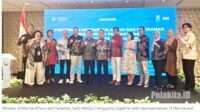
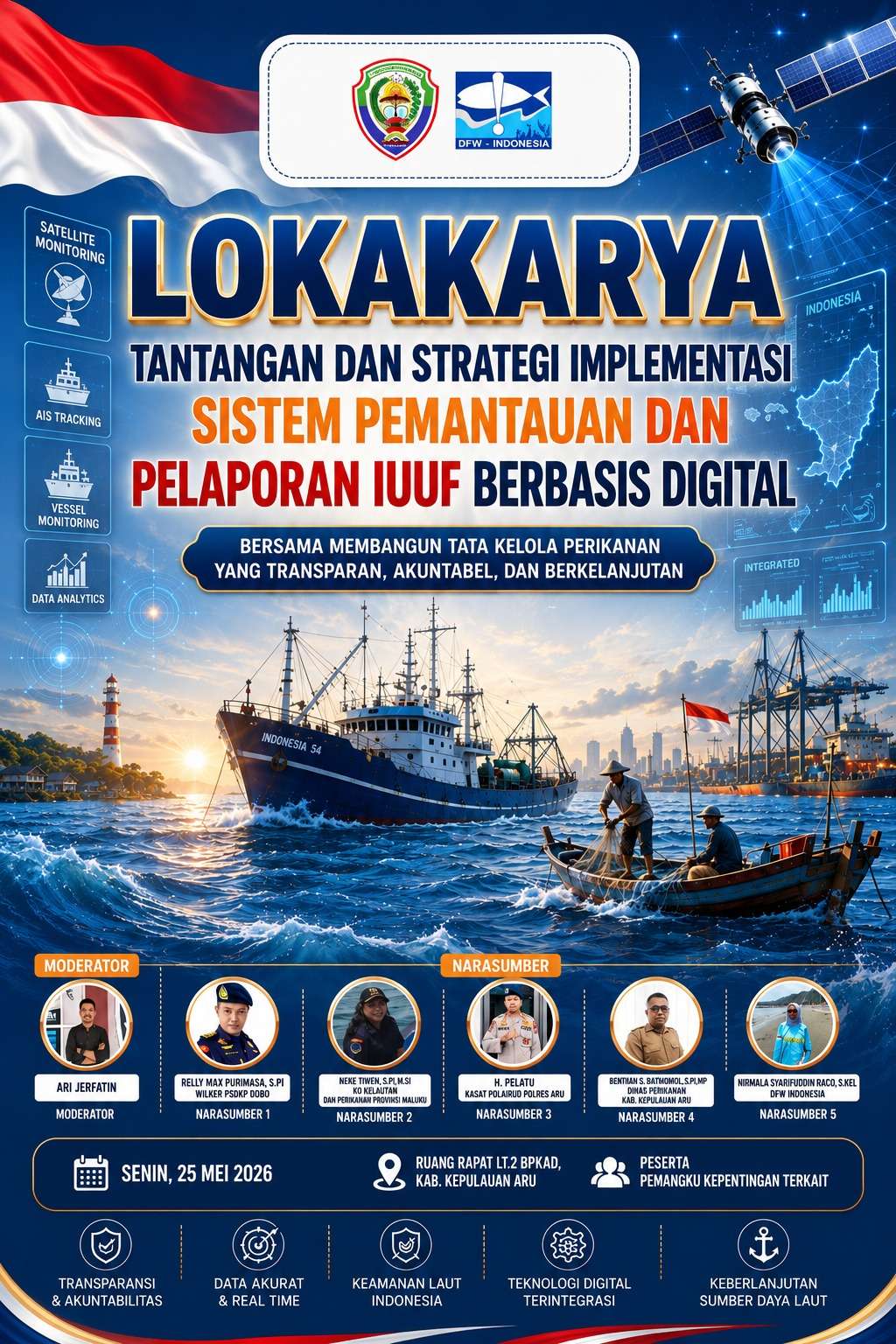
On May 25, 2026, stakeholders from government agencies, law enforcement, fisheries institutions, academics, NGOs, and coastal communities gathered in Kepulauan Aru to discuss strategies for implementing modern digital surveillance systems capable of strengthening Indonesia’s marine protection efforts.
For years, fisheries surveillance relied heavily on manual patrols and limited field monitoring. However, technological innovation is now transforming maritime oversight into a proactive and integrated system.
Satellite monitoring, the Automatic Identification System (AIS), and the Vessel Monitoring System (VMS) are becoming central tools in detecting suspicious activities at sea.
By combining satellite imagery with vessel tracking data, authorities can identify so-called “dark vessels” — fishing boats that intentionally switch off their transponders to avoid detection while operating illegally.
Nirmalasari, Project Coordinator of DFW Indonesia, explained that digital transformation is essential for improving the effectiveness of fisheries governance.
According to her, technology enables monitoring and reporting systems to operate faster, more accurately, and in an integrated manner while also expanding community participation in protecting marine resources.
“Through the use of technology, monitoring and reporting systems are expected to run faster, more accurately, integrated, and involve broader community participation,” she said.
Beyond surveillance, digitalization also introduces a new level of transparency and accountability into fisheries management.
Traditional paper-based reporting systems are often vulnerable to manipulation and delayed verification.
Real-time digital reporting, by contrast, creates traceable records of fishing activities and allows policymakers to respond more quickly to ecological and economic changes in marine ecosystems.
The workshop also emphasized that maritime security can no longer rely solely on state institutions.
Coastal communities and fisher groups are increasingly seen as vital actors within an inclusive monitoring system.
Equipped with digital reporting tools, local communities can serve as the “eyes and ears” of the sea, providing critical information from areas that may be difficult for authorities to monitor continuously.
“This activity becomes a momentum to strengthen synergy among stakeholders in supporting Indonesia’s maritime security and the protection of fishery resources through technology-based monitoring systems,” Nirmala added.
One of the key strengths of the initiative lies in its collaborative approach.
Representatives from fisheries oversight agencies, marine police units, regional governments, and civil society organizations shared perspectives on how digital tools can improve law enforcement and ecosystem-based fisheries management.
The workshop will highlight the importance of institutional synergy in ensuring that surveillance data leads to concrete legal action and stronger protection of marine biodiversity.
In the Aru Islands, where fisheries are deeply tied to local livelihoods and regional identity, the development of an integrated digital monitoring system is viewed not only as a technological innovation but also as a long-term investment in sustainable ocean governance.
The initiative aims to create a system that protects fish stocks, secures fisher livelihoods, and preserves marine ecosystems for future generations.
As Indonesia continues to strengthen its maritime governance, the Aru Islands may become a model for how digital innovation can support inclusive and sustainable fisheries management.
In an era where marine ecosystems face mounting pressures from illegal exploitation and climate change, technology may prove to be one of the most powerful tools in safeguarding the future of the oceans.
___
Source: DFW Indonesia