
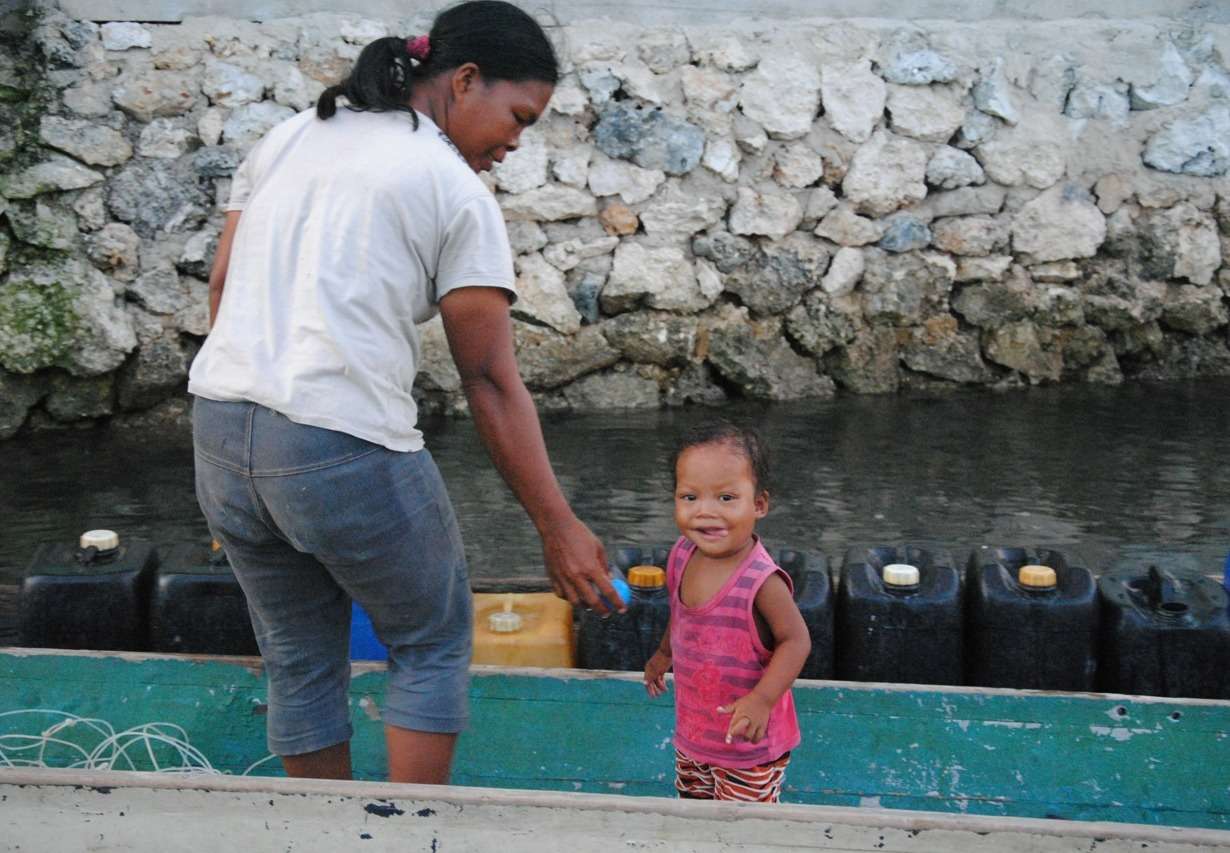
Researchers and facilitators found that adaptation was already happening in various forms. Communities were protecting water sources, rehabilitating coastal ecosystems, strengthening local institutions, diversifying livelihoods, and developing collective responses to environmental risks.
MARITIMEPOSTS.COM – The sea has always been the lifeblood of Wakatobi.
In this cluster of small islands off the southeastern coast of Sulawesi, generations have relied on the ocean for food, transportation, culture, and identity. The rhythms of daily life—fishing trips before dawn, seaweed farming in shallow lagoons, and inter-island journeys in wooden boats—have long followed patterns that seemed eternal.
Today, those patterns are changing.
Across Wangi-Wangi, Kaledupa, Tomia, and Binongko, residents are witnessing stronger storms, shifting seasons, prolonged droughts, coastal erosion, and increasingly unpredictable marine conditions.
For many island communities, climate change is no longer a scientific prediction. It is an everyday reality.
Yet amid these mounting pressures, Wakatobi offers a different story—one not defined solely by vulnerability, but by resilience.
Living on the Frontline
Small islands are among the world’s most climate-sensitive landscapes. Their limited land area, dependence on marine resources, and exposure to sea-level rise make them particularly vulnerable to environmental change.
In Wakatobi, where many villages sit only a few meters above sea level, the effects are becoming increasingly visible.
Residents speak of coastlines that have gradually retreated. Farmers describe longer dry spells that affect freshwater availability. Fishers report changes in fishing grounds and weather patterns that make traditional knowledge harder to rely upon.
For communities whose lives are intimately connected to nature, even subtle environmental changes can have profound consequences.
But adaptation in Wakatobi did not begin with outside interventions.
Long before climate change entered policy discussions, island communities had been developing their own ways of coping with environmental uncertainty. These practices, rooted in local knowledge and collective action, became the foundation for a broader effort to strengthen climate resilience.
When Local Knowledge Meets Climate Policy
I remember in 2012, a collaborative initiative involving the Japan International Cooperation Agency’s Capacity Development for Climate Change Strategies (JICA-CDCCS), Yayasan COMMIT, local government institutions, and community groups began documenting adaptation practices across Wakatobi.
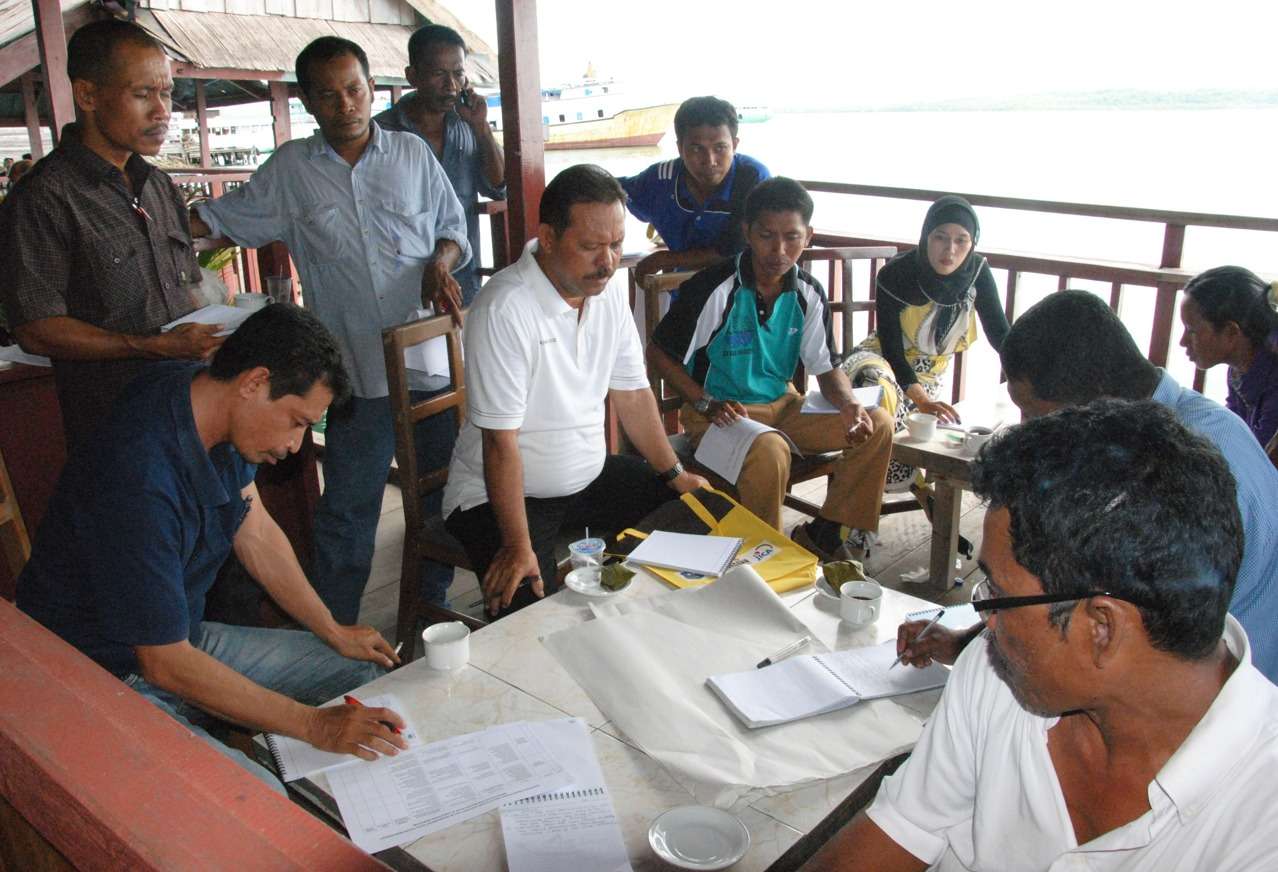
The objective was not simply to identify climate impacts. It was to understand how communities were already responding and how those local experiences could inform broader adaptation strategies.
The effort focused on twenty villages across the archipelago.
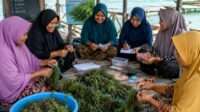
Researchers and facilitators found that adaptation was already happening in various forms. Communities were protecting water sources, rehabilitating coastal ecosystems, strengthening local institutions, diversifying livelihoods, and developing collective responses to environmental risks.
Rather than portraying island residents as passive victims of climate change, the findings revealed something different: communities acting as agents of adaptation.
The challenge was how to ensure that these local initiatives could be recognized, strengthened, and connected to government planning processes.
Building a System for Resilience
One lesson quickly emerged from the field: resilience requires more than good intentions.
Local initiatives often succeed because of strong community commitment, but sustaining them over time requires institutional support, monitoring, and coordination among stakeholders.
Recognizing this need, local government officials, community representatives, academics, and facilitators gathered in Wangi-Wangi in early 2013 to discuss a framework that could connect grassroots adaptation efforts with formal planning mechanisms.
At the center of the discussion was a seemingly technical concept: Monitoring, Evaluation, and Reporting (MER).
Yet participants saw it as something much larger.
A functioning monitoring system would allow communities to document climate impacts, track adaptation activities, identify lessons learned, and communicate results to decision-makers.
More importantly, it would create a shared language between villagers and government agencies.
The process reflected a broader shift in climate adaptation thinking. Rather than imposing solutions from above, the goal was to strengthen systems that enable communities themselves to become central actors in resilience building.
Communities as Partners, Not Beneficiaries
One of the most important insights emerging from Wakatobi is that effective climate adaptation depends on partnership.
Government agencies possess policy authority and resources. Researchers contribute scientific knowledge. Civil society organizations provide facilitation and technical support.
But communities bring something equally valuable: lived experience.
Residents understand local environmental conditions in ways that cannot always be captured through satellite imagery or statistical models. They know which shorelines are most vulnerable, where freshwater sources are becoming scarce, and how seasonal changes affect livelihoods.
This knowledge becomes especially important on small islands, where environmental changes often appear first and are felt most intensely.
The adaptation framework developed in Wakatobi sought to recognize this reality by positioning communities not merely as recipients of programs, but as co-creators of solutions.
Lessons from the Islands
The story of climate adaptation in Wakatobi offers lessons that extend far beyond Indonesia.
Across the world, small-island communities are confronting similar challenges: rising seas, ecosystem degradation, and increasing climate uncertainty.
While each location has its own context, many face the same question: how can local resilience be strengthened in an era of global environmental change?
Wakatobi’s experience suggests that adaptation works best when it begins with what communities are already doing.
It also demonstrates the importance of linking local initiatives with supportive policies, institutions, and monitoring systems. Without these connections, valuable local innovations often remain invisible and vulnerable to disruption.
Perhaps most importantly, Wakatobi reminds us that climate adaptation is not solely about infrastructure, technology, or funding.
It is also about people.
It is about fishers adjusting to changing seas, women managing household water supplies during prolonged dry seasons, community leaders organizing collective action, and villages working together to protect the resources on which their futures depend.
Beyond Survival
As climate risks continue to intensify, the stakes for small islands are becoming increasingly high.
For Wakatobi, adaptation is not simply a matter of environmental management. It is about safeguarding culture, livelihoods, and a way of life that has evolved through centuries of interaction with the sea.
The communities of these islands cannot stop global warming on their own.
But through local innovation, collective action, and partnerships that bridge policy and practice, they are demonstrating what resilience looks like in real time.
In the process, Wakatobi is offering an important lesson to the world: adaptation is strongest when it grows from the ground up.
On these small islands surrounded by one of the richest marine ecosystems on Earth, the fight against climate change is already underway—not in conference halls or international summits, but in villages where people continue to adapt, organize, and protect the future of their islands one community at a time.
___
Written by Kamaruddin Azis, founder MaritimePosts and Pelakita,ID