

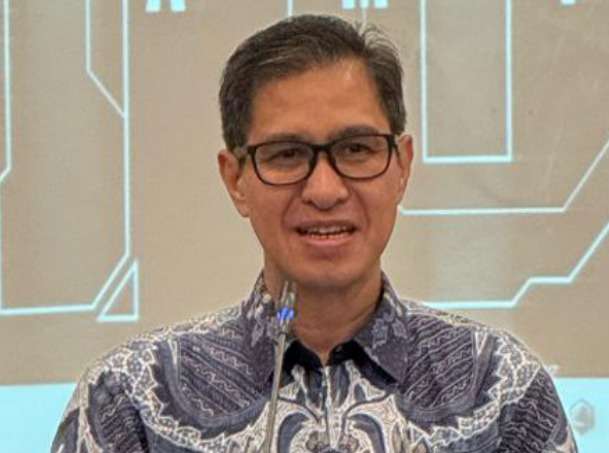
By Irawan Asaad, Ph.D.
Director of Climate Change Resource Mobilization, Ministry of Environment, Republic of Indonesia
His presentation was delivered during the Climate Dialogue event themed “Youth Action for Climate Protection: Towards a Green and Sustainable Indonesia.” The event was part of the Climate Change Thematic Community Service Program (KKN) and was organized through a collaboration between the Ministry of Environment/Environmental Control Agency (KLH/BPLH) and Hasanuddin University. It served as a preparatory session for students participating in the Climate Change Thematic KKN program.
MARITIMEPOSTS.COM – For more than three decades, Indonesia has steadily strengthened its commitment to addressing climate change through active participation in international environmental agreements.
This journey reflects not only Indonesia’s role as a responsible member of the global community but also its recognition that climate change poses significant risks to national development, environmental sustainability, and the well-being of future generations.
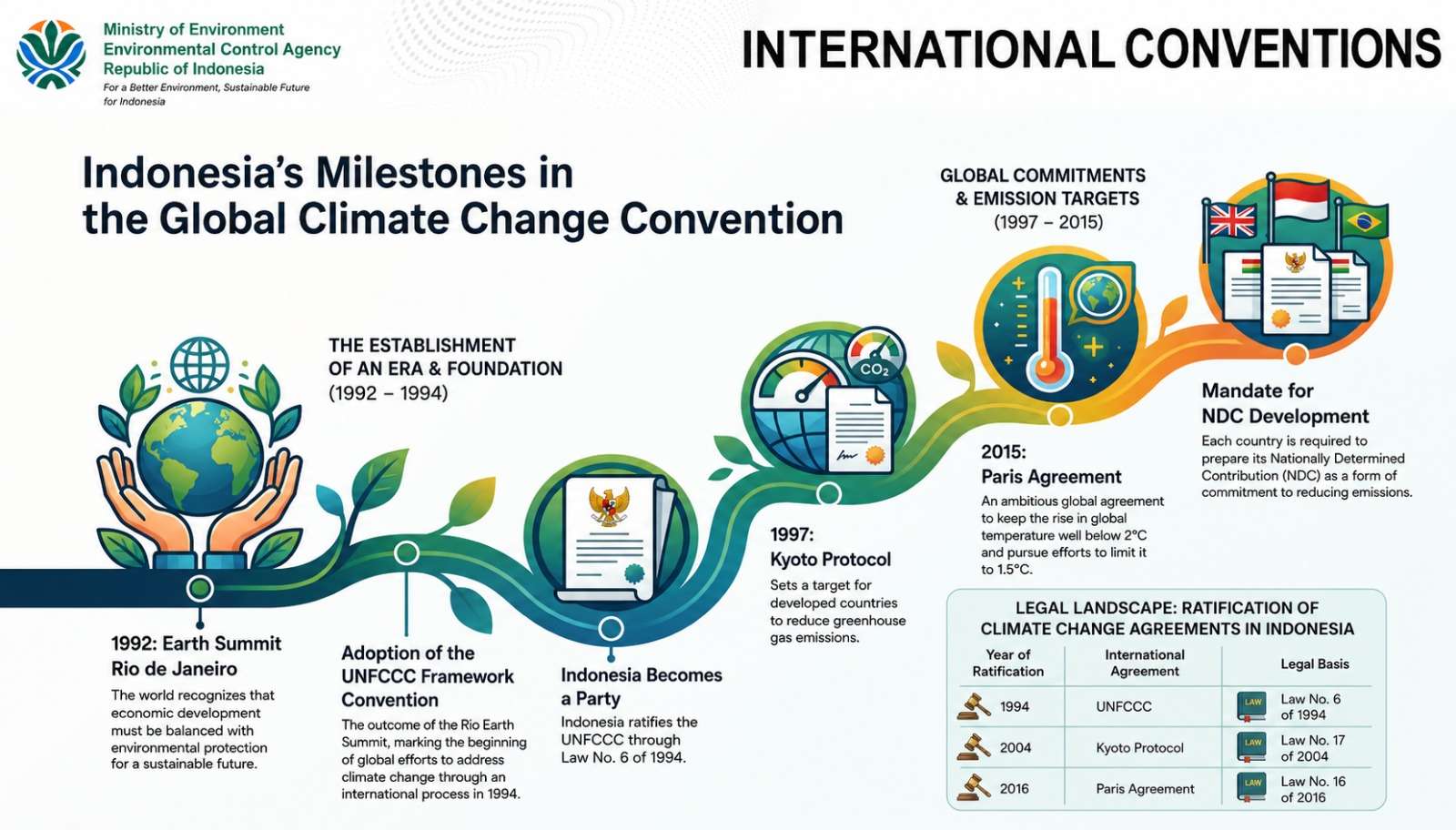
The foundation of Indonesia’s climate commitment can be traced back to the 1992 Earth Summit held in Rio de Janeiro, Brazil.
Officially known as the United Nations Conference on Environment and Development (UNCED), the summit marked a historic turning point in global environmental governance. World leaders agreed that economic development must go hand in hand with environmental protection, laying the groundwork for international cooperation on climate issues.
One of the most important outcomes of the Rio Earth Summit was the establishment of the United Nations Framework Convention on Climate Change (UNFCCC).
The convention created a global framework for countries to collectively address the causes and impacts of climate change.
As part of its commitment to the international process, Indonesia ratified the UNFCCC through Law No. 6 of 1994, officially becoming a Party to the convention and joining global efforts to stabilize greenhouse gas concentrations in the atmosphere.
The next major milestone came in 1997 with the adoption of the Kyoto Protocol.
This landmark agreement introduced legally binding emission reduction targets for developed countries, representing the first international mechanism aimed at reducing greenhouse gas emissions.
Indonesia subsequently ratified the Kyoto Protocol through Law No. 17 of 2004, further strengthening its engagement in global climate governance.
As scientific evidence of climate change became increasingly compelling, the international community recognized the need for a more comprehensive and inclusive agreement.
This led to the adoption of the Paris Agreement in 2015, a historic accord that brought together nearly every nation in the world under a shared commitment to limit global temperature rise. The agreement seeks to keep the increase in average global temperatures well below 2 degrees Celsius above pre-industrial levels while pursuing efforts to limit warming to 1.5 degrees Celsius.
Indonesia ratified the Paris Agreement through Law No. 16 of 2016, reaffirming its determination to contribute to global climate action. One of the key innovations of the Paris Agreement is the requirement for every participating country to prepare and implement a Nationally Determined Contribution (NDC).
Through the NDC mechanism, countries define their own climate targets and strategies for reducing greenhouse gas emissions and strengthening resilience to climate impacts.
For Indonesia, the NDC serves as an important policy instrument that aligns international commitments with national development priorities.
It provides a framework for integrating climate action into sectors such as energy, forestry, agriculture, waste management, and land use while supporting sustainable economic growth.
Indonesia’s climate journey demonstrates a gradual but significant evolution in international climate governance.
Beginning with broad environmental commitments in Rio, progressing through the emission reduction framework of Kyoto, and culminating in the nationally driven approach of the Paris Agreement, the country has consistently positioned itself as an active participant in global climate efforts.
Today, climate action is no longer viewed solely as an environmental issue. It has become an integral component of national development planning, economic resilience, and sustainable growth.
As Indonesia continues to implement its climate commitments and enhance its Nationally Determined Contributions, the country remains committed to building a low-carbon and climate-resilient future while contributing to global efforts to address one of humanity’s greatest challenges.
This version is suitable for a government website, university publication, climate education material, or media article accompanying the infographic.
___
Editor K. Azis