
“From Eastern Indonesia, let us prove that the light of knowledge can illuminate civilization.”
– Prof. Jamaluddin Jompa
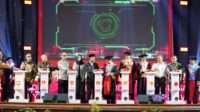
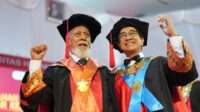
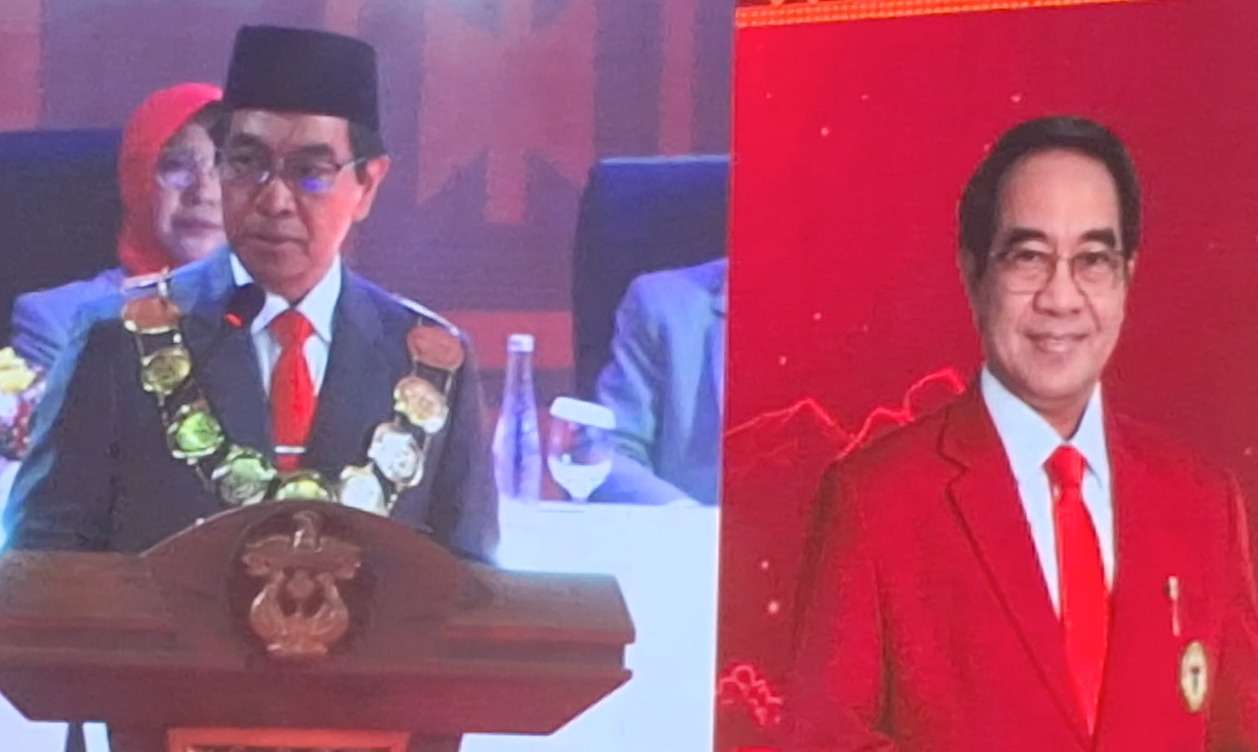
MARITIMEPOSTS— Rector Jamaluddin Jompa reaffirmed a collective commitment to building an impactful university in his inaugural address as Rector of Universitas Hasanuddin (Unhas) for the 2026–2030 term.
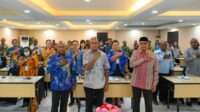
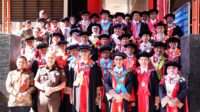
In a solemn ceremony attended by fellow rectors, government officials, strategic partners, and representatives of friendly nations, he emphasized that leadership at Unhas is not an individual journey, but a shared endeavor involving all elements of the nation.
In his remarks, Jompa expressed appreciation to invited guests, including university leaders from across Indonesia. He also acknowledged the presence of government representatives, the business sector, banking institutions, and international partners who have contributed to the development of Unhas.
“This is not a solitary journey. This mandate is a collective effort to educate the nation,” he said.
At the start of his second term, Jompa likened his role to that of a captain steering a large ship through challenging seas. As a member of the Bugis-Makassar community, he stressed that the spirit of seafaring resilience is deeply ingrained and essential in facing the dynamics of the times.
He recalled the beginning of his tenure in 2022, which coincided with the final phase of the pandemic. Amid significant limitations, the Unhas academic community demonstrated strong adaptability and produced relevant innovations in learning.
According to him, this resilience has become a key asset in advancing the institution.
Jompa also underlined that Unhas’ achievements are the result of collective work. He rejected the notion of a “single player” and emphasized the importance of abandoning sectoral ego. Cultural values of the Bugis-Makassar—sipakatau, sipakainge, and sipakalebbi—serve as the foundation for harmony and collaboration.
“Based on this, we uphold the spirit of ‘Unhas Bersatu’. This university belongs not only to its academic community, but to the entire Indonesian nation,” he stated.
Over the past four years, Unhas has recorded several strategic achievements, including entering the 951st position globally in the QS World University Rankings 2026 for the first time.
The university has also shown significant progress in Asia and received recognition in various academic fields and environmental sustainability.
At the national level, Unhas has earned awards for public information transparency and contributions to the Sustainable Development Goals (SDGs).
Student achievements have also stood out, with Unhas winning the overall championship at the National Student Scientific Week (PIMNAS) for two consecutive years.
Beyond academics, Unhas has strengthened its role as a hub of innovation. Various research products have been developed, ranging from agricultural drones and carbon fiber bulletproof vests to electric vehicles and solar-powered fishing boats.
In the agrocomplex sector, the development of superior corn varieties demonstrates strong potential for national food security.
In his speech, Jompa reaffirmed a strong commitment to inclusive education, ensuring that no Unhas student drops out due to financial constraints. To date, tens of thousands of students have received scholarships under this policy.
Looking ahead, Unhas aims to enter the world’s top 500 universities by 2030. Strategies to achieve this include strengthening thematic research groups, expanding international collaboration, and increasing global mobility for lecturers and students.
Alumni are also seen as playing a crucial role in enhancing the university’s global reputation.
On the economic front, Unhas will promote financial independence through the development of a science techno park, holding company, and venture capital to accelerate the commercialization of research into economically valuable products.
In education, the curriculum will continue to align with industry needs through a work-integrated learning approach. The expansion of campuses to various regions is also part of the vision of becoming an “impactful university.”
Jompa further emphasized a commitment to green transformation by integrating environmental, social, and governance (ESG) principles into university governance. This step is considered vital in responding to global challenges such as climate change and sustainable development.
Closing his speech, Jompa invited all stakeholders to strengthen cross-sector collaboration, urging the dismantling of barriers between disciplines, universities, and institutions to achieve shared goals.
He also expressed gratitude to his parents and family for their unwavering support.
Quoting Nelson Mandela, Jompa emphasized that education is the most powerful weapon to change the world.
“From Eastern Indonesia, let us prove that the light of knowledge can illuminate civilization,” he concluded.
Editor: Denun