

Supported by Australia’s Department of Foreign Affairs and Trade (DFAT), the program is one of the most competitive professional development initiatives in the region.
MARITIMEPOSTS.COM – MAKASSAR, INDONESIA — As universities around the world face growing expectations to deliver not only scientific publications but also tangible solutions that generate economic and social impact, Hasanuddin University (Unhas) is strengthening its commitment to building an innovation ecosystem that bridges academic research and industry needs.
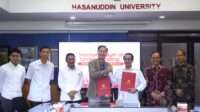
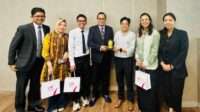
That commitment has received international recognition through the selection of Dr. Asmi Citra Malina A.R. Tassakka, Director of Innovation and Intellectual Property at Hasanuddin University, as one of only 25 participants chosen for the prestigious Australia Awards Indonesia Short Course 2026 on Advancing the Research into Commercialisation Agenda.
Supported by Australia’s Department of Foreign Affairs and Trade (DFAT), the program is one of the most competitive professional development initiatives in the region.
From approximately 500 applicants representing universities, research institutions, government agencies, and innovation organizations across Indonesia, only 25 participants were selected to join the intensive training program.
For Hasanuddin University, the achievement underscores its growing role in fostering innovation, intellectual property management, research commercialization, and the development of university-based startups and spin-off enterprises.
Turning Research into Real-World Impact
For many universities, the challenge is no longer generating research. The greater challenge lies in ensuring that research findings move beyond academic journals and laboratory walls to address societal needs, create commercial value, and contribute to economic development.
The Australia Awards Short Course provides a strategic platform for innovation leaders to learn how research can be transformed into products, services, technologies, and business ventures capable of delivering measurable impact.
The program follows a hybrid model designed to support both learning and implementation. Participants first attended a Pre-Course Workshop in Indonesia on April 29–30, 2026. This was followed by the main Australia-based program, held from June 15–26, 2026, across three major innovation hubs—Brisbane, Gold Coast, and Canberra.
A Post-Course Workshop scheduled for October 2026 in Indonesia will allow participants to evaluate and refine the implementation of projects developed during the program.
Learning from Australia’s Innovation Ecosystem
During their stay in Australia, participants are hosted by Griffith University, a leading institution recognized for its work in innovation, entrepreneurship, and industry collaboration.
The program includes masterclasses with policymakers and innovation experts, field visits to advanced research and technology facilities, and hands-on workshops focused on commercialization pathways.
Participants visit organizations such as Solving Plastic Waste CRC, ARM Hub, and Queensland AI Hub, while also engaging with Australia’s national science agency, CSIRO, to explore customer discovery methodologies and market-driven innovation strategies.
Through these experiences, participants gain insights into how research ideas can evolve into commercially viable solutions that address real-world challenges.
Strengthening Indonesia’s Innovation Capacity
For Asmi Citra Malina, the opportunity adds to an impressive record of international professional development awards.
“This is the third DFAT short-course grant that I have received,” she said, expressing gratitude for the opportunity provided by the Australian Government.
The knowledge and networks gained through the program are expected to strengthen Hasanuddin University’s capacity to support researchers, faculty members, and students in managing innovation more strategically. This includes not only intellectual property protection but also stakeholder engagement, industry partnerships, technology transfer, and the acceleration of commercialization pathways.
As Indonesia seeks to expand its knowledge-based economy, initiatives such as this play an increasingly important role.
Research commercialization is no longer viewed solely as an academic objective; it is becoming a key mechanism for creating innovation-driven growth, generating new business opportunities, and enhancing national competitiveness.
The participation of Dr. Asmi Citra Malina in the Australia Awards Indonesia Short Course 2026 reflects a broader effort by Indonesian universities to position innovation as a bridge between scientific knowledge, societal needs, and sustainable economic development.
Source: Hasanuddin University TV (Unhas TV), Directorate of Innovation and Intellectual Property of Hasanuddin University, Australia Awards Indonesia Short Course 2026.