
MARITIMEPOSTS.COM – Imagine the familiar bureaucratic friction of rural governance: a resident seeks to understand a local budget allocation or the status of a delayed permit, only to be met with the shuttered windows of a “black box” administration.
For decades, the flow of information in Indonesia’s grassroots has been stalled by manual ledgers and a culture of opacity.
This isn’t merely an administrative inconvenience; it is a fundamental barrier to a healthy democracy, creating a landscape where citizens feel disconnected from the very institutions designed to serve them.
In Maros, South Sulawesi, a surprising solution to this systemic inertia is currently taking root. Rather than arriving with shovels and cement to build physical bridges, students from Universitas Hasanuddin (Unhas) are arriving with digital tools and legal frameworks to build intellectual ones.
This initiative represents a sophisticated attempt to dismantle the “asymmetric information” that often plagues village-level governance, transforming the village office from a site of mystery into a hub of open data.
The 116th wave of the Unhas student service program (KKN) suggests that the final frontier of democratic reform is not found within the halls of the national parliament. Instead, it lies in the small offices of the village head, where the glow of a digital dashboard is beginning to replace the clatter of manual typewriters, institutionalizing transparency where it matters most.
A National First: The KKN That Trades Manual Labor for Digital Literacy
The program, officially titled “KKN Tematik KIP” (Public Information Disclosure), marks a definitive shift in the history of Indonesian student service. Historically, the KKN (Kuliah Kerja Nyata) has been synonymous with physical labor—students painting fences or clearing irrigation canals.
This wave, however, is focused on building “intellectual infrastructure.” It is a program designed to bridge the gap between academic theory and rural reality, ensuring that the sophistication of urban governance finds its way to the village square.
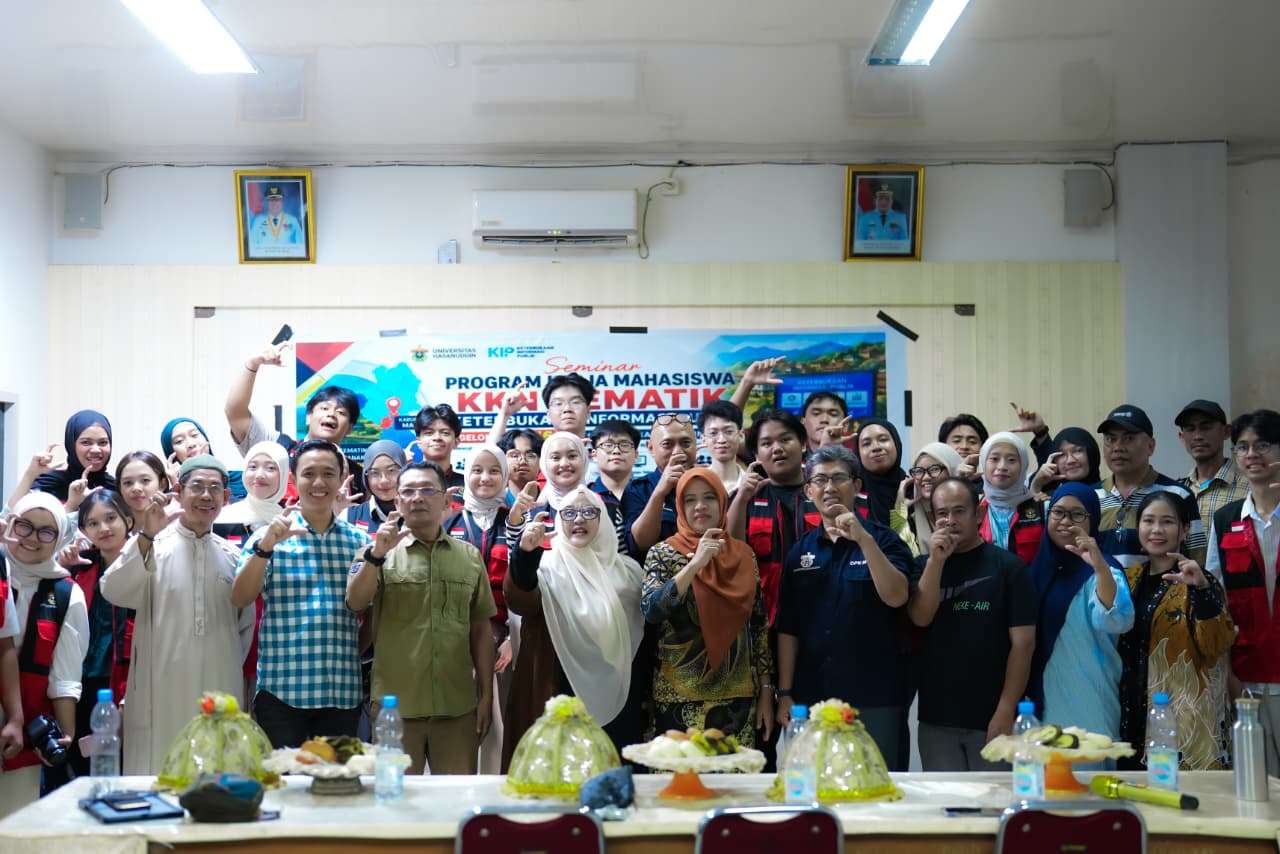
This initiative is the first of its kind in Indonesia to focus specifically on Public Information Disclosure at the village and sub-district levels. Fauziah Erwin, Chair of the Information Commission of South Sulawesi, views the program as a groundbreaking vehicle for modernization.
During a seminar in the Turikale District on July 10, 2026, she described the students as “driving motors” tasked with elevating the quality of public service through structured, digital-first information management.
It’s Not a Favor, It’s Your Right: Re-framing Public Information
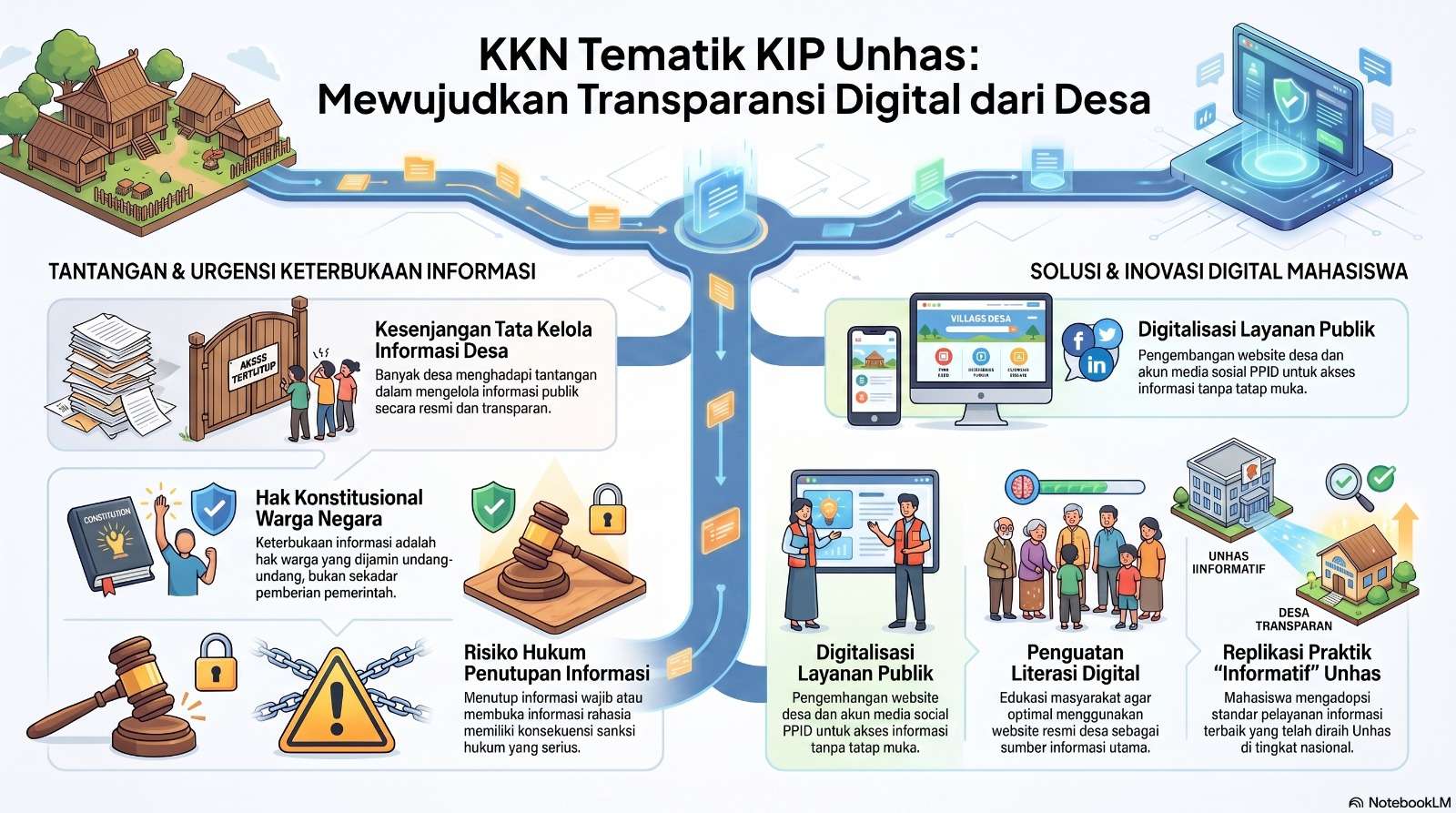
The hurdle to transparency in rural Indonesia is often less about technology and more about psychology. In many villages, citizens view access to government data as a “favor” or a benevolent gift bestowed by local officials—a perception that fosters a sense of indebtedness to the state. The KKN Tematik KIP seeks to fundamentally disrupt this power dynamic by asserting that information is a legally guaranteed right.
Fauziah Erwin emphasizes that transparency is a mandatory obligation for all public bodies, not a discretionary choice. To shift this deep-seated cultural mindset, the program anchors its work in the constitutional mandate of the citizen. As she articulated to the local officials and students:
“Public information is a right of every citizen guaranteed by law (hak setiap warga negara yang dijamin oleh undang-undang), not just a form of service or a gift from the government.”
The High Stakes of Secrecy: When “No Comment” Becomes Illegal
The Legal Gravity of Transparency Under the frameworks introduced to the Maros officials, village-level transparency now possesses significant legal teeth. The program operates under the Public Information Disclosure Act and the specific standards for village information services outlined in the Ministry of Home Affairs Regulation (Permendagri) Number 2 of 2026.
This regulation represents the new boundaries of administrative conduct, where the unlawful shielding of data carries the same legal weight as the unauthorized disclosure of private information.
For local administrators, the days of “no comment” as a viable defense are over. The students are educating officials on the dual responsibility of a public body: they are legally required to proactively announce public information, yet they must also be rigorous in protecting “exempted” data.
In this new era of consequence-based governance, failure to manage these classifications correctly can lead to direct legal sanctions, forcing a level of professionalism that was once reserved for provincial or national offices.
Bridging the “Connectivity vs. Literacy” Divide: Lessons from Kurusumange
A compelling insight emerged from the students’ work in Desa Kurusumange, highlighting a phenomenon that could be called the “connectivity paradox.” The students found that residents already possessed smartphones and the village maintained an official website; however, these tools were being used for social connection rather than civic engagement. This revealed a critical gap between access—having the hardware—and literacy—knowing how to use that hardware to hold power accountable.
To address this, the student intervention moved beyond technical support toward high-impact literacy tools. In addition to optimizing the village website as an official source of government data, students developed a dedicated Instagram account for the PPID (Information and Documentation Management Officer) to meet younger villagers where they already congregate. By creating video profiles and visual media, the students transformed dry administrative data into an accessible, audio-visual narrative, allowing residents to navigate public services without ever stepping foot in a physical office.
From Campus Elite to Village Reality: Exporting “Best Practices”
Universitas Hasanuddin is uniquely positioned to mentor local governments. For two consecutive years, Unhas has been recognized as a “highly informative” institution by the Central Information Commission—a status that reflects its internal success in managing data. The KKN Tematik KIP is an effort to export this institutional legacy. Ishaq Rahman, a supervising lecturer for the program, noted that while Unhas had achieved excellence in its own right, there was a moral responsibility to fix the disparity in its own backyard, where surrounding villages were still lagging.
The Camat of Turikale, Nasaruddin, validated this approach, noting that the student presence provided a necessary “value add” for his staff, improving the apparatus’s understanding of digital service. A prime example of this knowledge transfer is the new Kelurahan Turikale website, which does not merely host information but directly adopts the management practices and architectural systems of the Unhas PPID. As Ahmad Bahar of the Unhas PPID explained, the university is committed to ensuring that “good practices” do not stop at the campus gates.
Conclusion: The Future of Transparent Governance
The 116th wave of Unhas students in Maros is providing a blueprint for the rest of Indonesia. By shifting the focus from physical labor to digital literacy and intellectual infrastructure, they are addressing the root causes of bureaucratic inertia. They leave behind a legacy of optimized websites, active digital profiles, and an administrative staff that understands its legal obligations.
However, as the students return to campus, a provocative question remains for the residents of Maros: can digital transparency effectively eliminate the roots of local corruption, or will the “black box” simply evolve into more sophisticated forms? What is certain is that the work in Turikale and Kurusumange has handed the keys to the citizens. By proving that information is a right rather than a privilege, these students have ensured that the doors of governance, once closed, are now increasingly difficult to lock.